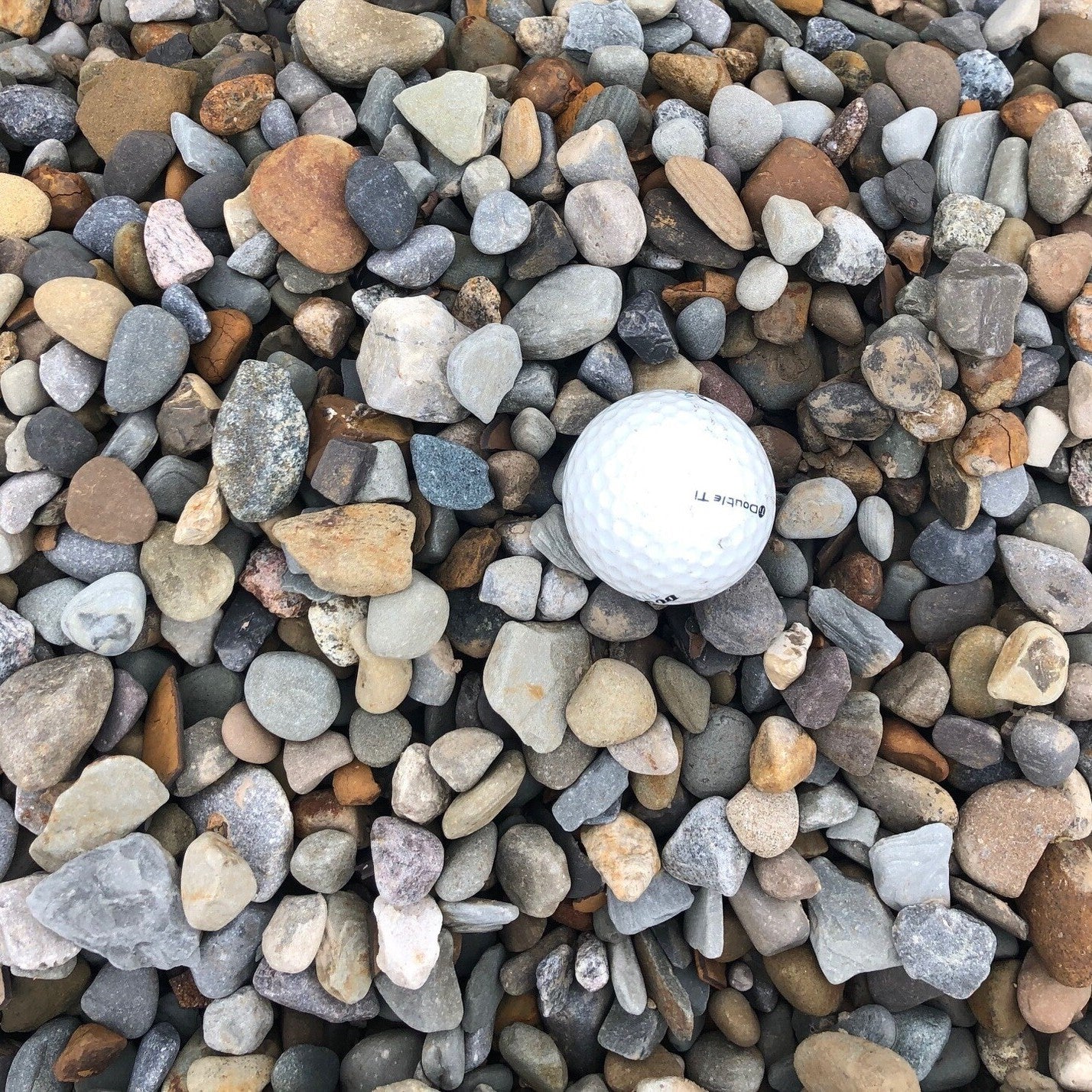
Number 57 crushed stone, angular limestone graded to about three quarters of an inch. The standard driveway, base and drainage gravel, it locks together under traffic and drains fast.
Mulch Mound delivered a yard of pea gravel to us. Delivery was on time, driver was friendly and hit a bullseye on the “tarp target”. We used the pea gravel (which was diameter as specified) to fill several muskrat holes around our pond. I would definitely recommend Mulch Mo...
Tell us what you're looking for
Thanks! We received your request.
Something went wrong. Please try again.
How Much Material Do I Need?
Two to three inches is right for decorative stone beds and pathways, while drainage trenches and dry creek beds usually need six to twelve inches of washed rock to function properly.
Use our free gravel calculator
What is a yard?
A yard is approximately 27 cubic feet. As a general guideline, one yard of material can cover an area of about 100-160 square feet at a 2-3 inch depth.
We can't take orders for this right now. Tell us what you need and we'll get back to you.
What do you need?
Thanks! We received your request.
Something went wrong. Please try again.
Hand-picked local yards
4,000+ regional deliveries
Dedicated support
Why order through Mulch Mound
The best local , without the guesswork.
We hand-pick and partner with the best yards in your region, keep only the ones our buyers rate well, and back each load with our guarantee.
Mulch Mound Guarantee
If your isn't the quantity or quality you ordered, we'll make it right.
About this stone
Number 57 crushed stone, angular limestone graded to about three quarters of an inch. The standard driveway, base and drainage gravel, it locks together under traffic and drains fast.
Mulch Mound delivered a yard of pea gravel to us. Delivery was on time, driver was friendly and hit a bullseye on the “tarp target”. We used the pea gravel (which was diameter as specified) to fill several muskrat holes around our pond. I would definitely recommend Mulch Mo...
How Much Material Do I Need?
Two to three inches is right for decorative stone beds and pathways, while drainage trenches and dry creek beds usually need six to twelve inches of washed rock to function properly.
Use our free gravel calculator
What is a yard?
A yard is approximately 27 cubic feet. As a general guideline, one yard of material can cover an area of about 100-160 square feet at a 2-3 inch depth.
Mulch Mound delivered a yard of pea gravel to us. Delivery was on time, driver was friendly and hit a bullseye on the “tarp target”. We used the ...
Read full review
Mulch Mound delivered a yard of pea gravel to us. Delivery was on time, driver was friendly and hit a bullseye on the “tarp target”. We used the pea gravel (which was diameter as specified) to fill several muskrat holes around our pond. I would definitely recommend Mulch Mound to a friend!
Placing an order online was so easy. Delivery was on time. When the driver realized we had a newly poured driveway they erred on the side of cautio...
Read full review
Placing an order online was so easy. Delivery was on time. When the driver realized we had a newly poured driveway they erred on the side of caution and opted not ti drive in it. The company even sent me a message explaining that call. Would recommend!
Measure each area in feet, multiply length by width, and pick your depth before running the numbers. One cubic yard of stone covers about 100 square feet at three inches. For dry creek beds and swales, measure the channel bottom width, the length, and average depth separately, since those areas need far more material than a flat bed.
Complete Your Outdoor Stone Project
Add heavy woven landscape fabric and steel or paver edging so your stone stays where you put it through spring runoff, and consider a few boulders as anchor points in larger beds.
Plan your stone around snow removal. Coeur d'Alene averages a real snow load, and every winter someone shovels or plows their pea gravel into the lawn. Keep loose rock at least a foot back from walkway and driveway edges, use crushed minus rather than rounded stone anywhere a blade will pass, and install solid edging so pushed snow stops at a hard line instead of dragging material with it.
Mulch Mound Pro Tip
Rinse decorative stone after it is spread. Crushed rock from regional pits carries a fine dust that dulls the color and, once our first rain hits, cements into a gray film across the surface. A thorough hose down right after installation washes the fines down into the base where they help lock the layer together, and your river rock or basalt shows its true wet weather color.
Mulch Mound Pro Tip
Use stone strategically for wildfire defense. Homes on Coeur d'Alene's forested edges benefit enormously from a noncombustible five foot zone against the foundation, and gravel is the easiest way to create it. Replace bark, dry needles, and juniper right at the wall with washed rock, keep the band clear of debris each fall, and you have reduced ignition risk without changing the look of the rest of the yard.
The Unique Landscape of Coeur d'Alene
Decorative stone earns its keep in Coeur d'Alene because our winters are wet and our summers are dry, and rock handles both without breaking down or needing replacement. On the sloped lots common above the lake and along Fernan, gravel and larger cobble slow the spring snowmelt that would otherwise carve channels through bark beds. Silt loam moves easily when saturated, so drain rock and washed gravel are essential around foundations, French drains, and downspout outlets. Stone also stays put through the wind that funnels down the valley, and it will not fade under high elevation summer sun the way organic mulch does. For fire conscious homeowners near the wildland edge, a gravel band against the house is one of the simplest defensible space upgrades you can make.
Frequently Asked Questions
Click a question to see the answer
Answer
Will rock beds make my yard hotter in the summer?
Light colored stone reflects heat, and on a south facing Coeur d'Alene wall it can raise nearby air temperatures noticeably during our 90 degree July stretches. Use darker basalt or river rock in those spots, keep rock away from heat sensitive shrubs, and reserve gravel for pathways, drainage, and low water plantings.
Answer
What size gravel works for a driveway that gets plowed?
Use three quarter inch minus crushed rock. The fines pack into a firm surface that a plow blade can ride over without scooping up the whole driveway, which is exactly what happens with rounded pea gravel. Set your plow shoes a half inch high and you will lose very little material each Coeur d'Alene winter.
Answer
Does stone stop weeds better than mulch?
Only at first. Within a couple of seasons, dust, pine needles, and organic debris settle between the rocks and North Idaho weeds like cheatgrass and dandelion root right in that layer. Stone lasts far longer than bark, but plan on blowing debris out each spring and spot treating.
Answer
How much stone do I need around my foundation for drainage?
A band 18 to 24 inches wide and three to four inches deep, sloped away from the house, handles most Coeur d'Alene homes. Use washed drain rock rather than crushed minus so snowmelt moves through instead of sitting. This also doubles as a defensible space buffer if you are near forested ground.
Answer
Can I put river rock over landscape fabric?
Yes, and with stone it is worth doing. Use a heavy woven fabric, not the thin nonwoven kind, because our freeze and thaw cycles work rock down into silt loam surprisingly fast. Fabric keeps the stone from disappearing into the soil and makes future cleanup much easier.
Answer
What is a dry creek bed and does it help with our spring runoff?
It is a shallow, rock lined channel that directs water away from structures, and it works very well on Coeur d'Alene's sloped lots. Line it with drain rock and set larger cobble along the edges to handle the volume that comes off a fast April melt. It looks intentional year round and prevents the erosion gullies that form in bare beds.
Answer
How many tons of rock is in a cubic yard?
Most decorative stone runs about 1.3 to 1.5 tons per cubic yard, so a yard of river rock weighs roughly 2,700 pounds. That matters if you are hauling in a half ton pickup, since a single yard is over the legal limit for most of them. We deliver so you are not making six trips.