


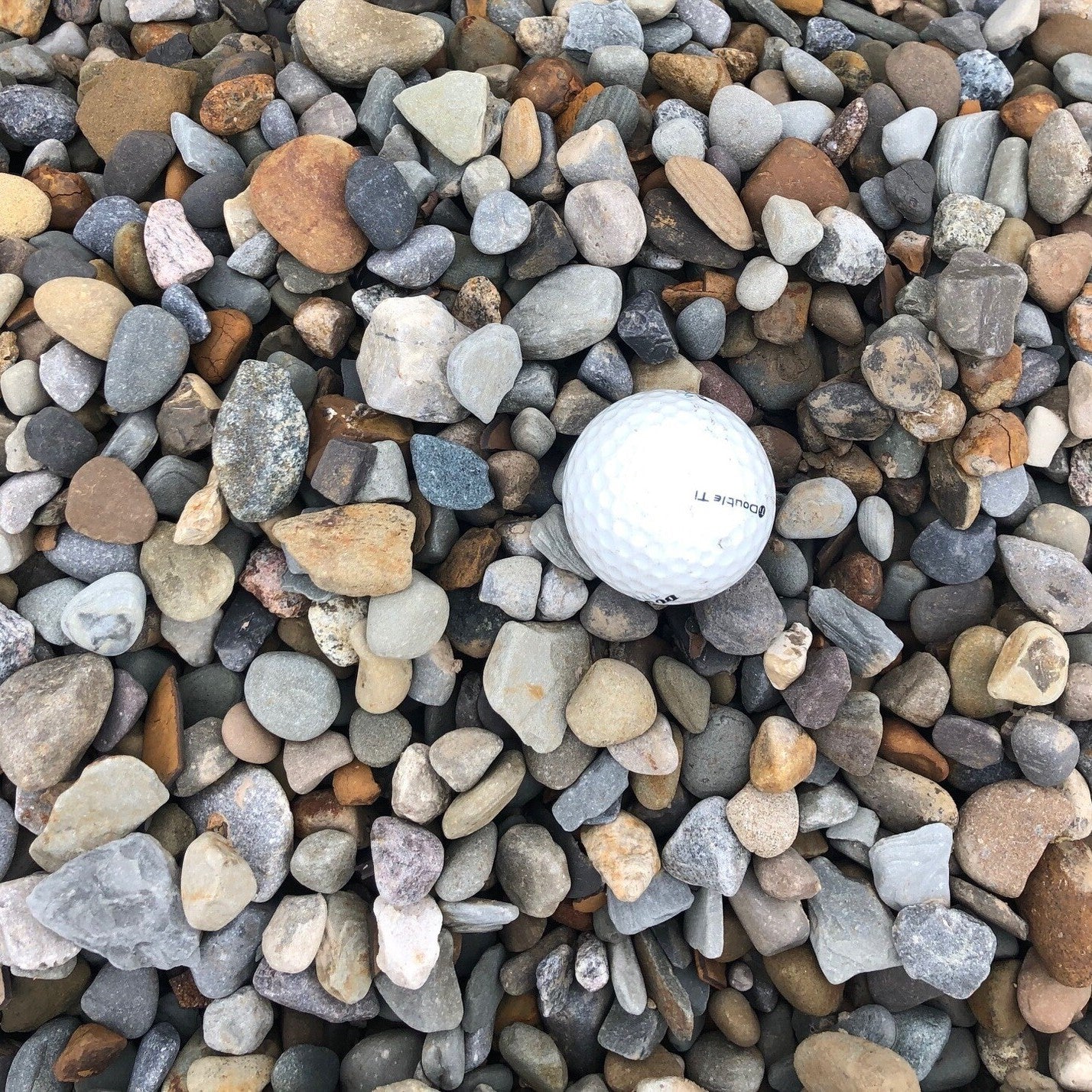

The driver nailed it on putting the gravel I ordered in front of my trailer and between the sidewalk. Very satisfied with how my flowerbeds look now.
About this stone
Number 57 crushed stone, angular limestone graded to about three quarters of an inch. The standard driveway, base and drainage gravel, it locks together under traffic and drains fast.
The driver nailed it on putting the gravel I ordered in front of my trailer and between the sidewalk. Very satisfied with how my flowerbeds look now.
Tell us what you're looking for
Thanks! We received your request.
Something went wrong. Please try again.
How Much Material Do I Need?
How Much Material Do I Need?
Two to three inches is standard for decorative stone beds and pathways, while driveways and drainage trenches need four to six inches or more to function properly. Deeper is not always better with decorative rock, since anything past three inches simply hides in the bottom of the bed.
Use our free gravel calculator
What is a Yard?
What is a Yard?
FAQs
FAQs
Covington Gravel Delivery
Covington Gravel Delivery
Regular price
$133.00
per
Yard
Regular price
Sale price
$133.00
Unit price
per
Shipping calculated at checkout.
Minimum of 3 Yard
Couldn't load pickup availability
Not currently available
We can't take orders for this right now. Tell us what you need and we'll get back to you.
Hand-picked local yards
4,000+ regional deliveries
Dedicated support
Why order through Mulch Mound
The best local , without the guesswork.
We hand-pick and partner with the best yards in your region, keep only the ones our buyers rate well, and back each load with our guarantee.
Mulch Mound Guarantee
If your isn't the quantity or quality you ordered, we'll make it right.
About this stone
Number 57 crushed stone, angular limestone graded to about three quarters of an inch. The standard driveway, base and drainage gravel, it locks together under traffic and drains fast.
The driver nailed it on putting the gravel I ordered in front of my trailer and between the sidewalk. Very satisfied with how my flowerbeds look now.
How Much Material Do I Need?
How Much Material Do I Need?
Two to three inches is standard for decorative stone beds and pathways, while driveways and drainage trenches need four to six inches or more to function properly. Deeper is not always better with decorative rock, since anything past three inches simply hides in the bottom of the bed.
Use our free gravel calculator
What is a Yard?
What is a Yard?
FAQs
FAQs
Tell us what you're looking for
Thanks! We received your request.
Something went wrong. Please try again.

How It Works
Getting started is easy — just follow these simple steps
1
Choose your stone
Make sure you adjust the quantity to your home's needs. You can use our calculator to estimate how much you'll need.
2
Select your delivery date
Select a delivery date you'd like for the product to be dropped off at your home
3
Sit back and wait
Sit back, wait, and let us work our magic to make sure the highest quality product is delivered to your driveway.

Placing an order online was so easy. Delivery was on time. When the driver realized we had a newly poured driveway they erred on the side of cautio...
Read full review
Placing an order online was so easy. Delivery was on time. When the driver realized we had a newly poured driveway they erred on the side of caution and opted not ti drive in it. The company even sent me a message explaining that call. Would recommend!

Online ordering was really simple and I liked the transparent pricing.
Need Help Calculating How Much Gravel You Need?
Use our NEW Trace from Satellite tool to get an estimate for your project based on an aerial view of your property
Try Our CalculatorMeasure the length and width of your area in feet and decide on depth before running the numbers, because stone gets heavy fast and overordering is expensive. Multiply length by width by depth in feet, then divide by 27 for cubic yards. For trenches, measure the trench length, width, and depth separately rather than treating it as a flat surface.
Complete Your Outdoor Stone Project
Pair your stone with filter fabric for any drainage work and with steel or paver edging to keep gravel from spreading into the lawn. A load of base rock under your decorative layer makes the finished surface far more stable in our wet soil.

Service area
Areas we deliver stone and gravel in Covington, Louisiana
Mulch Mound Pro Tip
Always separate stone from Covington silt loam with fabric. Our fine soil particles behave like liquid when saturated, and without a barrier they will pump up into a clean gravel layer during heavy rain until the stone is half buried in mud. Non woven filter fabric under drainage rock and woven geotextile under driveway base both prevent this. It is a small material cost that doubles or triples the working life of the installation.
Mulch Mound Pro Tip
Compact base rock in lifts, not all at once. Spread three to four inches, run a plate compactor or hand tamper over it, then add the next lift and repeat. On Covington's soft, moisture holding subgrade, a single thick uncompacted layer will settle unevenly through the first wet winter and leave you with ruts and low spots. Lightly dampening crushed limestone before compacting helps the fines bind and lock the surface tight.
Mulch Mound Pro Tip
Set your edging before the stone arrives. Gravel migrates, especially where 65 inches of annual rain sheets across a yard, and once it scatters into a St. Augustine lawn you will be picking rocks out with a rake for years. Steel edging, concrete curbing, or heavy paver borders all work. Install them at least an inch above your finished stone height so runoff has to lift over the barrier before it can carry material away.
The Unique Landscape of Covington
Stone earns its keep in Covington because water is the constant here, with 65 inches falling on ground that sits low and drains slowly. Gravel swales, French drain beds, and stone borders move that water off your lawn instead of letting it sit against foundations and root crowns. Unlike organic materials, stone does not decompose in our warm, humid Zone 9a conditions, so it holds its shape year after year in high traffic and high water areas. It is also the practical choice for driveways, side yards, and drip lines under eaves where mulch would simply float away in a north shore downpour. Decorative stone reflects less moisture into shady, humid spots too, which helps reduce the mildew and fungal issues Covington gardeners fight all summer. For any spot where a material has to hold still and let water pass through, stone is the answer.