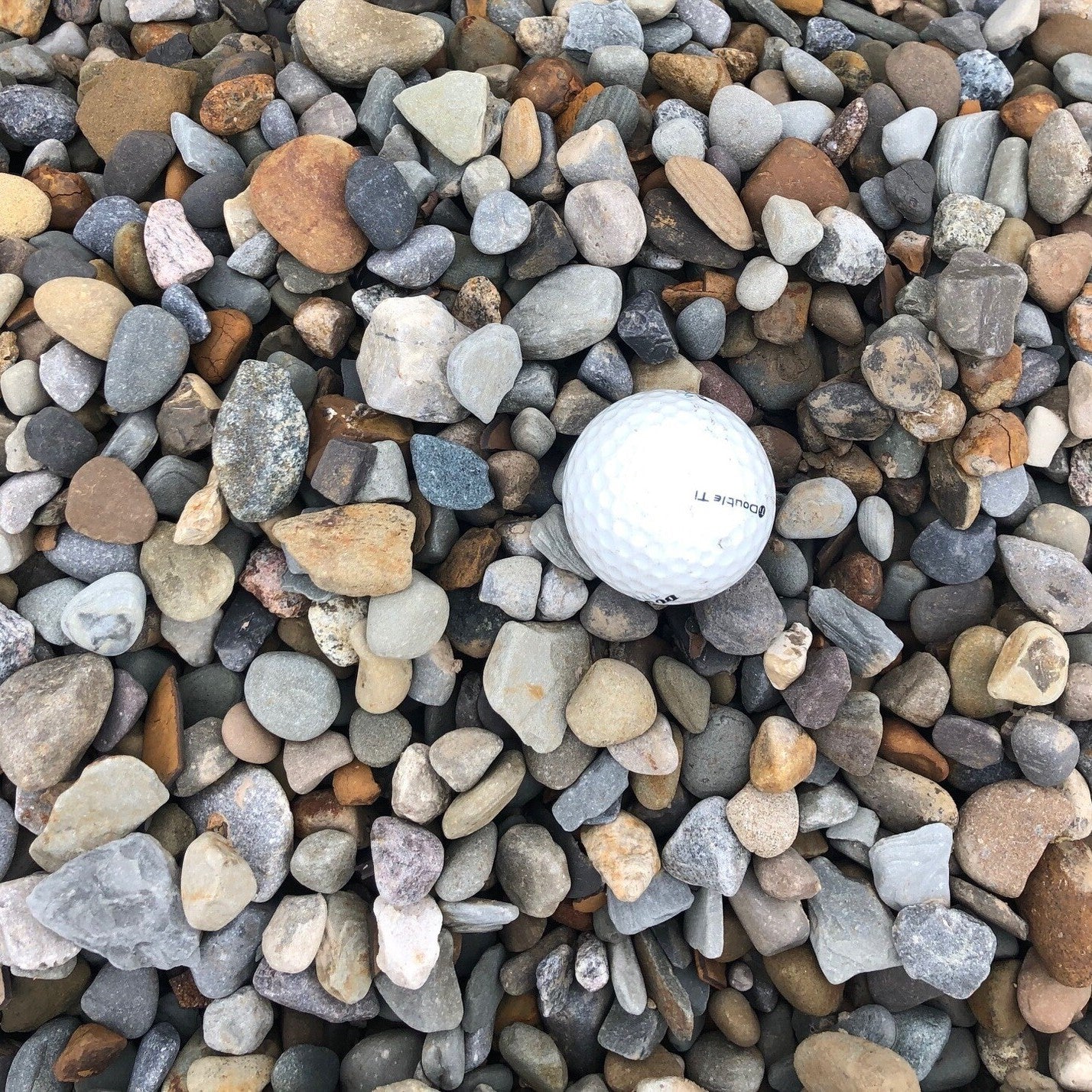
About this stone

#8 washed gravel: small angular crushed stone perfect for drainage, French drains, and concrete bases.

I used Mulch Mound to have 3 cubic yards of garden soil delivered. The process was easy and I love that I didn't have to call anyone. I placed my order online, picked my delivery date, laid out my tarp and the dirt was delivered. My delivery had to be pushed back, but I was ke...

Use two to three inches of decorative stone for beds and walkways, and four to six inches of compacted base rock under driveways or patios. Drainage trenches should be filled to within a few inches of grade with washed gravel.
Use our free stone calculator

A yard is approximately 27 cubic feet. As a general guideline, one yard of material can cover an area of about 100-160 square feet at a 2-3 inch depth.

Durant Stone Delivery

Durant Stone Delivery

4.7
137 reviews
Regular price $101.00 per Yard
Regular price Sale price $101.00
Sale Sold out
Shipping calculated at checkout.
Type
Size
Hand-picked local yards
4,000+ regional deliveries
Dedicated support
Why order through Mulch Mound

The best local , without the guesswork.

We hand-pick and partner with the best yards in your region, keep only the ones our buyers rate well, and back each load with our guarantee.

Mulch Mound Guarantee

If your isn't the quantity or quality you ordered, we'll make it right.

About this stone

#8 washed gravel: small angular crushed stone perfect for drainage, French drains, and concrete bases.

I used Mulch Mound to have 3 cubic yards of garden soil delivered. The process was easy and I love that I didn't have to call anyone. I placed my order online, picked my delivery date, laid out my tarp and the dirt was delivered. My delivery had to be pushed back, but I was ke...

Use two to three inches of decorative stone for beds and walkways, and four to six inches of compacted base rock under driveways or patios. Drainage trenches should be filled to within a few inches of grade with washed gravel.
Use our free stone calculator

A yard is approximately 27 cubic feet. As a general guideline, one yard of material can cover an area of about 100-160 square feet at a 2-3 inch depth.

View full details

How It Works

Getting started is easy — just follow these simple steps

1

Choose your stone

Make sure you adjust the quantity to your home's needs. You can use our calculator to estimate how much you'll need.

2

Select your delivery date

Select a delivery date you'd like for the product to be dropped off at your home

3

Sit back and wait

Sit back, wait, and let us work our magic to make sure the highest quality product is delivered to your driveway.

From The Mouths of Durant Folks

4.7
out of 5 based on 137 reviews
Google Reviews

Need Help Calculating How Much Stone & Gravel You Need?

Use our NEW Trace from Satellite tool to get an estimate for your project based on an aerial view of your property

Try Our Calculator
📍

Measure length and width of the area and pick your depth, then remember stone is sold and priced by weight as often as by volume. Two inches is standard for decorative beds and pathways, while driveways and drainage trenches need four inches or more. Round up on tonnage, because a partial short load costs more per unit than ordering right the first time.

Complete Your Outdoor Stone Project

Add woven landscape fabric and steel or paver edging so your stone stays where you put it through Durant's spring storms. Larger accent boulders finish dry creek beds and give a natural look that a uniform gravel field cannot.

Map of the stone delivery area around Durant, Oklahoma

Service area

Areas we deliver stone and gravel in Durant, Oklahoma

Mulch Mound Pro Tip

Grade before you gravel. Durant's gentle terrain and clay loam mean water spreads out and sits rather than running off, so any stone area needs at least a slight fall away from your foundation. Aim for a quarter inch of drop per foot over the first ten feet. Getting that slope right before a single rock is placed prevents the standing water and mosquito problems that plague flat rock beds here.

Mulch Mound Pro Tip

Compact base rock in layers, not all at once. On our clay loam, dumping six inches of base and running a plate compactor over the top only firms up the first two inches. Spread it in two or three inch lifts, wet each lift lightly, and compact before adding the next. A Durant driveway built this way will hold through years of freeze thaw cycles and spring saturation instead of rutting the first wet season.

Mulch Mound Pro Tip

Choose stone color with Durant sun in mind. Light colored gravels like white marble chip reflect intense summer glare back at windows and can be uncomfortable on a south facing patio, and they show the reddish dust our soils kick up. Tan, brown, and mixed river rock hide that staining and stay visually softer. Darker stone looks sharp but absorbs serious heat, so keep it away from bare feet and tender plantings.

The Unique Landscape of Durant

Stone earns its place in Durant landscapes because it does not decompose in our humid zone 8a summers the way organic material does. With 45 inches of rain a year concentrated in heavy events, gravel swales, dry creek beds, and rock lined downspout runs are some of the most effective drainage tools available on clay loam lots. River rock and decorative gravel also solve the recurring problem of beds on the south and west sides of Durant homes, where reflected heat cooks mulch and plants alike. Because Durant sits at 669 feet with fairly gentle terrain, water tends to spread and pool rather than run off quickly, which makes properly built gravel drainage even more valuable. Stone is also the low maintenance answer for narrow side yards, around AC units, and along fence lines where mowing is a nuisance. Once it is installed correctly over fabric, it holds for years.

Frequently Asked Questions

Click a question to see the answer

Answer

What size gravel works best for a Durant driveway?

A two layer approach holds up best on our clay loam. Start with four to six inches of crushed base rock with fines so it locks together and compacts, then top with an inch or two of clean three quarter inch gravel. Skipping the base layer is why so many local gravel drives develop ruts and potholes after a wet spring.

Answer

Will rock mulch make my beds too hot for plants?

It can on south and west exposures, where Durant afternoon temperatures regularly exceed 95 degrees in July and August. Stone absorbs and radiates that heat, so pair it with tough plants like yucca, agave, ornamental grasses, and salvia rather than hydrangeas or hostas. On the north or east side of a house, rock beds stay comfortable for a much wider plant list.

Answer

How do I keep weeds from growing up through my gravel?

Install a quality woven landscape fabric underneath, not the thin plastic sheeting sold in rolls at big box stores. Even then, Durant's long growing season means windblown seed will eventually germinate in the dust that collects between stones. A spring preemergent application in late February plus a fall blowing out of leaf debris keeps it manageable.

Answer

Can stone fix the soggy spot in my backyard?

Often yes, if you build it properly. On Durant clay loam a French drain trench filled with washed drainage gravel around a perforated pipe will move water to a lower outlet, and a surface dry creek bed handles sheet flow during heavy storms. Simply dumping rock on a wet area without a place for the water to go will not solve anything.

Answer

How much does a yard of stone weigh, and how much do I need?

Most gravel and river rock runs about 2,700 to 3,000 pounds per cubic yard, roughly one and a half tons. One yard covers about 160 square feet at two inches deep. A typical Durant side yard measuring 8 by 40 feet is 320 square feet, so around two yards at that depth.

Answer

Does stone work as well as mulch around trees?

Not really. Stone does not break down and feed Durant's clay loam the way hardwood mulch does, and the extra heat it holds is hard on shallow tree roots during our summers. Use rock for drainage, pathways, and utility areas, and save organic mulch for anywhere you want plants to thrive long term.

Answer

Will river rock float away in a heavy storm?

River rock stays put far better than mulch, but in a fast moving channel smaller sizes can shift. For dry creek beds and swales handling Durant's heavier downpours, use a mix of three to five inch cobble with some larger accent boulders to break up flow. Set your fabric well and overlap seams by at least a foot.