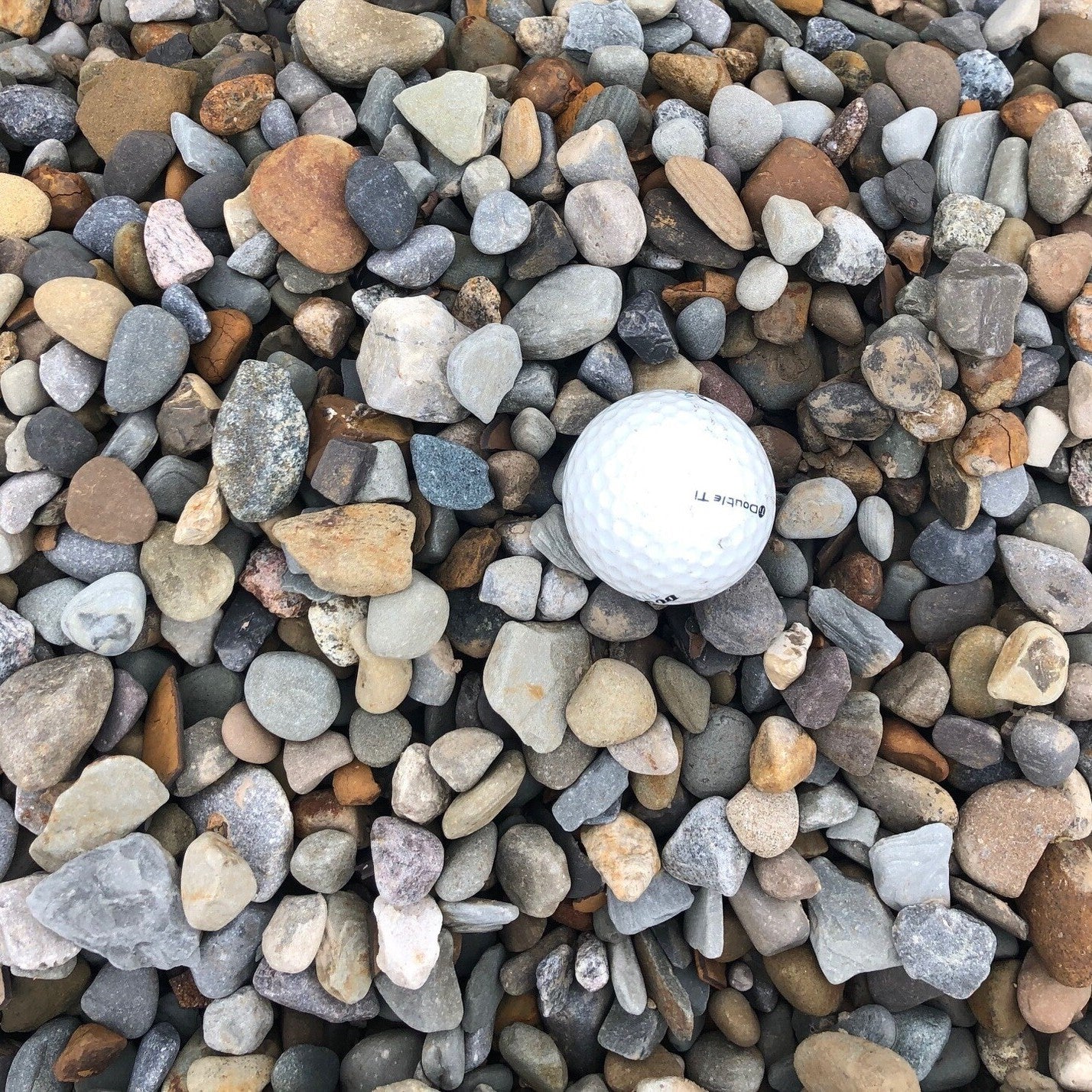
Number 57 crushed stone, angular limestone graded to about three quarters of an inch. The standard driveway, base and drainage gravel, it locks together under traffic and drains fast.
My experience with Mulch Mound was great and super easy. I ordered two yards of screened topsoil and was able to get it delivered within 2 days. They came in my requested time frame (afternoon) and dropped it off where I asked on my driveway. The topsoil was exactly what was a...
Tell us what you're looking for
Thanks! We received your request.
Something went wrong. Please try again.
How Much Material Do I Need?
Use 3 inches for decorative rock beds and drip strips, 4 inches of crushed minus for paths and driveways, and 4 to 6 inches of washed rock in drainage swales. Larger stone sizes need proportionally more depth to fully hide the surface below.
Use our free gravel calculator
What is a Yard?
A yard is approximately 27 cubic feet. As a general guideline, one yard of material can cover an area of about 100-160 square feet at a 2-3 inch depth.
We can't take orders for this right now. Tell us what you need and we'll get back to you.
What do you need?
Thanks! We received your request.
Something went wrong. Please try again.
Hand-picked local yards
4,000+ regional deliveries
Dedicated support
Why order through Mulch Mound
The best local , without the guesswork.
We hand-pick and partner with the best yards in your region, keep only the ones our buyers rate well, and back each load with our guarantee.
Mulch Mound Guarantee
If your isn't the quantity or quality you ordered, we'll make it right.
About this stone
Number 57 crushed stone, angular limestone graded to about three quarters of an inch. The standard driveway, base and drainage gravel, it locks together under traffic and drains fast.
My experience with Mulch Mound was great and super easy. I ordered two yards of screened topsoil and was able to get it delivered within 2 days. They came in my requested time frame (afternoon) and dropped it off where I asked on my driveway. The topsoil was exactly what was a...
How Much Material Do I Need?
Use 3 inches for decorative rock beds and drip strips, 4 inches of crushed minus for paths and driveways, and 4 to 6 inches of washed rock in drainage swales. Larger stone sizes need proportionally more depth to fully hide the surface below.
Use our free gravel calculator
What is a Yard?
A yard is approximately 27 cubic feet. As a general guideline, one yard of material can cover an area of about 100-160 square feet at a 2-3 inch depth.
My experience with Mulch Mound was great and super easy. I ordered two yards of screened topsoil and was able to get it delivered within 2 days. Th...
Read full review
My experience with Mulch Mound was great and super easy. I ordered two yards of screened topsoil and was able to get it delivered within 2 days. They came in my requested time frame (afternoon) and dropped it off where I asked on my driveway. The topsoil was exactly what was advertised, clean with no rocks or other debris. The price was reasonable. I plan to use them again in a couple weeks to order compost for my garden beds.
Measure length and width in feet for each area, and for a curved dry creek bed take an average width along its run. Enter your target depth, remembering that 3 inches is standard for decorative beds and 4 inches for drives and paths. Because stone is sold by weight as well as volume, confirm the coverage figure for the specific size you choose.
Complete Your Outdoor Stone Project
Add steel or composite edging to keep stone out of the lawn, and pick up landscape fabric plus a few yards of soil or mulch for the planted zones that sit alongside your rock areas.
Compact your base in lifts. Ellensburg silt loam is fine textured and will settle unevenly under a heavy stone path if you place it all at once. Spread 2 inches, wet it lightly, run a plate compactor, then repeat until you reach full depth. The extra hour saves you from the dips and low spots that collect water and ice through our freeze thaw winters.
Mulch Mound Pro Tip
Set your stone surface slightly below the surrounding grade and finished edging. In a valley this windy, rock that sits proud of the edge migrates into lawns and onto sidewalks where it becomes a mower hazard. A recessed finish also catches the runoff from summer downpours instead of letting it sheet across compacted silt loam and carve channels through your beds.
Mulch Mound Pro Tip
Use light colored stone thoughtfully. Pale rock reflects a great deal of our intense high desert sunlight back onto siding, windows, and nearby plants, which raises temperatures against the house during 90 degree stretches. Darker basalt and river rock absorb more heat but radiate it back at night, which can actually help tender plantings through a cold snap near the September 25 first frost. Choose by exposure and location.
The Unique Landscape of Ellensburg
Stone earns its keep in Ellensburg because our climate punishes organic materials in the open. With persistent valley wind, intense high desert sun at 1565 feet, and only about 9 inches of annual rainfall, gravel and decorative rock stay put and stay looking sharp where bark would fade and scatter. Stone is also the practical answer for the drainage side of silt loam, which sheds water off its crusted surface during a sudden summer thunderstorm or a February thaw. Drip strips, dry creek beds, and gravel paths give that runoff somewhere to go instead of pooling against a foundation. And because the material never needs replacing, it is a one time investment for driveways, xeriscape zones, and the fire wise perimeter many Kittitas County properties now want.
Frequently Asked Questions
Click a question to see the answer
Answer
What size gravel holds up best on an Ellensburg driveway?
A crushed 5/8 minus is the local workhorse because the fines lock together and compact into a firm surface over silt loam. Round pea gravel and washed rock will not knit and simply rut and migrate. Plan on 4 inches over a compacted base for a residential drive, and expect to add a thin refresher layer every few years as the surface wears and the wind takes the loose fines.
Answer
Does rock mulch really work in our climate, or does it cook plants?
It works well for the right plants. Stone absorbs and radiates heat, which is a genuine benefit for lavender, sedum, ornamental grasses, and other xeric plants that thrive in the Kittitas Valley. It is a poor choice around hydrangeas, ferns, or anything with high water needs, since the extra heat load compounds our already dry conditions. Match the mulch to the plant palette rather than covering the whole yard.
Answer
Should I put fabric under stone in a landscape bed?
For a purely decorative bed or a drip strip, yes, quality woven fabric slows the movement of stone down into silt loam. In planted beds it becomes a maintenance problem within a few years, because dust blown in on the valley wind builds a thin soil layer on top of the fabric and weeds like cheatgrass germinate right in it. A deeper stone layer of 3 inches often outperforms a thin layer over fabric.
Answer
Can I install stone in the winter here?
Stone is one of the few materials you can install nearly year round in Ellensburg, since there is no planting or root establishment to worry about. The limitation is the ground itself. Once the surface freezes after the September 25 first frost period gives way to real winter, you cannot excavate or compact a base properly. Deliveries are fine in cold weather as long as your drop site is accessible and not a mud pit.
Answer
How do I keep my rock beds from filling with dirt and weeds?
In a dusty, windy valley this is the main maintenance task. Blow or rake debris out of the stone each fall and again in spring before seeds germinate, keep the layer at least 3 inches deep so wind blown silt has to travel farther before it forms a seed bed, and use solid edging to stop soil from washing in from adjacent lawn. Spot treating cheatgrass early in spring is far easier than pulling it in June.
Answer
What is the best stone for a dry creek bed or drainage swale?
Use a mix of sizes. A base of 1 to 3 inch washed rock with larger 4 to 8 inch cobble set as accents handles the fast, short duration flows we get from summer thunderstorms and spring snowmelt off the surrounding hills. Washed material matters because fines would clog the voids and defeat the drainage purpose. Line the swale with fabric first so it does not sink into the silt loam below.
Answer
How much does a yard of stone weigh, and can my driveway handle it?
Most crushed and washed landscape rock runs about 2500 to 2900 pounds per cubic yard, roughly twice the weight of a yard of mulch. Older asphalt driveways in Ellensburg can soften on a 95 degree July afternoon, so we often recommend a morning delivery in midsummer or a drop on a gravel pad. Let us know your surface and we will plan accordingly.