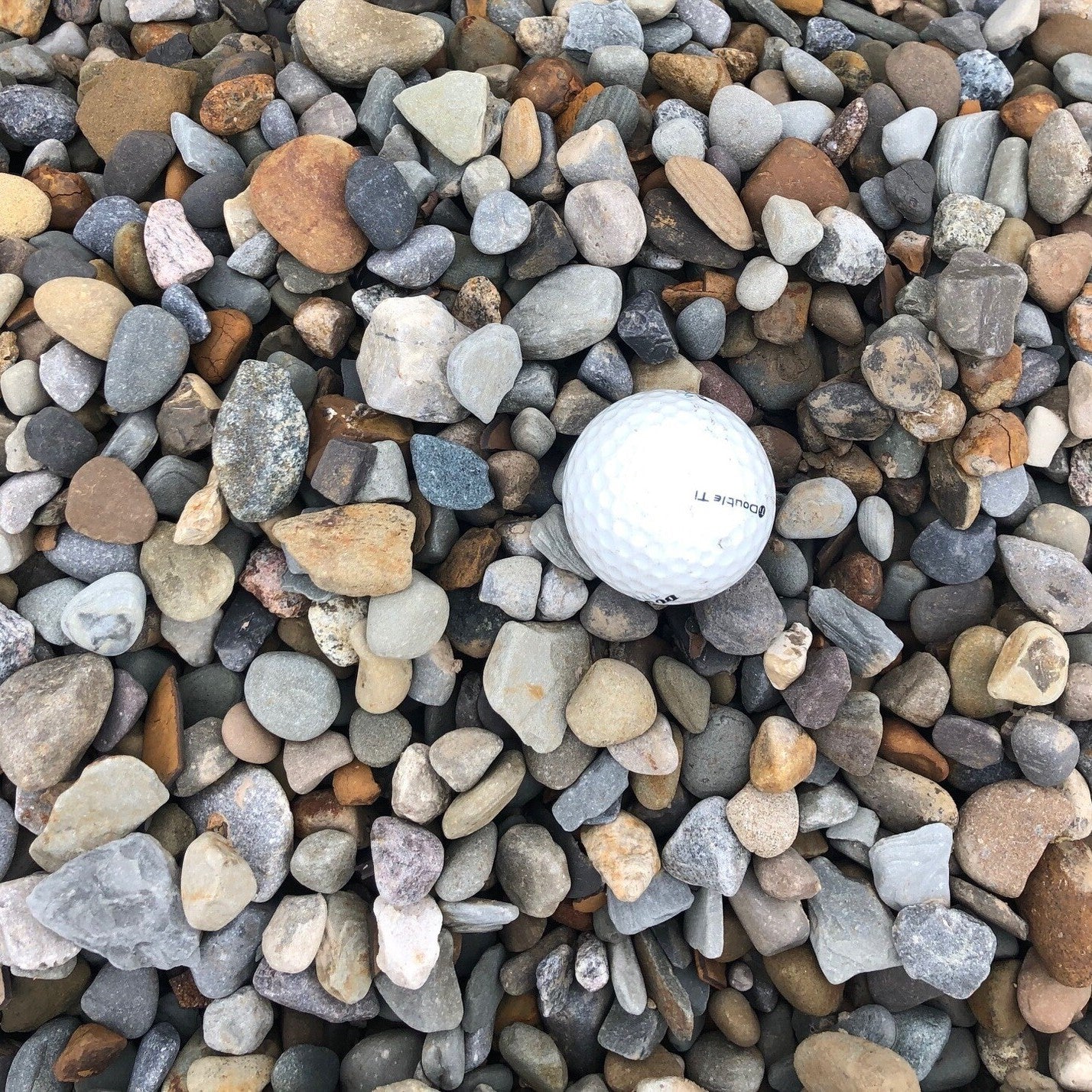
Number 57 crushed stone, angular limestone graded to about three quarters of an inch. The standard driveway, base and drainage gravel, it locks together under traffic and drains fast.
My experience with Mulch Mound was great and super easy. I ordered two yards of screened topsoil and was able to get it delivered within 2 days. They came in my requested time frame (afternoon) and dropped it off where I asked on my driveway. The topsoil was exactly what was a...
Tell us what you're looking for
Thanks! We received your request.
Something went wrong. Please try again.
How Much Material Do I Need?
For decorative ground cover and pathway applications, two to three inches of stone depth provides good coverage, weed suppression, and a stable walking surface in Florence's wet conditions. For drainage applications like French drains or swales, a minimum of six inches of clean aggregate is needed to move the volume of water that Florence rainstorms generate.
Use our free gravel calculator
What is a Yard?
A yard is approximately 27 cubic feet. As a general guideline, one yard of material can cover an area of about 100-160 square feet at a 2-3 inch depth.
We can't take orders for this right now. Tell us what you need and we'll get back to you.
What do you need?
Thanks! We received your request.
Something went wrong. Please try again.
Hand-picked local yards
4,000+ regional deliveries
Dedicated support
Why order through Mulch Mound
The best local , without the guesswork.
We hand-pick and partner with the best yards in your region, keep only the ones our buyers rate well, and back each load with our guarantee.
Mulch Mound Guarantee
If your isn't the quantity or quality you ordered, we'll make it right.
About this stone
Number 57 crushed stone, angular limestone graded to about three quarters of an inch. The standard driveway, base and drainage gravel, it locks together under traffic and drains fast.
My experience with Mulch Mound was great and super easy. I ordered two yards of screened topsoil and was able to get it delivered within 2 days. They came in my requested time frame (afternoon) and dropped it off where I asked on my driveway. The topsoil was exactly what was a...
How Much Material Do I Need?
For decorative ground cover and pathway applications, two to three inches of stone depth provides good coverage, weed suppression, and a stable walking surface in Florence's wet conditions. For drainage applications like French drains or swales, a minimum of six inches of clean aggregate is needed to move the volume of water that Florence rainstorms generate.
Use our free gravel calculator
What is a Yard?
A yard is approximately 27 cubic feet. As a general guideline, one yard of material can cover an area of about 100-160 square feet at a 2-3 inch depth.
My experience with Mulch Mound was great and super easy. I ordered two yards of screened topsoil and was able to get it delivered within 2 days. Th...
Read full review
My experience with Mulch Mound was great and super easy. I ordered two yards of screened topsoil and was able to get it delivered within 2 days. They came in my requested time frame (afternoon) and dropped it off where I asked on my driveway. The topsoil was exactly what was advertised, clean with no rocks or other debris. The price was reasonable. I plan to use them again in a couple weeks to order compost for my garden beds.
Really appreciate the care and follow thru that this company had with our order. A hiccup came up but they were quick to respond and address all co...
Read full review
Really appreciate the care and follow thru that this company had with our order. A hiccup came up but they were quick to respond and address all concerns, which made our garden day a success! Thank you for your prompt care.
Calculate the square footage of your project area and multiply by your intended depth in inches, then divide by 324 to get cubic yards of stone needed. Stone is denser than mulch or soil so a little goes further by volume, but many Florence homeowners underestimate how much weight and volume even a modest project requires. For drainage swales and creek beds, measure the full length and average width of the channel rather than just the visible surface area since depth adds significant volume.
Complete Your Outdoor Stone Project
Pairing bulk stone with a layer of quality landscape fabric underneath prevents Florence silt loam from working up into your gravel over time and extends the life of your installation significantly. Adding a topsoil or garden mix to adjacent planting beds while you have bulk materials on site is a practical way to complete multiple landscape improvements in a single project.
Florence homeowners dealing with foundation drainage issues should consider a gravel border around the perimeter of their home before investing in more complex drainage solutions. A twelve to eighteen inch band of clean washed gravel sloped away from the foundation moves water away from the structure efficiently and is one of the most cost-effective improvements available. This approach takes advantage of Florence's existing soil drainage patterns by giving surface water a clear path away from the foundation instead of letting it pool against the silt loam that surrounds most homes.
Mulch Mound Pro Tip
If you are installing stone in a Florence yard that has existing silt loam soil, always use landscape fabric as a separation layer between the native soil and your aggregate. Florence's rainfall is intense enough to work fine silt particles upward into gravel layers over two to three seasons, which degrades drainage performance and muddies the appearance of decorative stone. A professional-grade woven landscape fabric allows water to pass through while keeping soil and stone cleanly separated for years.
Mulch Mound Pro Tip
Consider the color temperature of the stone you choose for Florence landscaping and how it will look through all four of your mild but distinct seasons. Light-colored limestone and white river rock look striking against the green foliage of Florence's long growing season but can fade visually in winter when the landscape goes bare. Warmer buff and brown toned stones complement the natural color palette of North Alabama hardwood trees through fall and look equally attractive year-round in a Florence yard.
The Unique Landscape of Florence
Landscape stone is one of the most practical and durable materials Florence homeowners can invest in, particularly given the city's tendency toward heavy rain, sloped terrain, and erosion-prone silt loam soil. River rock and gravel serve as excellent drainage solutions in areas where standing water accumulates after Florence's frequent rainstorms, moving water away from foundations and plant beds efficiently. Crushed stone pathways handle the combination of heavy foot traffic and muddy conditions that Florence's wet springs create far better than bare soil or organic mulch alternatives. Decorative stone also adds long-term visual structure to landscapes that hold up through the full zone 8a growing season without fading, compressing, or requiring replacement the way organic materials do. Because Florence experiences regular freeze-thaw cycles in its mild winters, stone installations remain stable through temperature changes that can heave other materials out of position. For homeowners managing the dual challenges of slope erosion and heavy rainfall, properly installed stone is often the most reliable long-term solution available.
Frequently Asked Questions
Click a question to see the answer
Answer
What type of gravel works best for a drainage swale in a Florence yard that floods after big storms?
For drainage swales in Florence, a clean washed river gravel in the half-inch to one-inch size range is ideal because it allows water to move freely through the aggregate without clogging from fine particles. Avoid pea gravel in high-flow swales because the smaller size can shift significantly under the water volume generated by Florence's heavy rain events. Line the swale with landscape fabric before filling with gravel to prevent the surrounding silt loam soil from migrating into the stone over time, which would reduce drainage capacity.
Answer
Will landscape gravel wash away in my sloped Florence backyard during heavy rain?
Smaller, rounder gravel like pea gravel does migrate on slopes during heavy Florence rainstorms. For sloped areas, angular crushed stone in the three-quarter to one-inch range is a far better choice because the irregular edges lock together and resist movement. Installing a border of edging at the downhill edge of any gravel area also catches stone that does shift and keeps it from spreading onto lawn or hardscape areas.
Answer
How deep should I lay gravel for a backyard pathway in Florence that gets a lot of rain and foot traffic?
For a pathway in Florence that handles regular foot traffic and frequent rainfall, a three to four inch compacted gravel base is the minimum you should install. Start with a layer of compacted crushed stone as the base, which provides stability and drainage, and then top with a finer decorative gravel if you prefer the look. Skimping on depth in Florence's wet climate leads to muddy, rutted paths because the stone layer is not thick enough to stay above the softened silt loam soil beneath it.
Answer
Is crushed limestone or river rock better for a dry creek bed in my Florence landscape?
River rock is almost always the better choice for decorative dry creek beds in Florence because its smooth rounded edges look naturalistic and it handles the actual water flow that Florence rainstorms send through these features. Crushed limestone works well as a base layer beneath the visible river rock since its angular texture compacts and stabilizes the bed floor. Combining both materials gives you a stable, functional drainage feature that also looks like a natural extension of the Tennessee Valley landscape that surrounds Florence.
Answer
My Florence driveway gets muddy and soft in spring. Can bulk gravel fix that?
A muddy driveway in a Florence spring is almost always a silt loam drainage problem and bulk crushed stone is one of the most effective remedies available. Start by grading the driveway surface to create a slight crown so water sheds to the sides, then apply four to six inches of compacted crusher run or dense-graded aggregate. The angular particles in crusher run compact into a firm, interlocked surface that resists the softening that Florence silt loam is prone to during wet weather far better than round gravel or organic materials.
Answer
How do I keep landscape gravel from getting mixed into my lawn edges in a Florence yard?
Gravel migration into lawn edges is a common frustration in Florence where rain and mowing both push loose stone out of defined areas. Installing a solid edging barrier, whether metal, plastic, or concrete, at least four inches deep along every grass-gravel border prevents lateral migration effectively. On the gravel side, keeping stone depth at two to three inches rather than piling it high reduces the amount that escapes over or under the edging during heavy Florence rainstorms.
Answer
What size river rock is best for mulching around trees in a Florence yard?
River rock used as a mulch alternative around trees in Florence should be in the one to two inch size range, large enough to stay in place during rain events but not so large that it is difficult to spread and manage. Keep in mind that stone mulch absorbs heat in Florence's summer sun and radiates it back toward tree trunks and roots, which can stress some tree species during the hottest months of July and August. River rock works best around heat-tolerant ornamental trees and shrubs in Florence, and organic mulch is generally a better choice around large shade trees where root zone temperature management is more important.
Answer
Is crush and run the same as crusher run?
Crush and run and crusher run are the same product, a mix of crushed stone and stone dust that compacts into a firm base for driveways and walkways. For Florence properties dealing with sloped yards and heavy rain, our Crushed Stone #57 drains freely instead of holding water, making it the better choice for erosion control and drainage projects.