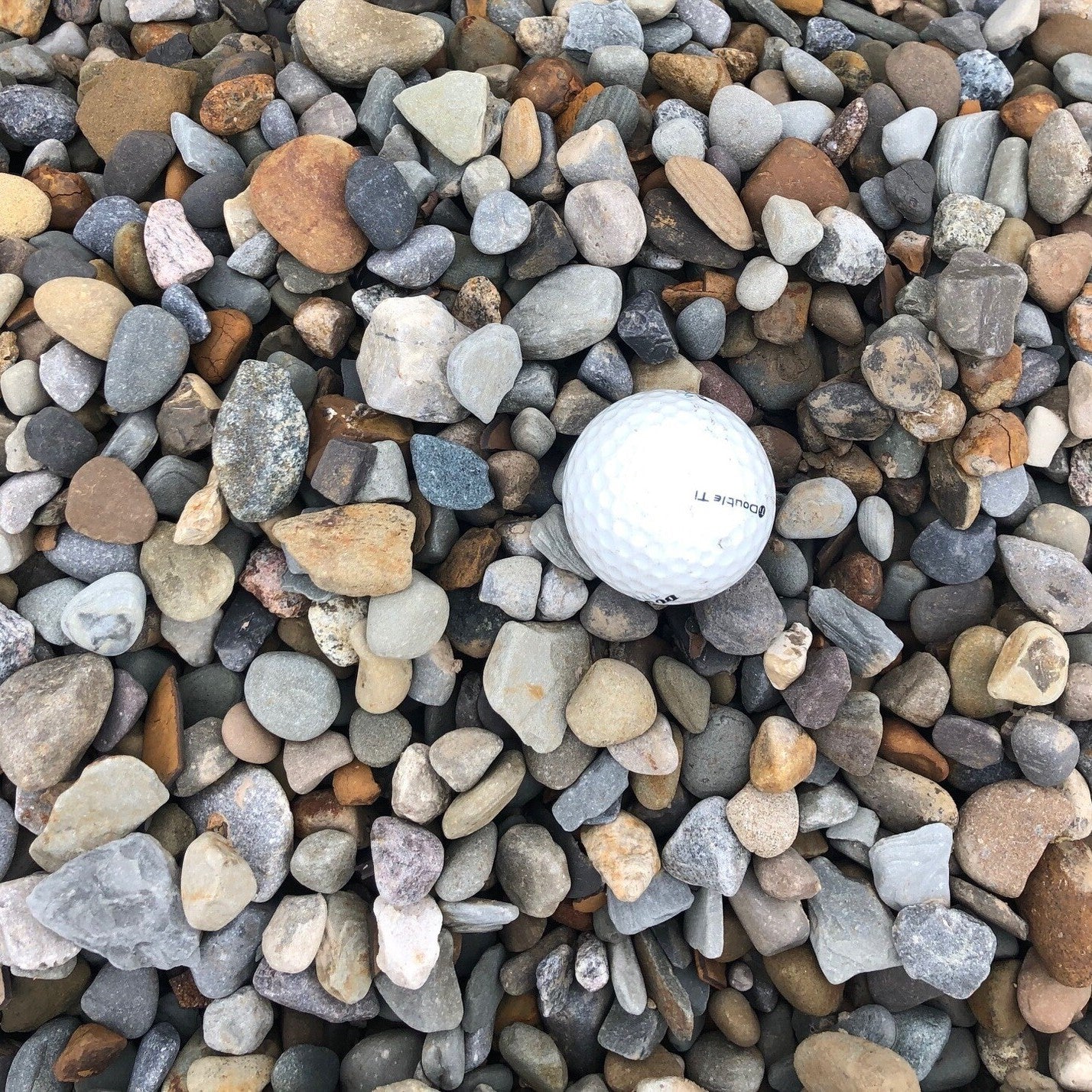
About this stone

#8 washed gravel: small angular crushed stone perfect for drainage, French drains, and concrete bases.

I used Mulch Mound to have 3 cubic yards of garden soil delivered. The process was easy and I love that I didn't have to call anyone. I placed my order online, picked my delivery date, laid out my tarp and the dirt was delivered. My delivery had to be pushed back, but I was ke...

Two inches of depth is the minimum for adequate coverage and weed suppression, and most Fortuna Foothills yards look best at 2 to 3 inches. One cubic yard covers about 160 square feet at 2 inches deep.
Use our free stone calculator

A yard is approximately 27 cubic feet. As a general guideline, one yard of material can cover an area of about 100-160 square feet at a 2-3 inch depth.

Fortuna Foothills Stone Delivery

Fortuna Foothills Stone Delivery

4.7
137 reviews
Regular price $101.00 per Yard
Regular price Sale price $101.00
Sale Sold out
Shipping calculated at checkout.
Type
Size
Hand-picked local yards
4,000+ regional deliveries
Dedicated support
Why order through Mulch Mound

The best local , without the guesswork.

We hand-pick and partner with the best yards in your region, keep only the ones our buyers rate well, and back each load with our guarantee.

Mulch Mound Guarantee

If your isn't the quantity or quality you ordered, we'll make it right.

About this stone

#8 washed gravel: small angular crushed stone perfect for drainage, French drains, and concrete bases.

I used Mulch Mound to have 3 cubic yards of garden soil delivered. The process was easy and I love that I didn't have to call anyone. I placed my order online, picked my delivery date, laid out my tarp and the dirt was delivered. My delivery had to be pushed back, but I was ke...

Two inches of depth is the minimum for adequate coverage and weed suppression, and most Fortuna Foothills yards look best at 2 to 3 inches. One cubic yard covers about 160 square feet at 2 inches deep.
Use our free stone calculator

A yard is approximately 27 cubic feet. As a general guideline, one yard of material can cover an area of about 100-160 square feet at a 2-3 inch depth.

View full details

How It Works

Getting started is easy — just follow these simple steps

1

Choose your stone

Make sure you adjust the quantity to your home's needs. You can use our calculator to estimate how much you'll need.

2

Select your delivery date

Select a delivery date you'd like for the product to be dropped off at your home

3

Sit back and wait

Sit back, wait, and let us work our magic to make sure the highest quality product is delivered to your driveway.

From The Mouths of Fortuna Foothills Folks

4.7
out of 5 based on 137 reviews
Google Reviews

Need Help Calculating How Much Stone & Gravel You Need?

Use our NEW Trace from Satellite tool to get an estimate for your project based on an aerial view of your property

Try Our Calculator
📍

Measure your area in feet and break irregular yards into simple rectangles and triangles rather than trying to estimate the whole shape at once. Subtract the square footage of planting beds, patios, and driveways so you are not paying for coverage you do not need. Stone is heavy, so ordering accurately matters more here than with lighter materials.

Complete Your Outdoor Stone Project

Pair your rock with steel or concrete edging to hold clean lines against sandy loam, and consider boulders or a few larger accent stones to break up the expanse. Mulch in the planting beds themselves keeps plant roots cooler than rock does.

Map of the stone delivery area around Fortuna Foothills, Arizona

Service area

Areas we deliver stone and gravel in Fortuna Foothills, Arizona

Mulch Mound Pro Tip

Set your rock depth by exposure and traffic, not by one number across the whole yard. Open sunny areas where weed seed lands need a full 3 inches to keep sunlight off the soil. Under a mesquite or palo verde canopy, 2 inches is plenty and the extra depth would just collect dropped leaves. Walkways get 2 inches of a finer material so they compact firm underfoot rather than shifting with every step.

Mulch Mound Pro Tip

Apply pre emergent twice a year, in late February and again in early September, timed just ahead of our two germination windows. Water it in right after application because Fortuna Foothills rainfall will not do it for you. This single habit does more to keep a rock yard clean than fabric ever will, and it targets the windblown seed that actually causes most of the weed pressure here.

Mulch Mound Pro Tip

Choose your rock color with the afternoon sun in mind. Dark basalt and charcoal tones look sharp in a photo but absorb serious heat and can push surface temperatures well past what is comfortable near a patio. Lighter tans, golds, and buff tones common to this part of the Yuma area reflect more, stay cooler, and hide the inevitable dust film far better between refreshes.

The Unique Landscape of Fortuna Foothills

Decorative rock is the dominant ground cover across Fortuna Foothills for good reason, since it handles 110 degree summers, monsoon downpours, and near total sun exposure without breaking down or needing replacement. With only 3 inches of annual rainfall there is no practical case for large turf areas, and stone gives you a finished, permanent surface that never needs water. It also handles the sudden runoff that comes with monsoon season, when a single August storm can drop an inch in under an hour and move unprotected sandy loam right off your property. Rock reflects heat rather than absorbing organic breakdown, so it stays stable in ways mulch cannot in this climate. From decomposed granite pathways to river rock in drainage swales to larger rip rap on slopes, stone is the backbone of a functional low water landscape here.

Frequently Asked Questions

Click a question to see the answer

Answer

What size rock is best for a full front yard here?

Half inch to three quarter inch screened rock is the Fortuna Foothills standard and works well for a reason. It is small enough to walk on and rake, large enough that it does not blow around in spring winds, and it locks together into a stable surface. Anything under a quarter inch tends to compact into a hardpan, and anything over an inch and a half is uncomfortable underfoot and traps windblown debris.

Answer

Does landscape rock make my yard hotter?

Rock does absorb and radiate heat, and a large expanse of it will raise the temperature immediately around your house. You can manage that by keeping rock lighter in color rather than dark, shading the west and south sides with trees or ramadas, and using mulched planting beds near windows and patios instead of wall to wall stone. A mix of rock and planted areas reads much cooler than an unbroken gravel field.

Answer

Do I need fabric underneath the rock?

It is a genuine tradeoff. Fabric slows weeds for the first few years, but in Fortuna Foothills the real weed source is windblown seed landing on top of the rock and germinating in accumulated dust after a monsoon. Fabric does nothing about that and eventually tears and surfaces looking ragged. Many local installers now skip fabric in planted areas and rely on adequate rock depth plus a pre emergent instead.

Answer

How do I keep rock from washing out during monsoon storms?

Monsoon runoff in the foothills moves fast because the ground is hard and dry when the storm hits. Use larger stone, one and a half inch or bigger, in any natural drainage path or swale, and set solid edging or a header at the low end of sloped areas. Small screened rock on a slope with concentrated flow will end up in the street after one good August storm.

Answer

How often does landscape rock need to be refreshed?

The rock itself lasts indefinitely, but expect to top dress every five to eight years. What happens in Fortuna Foothills is that windblown dust and fine sand fill the voids between stones and the surface gradually looks dull and grey. A fresh inch of the same material restores the color, or you can rake and rinse the existing rock if the fill is not too deep.

Answer

Can I put rock right up against my house foundation?

Yes, and it is actually the preferred approach here. A band of rock 18 to 24 inches wide along the stucco keeps organic material away from the slab, discourages termite activity, and gives water a clean path away from the foundation. Just keep the rock surface an inch or two below your weep screed so moisture is not wicking into the wall.

Answer

Will decomposed granite hold up as a driveway or path?

For walkways and casual paths it does very well in this dry climate, compacting into a firm surface that sheds water. For anything carrying vehicle traffic, use a stabilized DG with a binder or you will get ruts and washboarding. The bigger concern in Fortuna Foothills is monsoon runoff cutting channels through it, so crown the path slightly and edge it well.