About this sand

Washed and finely screened masonry sand for mortar, paver joints, and pool bases. Consistent grain, ready to screed.

This was the easiest process to purchase mulch! It arrived on time and the driver did an amazing job putting it exactly where I wanted it. I will be a return customer for sure.

One cubic yard of mason sand covers about 324 square feet at a 1 inch depth, so a typical patio or pool deck project needs less than you'd think. For mortar mixing or paver joint fill, order in smaller increments since a little goes a long way at 1 to 2 inches. Measure your square footage first, then work backward from the 324 square foot per yard figure at your planned depth.

A yard is approximately 27 cubic feet. As a general guideline, one yard of material can cover an area of about 100-160 square feet at a 2-3 inch depth.

Fulshear Sand Delivery

Fulshear Sand Delivery

4.7
137 reviews
Regular price $74.00 per Yard
Regular price Sale price $74.00
Sale Sold out
Shipping calculated at checkout.
Type
Size
Minimum of 3 Yard
Hand-picked local yards
4,000+ regional deliveries
Dedicated support
Why order through Mulch Mound

The best local sand, without the guesswork.

We hand-pick and partner with the best yards in your region, keep only the ones our buyers rate well, and back each load with our guarantee.

Mulch Mound Guarantee

If your sand isn't the quantity or quality you ordered, we'll make it right.

About this sand

Washed and finely screened masonry sand for mortar, paver joints, and pool bases. Consistent grain, ready to screed.

This was the easiest process to purchase mulch! It arrived on time and the driver did an amazing job putting it exactly where I wanted it. I will be a return customer for sure.

One cubic yard of mason sand covers about 324 square feet at a 1 inch depth, so a typical patio or pool deck project needs less than you'd think. For mortar mixing or paver joint fill, order in smaller increments since a little goes a long way at 1 to 2 inches. Measure your square footage first, then work backward from the 324 square foot per yard figure at your planned depth.

A yard is approximately 27 cubic feet. As a general guideline, one yard of material can cover an area of about 100-160 square feet at a 2-3 inch depth.

View full details

How It Works

Getting started is easy — just follow these simple steps

1

Choose your quantity

Adjust the quantity to match your project. One cubic yard covers about 100 to 160 square feet at a 2 to 3 inch depth.

2

Select your delivery date

Select a delivery date you'd like for the product to be dropped off at your home

3

Sit back and wait

Sit back, wait, and let us work our magic to make sure the highest quality product is delivered to your driveway.

From The Mouths of Fulshear Folks

4.7
out of 5 based on 137 reviews
Google Reviews

Complete Your Outdoor Project

Mason sand pairs naturally with pavers, natural stone, and brick for any project involving mortar or joint work. If you are building a paver patio, consider chip stone for the joints instead of sand, since it holds up better under Fulshear's seasonal rain without washing out. A base layer of crushed gravel underneath either option gives the whole assembly somewhere solid to sit.

Mulch Mound Pro Tip

Mason sand is finer and more uniform than concrete sand, which is exactly why it works for mortar but not for structural bedding. If you are setting pavers, know that many contractors in this area have moved away from sand joints entirely in favor of clean chip stone, which locks in place and resists the pumping and washout that sand joints can suffer during heavy rain events common along the Gulf Coast.

Mulch Mound Pro Tip

A common mistake is ordering mason sand for a paver base layer instead of joint fill. It is too fine to compact into a stable base and will shift under foot traffic or vehicle weight. Save it for mortar mixing and joint work only, and use a compactable base material like crushed gravel underneath any paver or stone installation for the structural layer that actually needs to hold weight.

Mulch Mound Pro Tip

Because Fulshear's clay loam holds water, stage your sand delivery close to your work area but on a tarp or plywood, not directly on bare soil, especially during the wetter months. This keeps the sand from picking up clay and staying workable for mortar mixing. Spring and fall are ideal windows here, with drier ground and mild temperatures that make mixing and setting easier before summer humidity sets in.

Working With Sand in Fulshear

Fulshear sits on clay loam, which drains slowly and holds water after the spring rains that build up before hardscape season. That makes a stable, well drained bedding layer matter more here, not less, whether you are setting pavers on a patio or mixing mortar for a stone veneer wall near the historical marker downtown. Mason sand does not compact the way base gravel does, so it is used for the fine joint fill and mortar work, not as a structural base over Fulshear's native soil. A lot of builders here are shifting paver joints to chip stone instead, since it locks in place and will not wash out or pump up through the joints during a heavy Gulf Coast downpour.

Masonry vs Fill Sand

Masonry sand is washed and finely screened, the right choice for mortar work, paver joints, and sandboxes. Fill sand is coarser and less processed, better suited to leveling, bedding pipe, and filling low spots.

Bedding and Leveling

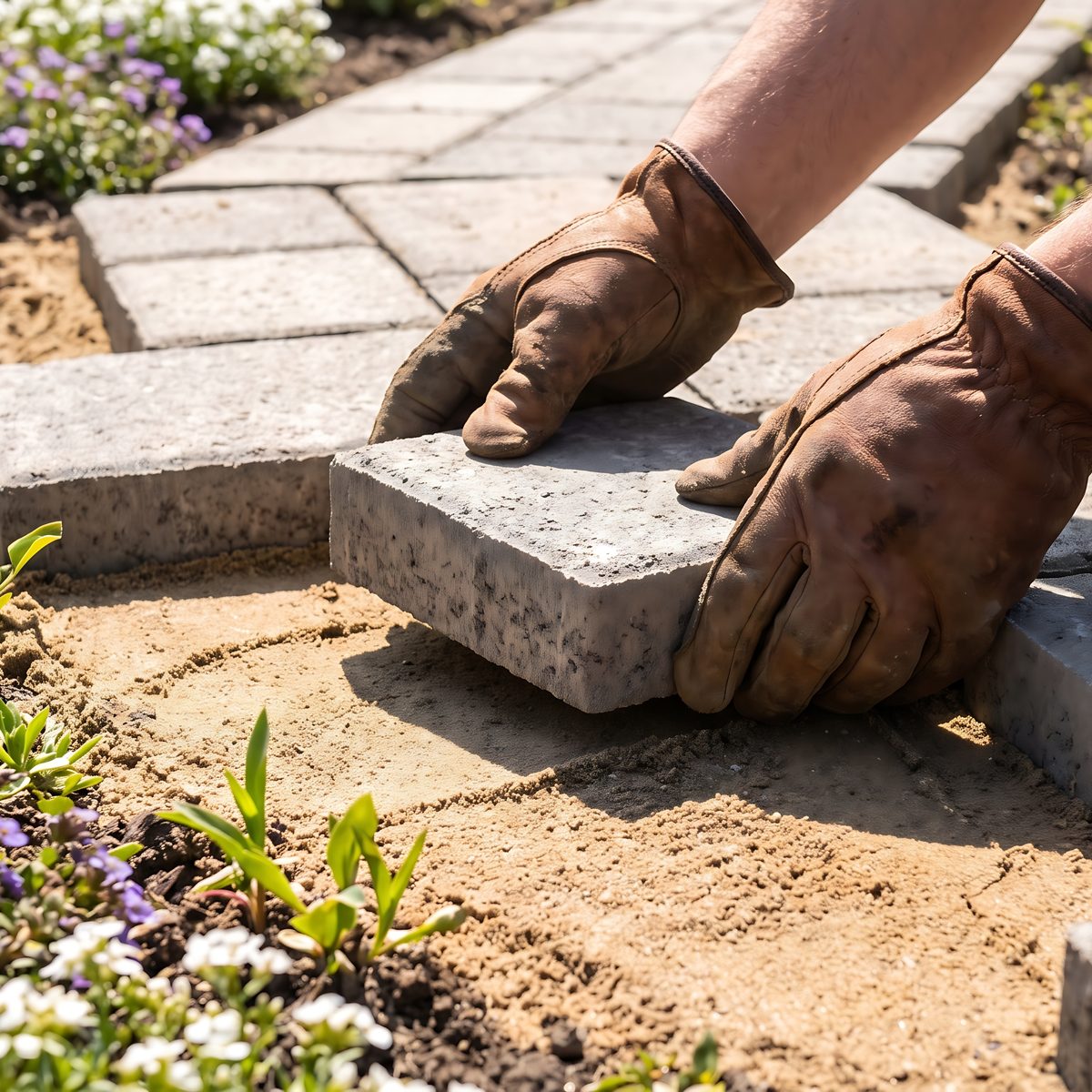
For pavers, screed a 1 inch sand bed over a compacted base rather than using sand to fix deep grade problems. A thin, even bed locks pavers in place. A thick one shifts underfoot.

Working With Moisture

Slightly damp sand spreads, screeds, and compacts far more easily than bone dry sand, which just flows back into your screed lines. Lightly wetting the pile before you work it saves real effort.

Frequently Asked Questions

Click a question to see the answer

Answer

Is mason sand the same as regular sand for my pool base?

It is close but finer than concrete sand, which is actually why it works well for pool bases where a smooth, uniform surface matters. It compacts less aggressively than coarser sands, so installers often screed it carefully to get a level cove and floor before the liner or plaster goes in.

Answer

How much sand do I need for a paver patio's joints?

Joint fill uses very little material since it is only filling gaps, not covering the whole surface. At a 1 inch depth reference, one cubic yard covers about 324 square feet, but for joints alone most residential patios need well under a quarter yard. Measure your total square footage to estimate more precisely.

Answer

What time of year is best to install pavers or do mortar work in Fulshear?

Spring through fall is peak hardscape season here, with the stretch between the last frost around March 30 and first frost around November 17 giving the widest workable window. Avoid mixing mortar in freezing temperatures, which are rare but do happen in a Fulshear winter, since cold weather affects cure time and workability.

Answer

Where will the sand be dropped off, and do I need to be home?

You choose the drop location at checkout, typically a driveway or curbside spot with clear access. You do not need to be home as long as the area is accessible and clear of vehicles or obstacles, but it helps to note any gate codes or narrow access points when scheduling.

Answer

Should I use mason sand or chip stone for my paver joints?

Chip stone is increasingly preferred for paver joints because it locks together and resists washout, while mason sand can pump out over time, especially with Fulshear's heavy seasonal rain. Mason sand still makes sense for mortar mixing and pool base work where its fine, uniform texture is actually the advantage.

More delivery around Fulshear, Texas

All Fulshear, Texas landscape supply