About this stone

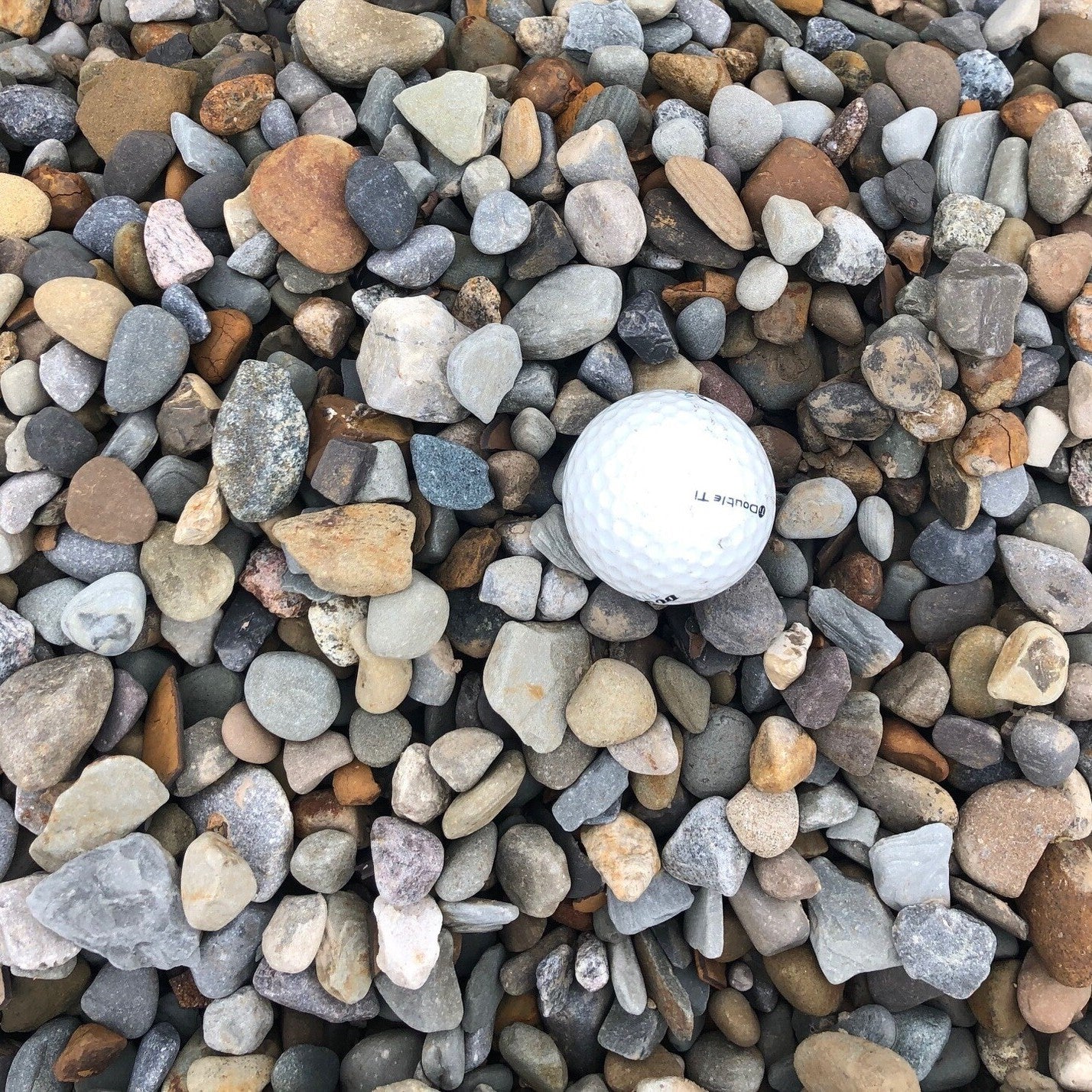
#8 washed gravel: small angular crushed stone perfect for drainage, French drains, and concrete bases.

Mulch Mound delivered a yard of pea gravel to us. Delivery was on time, driver was friendly and hit a bullseye on the “tarp target”. We used the pea gravel (which was diameter as specified) to fill several muskrat holes around our pond. I would definitely recommend Mulch Mo...

For decorative stone ground cover in ornamental beds, plan for 2 inches of depth to achieve good coverage and prevent the silt loam soil below from showing through over time. Drainage applications along foundations or in swales generally need 3 to 4 inches to function properly and resist being pushed around by the volume of water that moves through those areas during Galesburg spring rain events.
Use our free stone calculator

A yard is approximately 27 cubic feet. As a general guideline, one yard of material can cover an area of about 100-160 square feet at a 2-3 inch depth.

Galesburg Stone Delivery

Galesburg Stone Delivery

4.7
137 reviews
Regular price $87.00 per Yard
Regular price Sale price $87.00
Sale Sold out
Shipping calculated at checkout.
Type
Size
Hand-picked local yards
4,000+ regional deliveries
Dedicated support
Why order through Mulch Mound

The best local , without the guesswork.

We hand-pick and partner with the best yards in your region, keep only the ones our buyers rate well, and back each load with our guarantee.

Mulch Mound Guarantee

If your isn't the quantity or quality you ordered, we'll make it right.

About this stone

#8 washed gravel: small angular crushed stone perfect for drainage, French drains, and concrete bases.

Mulch Mound delivered a yard of pea gravel to us. Delivery was on time, driver was friendly and hit a bullseye on the “tarp target”. We used the pea gravel (which was diameter as specified) to fill several muskrat holes around our pond. I would definitely recommend Mulch Mo...

For decorative stone ground cover in ornamental beds, plan for 2 inches of depth to achieve good coverage and prevent the silt loam soil below from showing through over time. Drainage applications along foundations or in swales generally need 3 to 4 inches to function properly and resist being pushed around by the volume of water that moves through those areas during Galesburg spring rain events.
Use our free stone calculator

A yard is approximately 27 cubic feet. As a general guideline, one yard of material can cover an area of about 100-160 square feet at a 2-3 inch depth.

View full details

How It Works

Getting started is easy — just follow these simple steps

1

Choose your stone

Make sure you adjust the quantity to your home's needs. You can use our calculator to estimate how much you'll need.

2

Select your delivery date

Select a delivery date you'd like for the product to be dropped off at your home

3

Sit back and wait

Sit back, wait, and let us work our magic to make sure the highest quality product is delivered to your driveway.

From The Mouths of Galesburg Folks

4.7
out of 5 based on 137 reviews
Google Reviews

Need Help Calculating How Much Stone & Gravel You Need?

Use our NEW Trace from Satellite tool to get an estimate for your project based on an aerial view of your property

Try Our Calculator
📍

Measure the square footage of your stone area the same way you would for mulch, then use a depth of 2 inches for decorative ground cover and 3 to 4 inches for high-traffic pathways or drainage applications. Stone is denser than mulch or soil so a cubic yard covers less square footage at a given depth, and the calculator on this page accounts for that difference automatically. For irregular shapes like curved beds or free-form pathways, divide the area into rough rectangles, calculate each section separately, and add them together.

Complete Your Outdoor Stone Project

Stone ground cover pairs naturally with landscape edging that keeps it from migrating into lawn areas, especially through the freeze-thaw cycles that shift materials at the border of hard surfaces and soil in Zone 5b winters. If you are converting mulched beds to stone, adding fresh soil beneath the landscape fabric before installing stone gives plants a renewed growing medium that will perform well even after the surface material changes.

Map of the stone delivery area around Galesburg, Illinois

Service area

Areas we deliver stone and gravel in Galesburg, Illinois

Mulch Mound Pro Tip

Install landscape fabric before your stone delivery arrives rather than trying to work it under an existing pile of material. In Galesburg the optimal window for major landscape projects often falls in a narrow stretch between the last spring frost near May 2 and the onset of summer heat, so having your fabric pinned, cut, and ready before the stone arrives lets you spread and finish the project in a single productive day rather than spreading the work across multiple weekends.

Mulch Mound Pro Tip

For any stone application near the street or sidewalk, choose an angular crushed stone rather than rounded pea gravel in border areas. Rounded stone rolls easily onto sidewalks and becomes a slip hazard during icy conditions that Galesburg sees every winter from December through February. Angular stone locks together and stays in place far better at the edges of beds, driveways, and pathways where the transition from stone to hard surface creates the most opportunity for migration.

Mulch Mound Pro Tip

Consider how your stone choice will look during the roughly five months between the first frost around October 13 and the last frost near May 2, because that dormant season is when stone ground cover carries the entire visual load of your landscape. Earth-toned river rock and natural limestone hold up well aesthetically in the leafless winter landscape while also providing good contrast when the first early bulbs push through in late March and April before the main Galesburg growing season begins.

The Unique Landscape of Galesburg

Landscape stone has become one of the most popular choices in Galesburg yards because it handles the local climate in ways that organic material simply cannot match. Unlike mulch, stone does not break down, float away during the heavy spring rain events that Knox County gets, or require annual replenishment after Zone 5b winters. The silt loam soil in Galesburg stays wet for extended periods in early spring, and stone ground cover in high-traffic areas prevents the muddy, eroded patches that organic mulch struggles with under those conditions. Stone also absorbs and radiates heat, which can actually extend the usable season around patios and south-facing beds by a few weeks on either end of Galesburg's growing season. For utility areas, drainage swales, and pathways between garden spaces, stone provides a durable and low-maintenance surface that holds up year after year without attention. Choosing the right stone size and type for each specific application in your yard makes the difference between a surface that performs well and one that shifts, compacts, or disappears into the native soil over time.

Frequently Asked Questions

Click a question to see the answer

Answer

Will landscape stone wash away or shift during the heavy spring rains Galesburg gets?

The right size stone stays in place much better than mulch during heavy rain events, but extremely small gravel or pea stone can migrate on slopes when water moves fast across the surface. For sloped areas in Galesburg yards, a 1 to 2 inch angular crushed stone grips itself and the soil below much better than rounded pea gravel of the same size. On flat areas or gently sloping beds, most stone sizes hold their position well even through the wet spring periods that bring 39 inches of annual rain to the Galesburg area.

Answer

I want to replace the mulch in my side yard with stone because the mulch keeps washing into the street. What should I put under the stone?

A quality landscape fabric pinned securely over the existing soil before the stone goes down is the standard approach and works well in Galesburg conditions. The fabric keeps the stone from working its way down into the silt loam soil over time, which happens surprisingly quickly without a barrier because foot traffic and freeze-thaw cycles push stone particles downward. Choose a woven geotextile fabric rather than cheap plastic sheeting, because the woven material allows water to drain through while still separating the stone from the native soil below.

Answer

Does stone get too hot in the summer to have it near my plants?

Light-colored stone like white marble chips or tan limestone reflects quite a bit of heat and generally stays cooler than dark stone varieties in direct sun. Dark river rock or black lava rock absorbs heat and can raise soil temperatures at the surface, which benefits heat-loving plants but may stress moisture-sensitive perennials in Galesburg July and August heat. Placing a half-inch layer of compost between the soil and the landscape fabric before installing stone is one way to buffer some of that heat transfer in beds where you want to keep roots cooler.

Answer

What size gravel works best for a pathway between my raised vegetable beds?

A 3/8 inch pea gravel or a small crushed limestone in the quarter to half inch range works very well for garden paths in Galesburg. Those sizes are comfortable to walk on, drain quickly after rain so you are not stepping through mud after a wet spell, and stay in place better than very fine stone. For paths that get regular use, compacted crushed limestone compacts slightly under foot traffic and creates a firmer walking surface than rounded pea gravel, which tends to roll underfoot and migrate to the sides of the path over time.

Answer

Can I use landscape stone to fix the drainage problem along my foundation?

Stone is commonly used along foundations in Galesburg precisely because it allows water to move away from the structure rather than pooling against it the way compacted silt loam tends to do. A 6 to 12 inch wide band of washed drainage stone or river rock along the foundation creates a permeable zone where roof runoff and rain can infiltrate quickly rather than saturating the soil next to the basement wall. This is particularly helpful in Galesburg where the clay-influenced silt loam holds water and can stay saturated for days after a heavy rain.

Answer

How do I keep weeds from growing up through my stone ground cover?

Landscape fabric under the stone is the primary defense, but weed seeds that blow in from outside will still germinate on top of the stone in organic debris that accumulates over time. The good news is that weeds rooted in accumulated debris on top of fabric pull out very easily because their roots have not reached soil. Galesburg lawns and surrounding areas generate plenty of windblown seeds, so expect to do a light pull-through of the stone area once or twice a season regardless of what weed barrier you use underneath.

Answer

Is there a stone that looks good year-round in a Zone 5b climate and does not look washed out in winter?

Natural river rock in earth tones of brown, tan, and gray holds its color well year-round and looks intentional even under a light snow cover in a Galesburg winter. White marble chips can look striking in summer but appear stark and artificial in the bare winter landscape when there is no foliage around them. A blend of brown and gray tumbled stone in the 1 to 2 inch range is one of the most consistently attractive choices across all four Galesburg seasons because it complements bare branches and winter light as naturally as it does summer plantings.