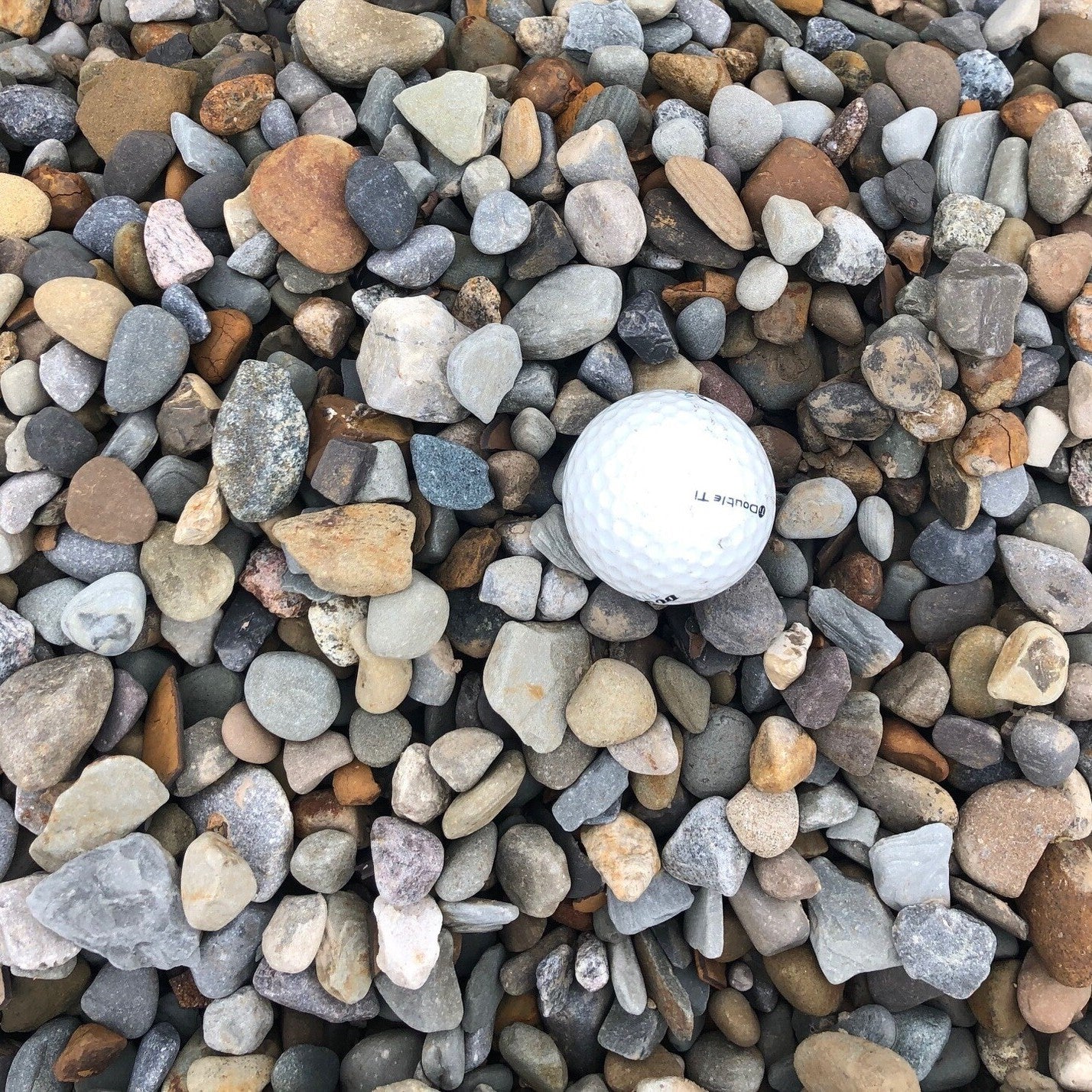
Number 57 crushed stone, angular limestone graded to about three quarters of an inch. The standard driveway, base and drainage gravel, it locks together under traffic and drains fast.
My experience with Mulch Mound was great and super easy. I ordered two yards of screened topsoil and was able to get it delivered within 2 days. They came in my requested time frame (afternoon) and dropped it off where I asked on my driveway. The topsoil was exactly what was a...
Tell us what you're looking for
Thanks! We received your request.
Something went wrong. Please try again.
How Much Material Do I Need?
Plan two to three inches for decorative beds and walkways and four to six inches of compacted base for driveways and parking pads that have to hold up on soft Delta ground. Drainage trenches typically need eight to twelve inches of washed stone around the pipe.
Use our free gravel calculator
What is a Yard?
A yard is approximately 27 cubic feet. As a general guideline, one yard of material can cover an area of about 100-160 square feet at a 2-3 inch depth.
We can't take orders for this right now. Tell us what you need and we'll get back to you.
What do you need?
Thanks! We received your request.
Something went wrong. Please try again.
Hand-picked local yards
4,000+ regional deliveries
Dedicated support
Why order through Mulch Mound
The best local , without the guesswork.
We hand-pick and partner with the best yards in your region, keep only the ones our buyers rate well, and back each load with our guarantee.
Mulch Mound Guarantee
If your isn't the quantity or quality you ordered, we'll make it right.
About this stone
Number 57 crushed stone, angular limestone graded to about three quarters of an inch. The standard driveway, base and drainage gravel, it locks together under traffic and drains fast.
My experience with Mulch Mound was great and super easy. I ordered two yards of screened topsoil and was able to get it delivered within 2 days. They came in my requested time frame (afternoon) and dropped it off where I asked on my driveway. The topsoil was exactly what was a...
How Much Material Do I Need?
Plan two to three inches for decorative beds and walkways and four to six inches of compacted base for driveways and parking pads that have to hold up on soft Delta ground. Drainage trenches typically need eight to twelve inches of washed stone around the pipe.
Use our free gravel calculator
What is a Yard?
A yard is approximately 27 cubic feet. As a general guideline, one yard of material can cover an area of about 100-160 square feet at a 2-3 inch depth.
My experience with Mulch Mound was great and super easy. I ordered two yards of screened topsoil and was able to get it delivered within 2 days. Th...
Read full review
My experience with Mulch Mound was great and super easy. I ordered two yards of screened topsoil and was able to get it delivered within 2 days. They came in my requested time frame (afternoon) and dropped it off where I asked on my driveway. The topsoil was exactly what was advertised, clean with no rocks or other debris. The price was reasonable. I plan to use them again in a couple weeks to order compost for my garden beds.
Measure length by width in feet for square footage, then pick your depth. Stone is sold by weight, so convert with roughly 1.4 tons per cubic yard for crushed limestone. On Greenwood's flat lots, remember that drainage trenches and swales need depth calculated separately from surface areas.
Complete Your Outdoor Stone Project
Order geotextile fabric and steel or aluminum edging with your stone, since both are essential for keeping gravel from sinking into or spreading across Greenwood silt loam. Corrugated pipe pairs with drainage rock for French drain work.
Compact in lifts, not all at once. Dumping six inches of crushed limestone and running a plate compactor over it once leaves the bottom half loose, and on Greenwood's soft ground that loose layer is where ruts start. Spread in two or three inch lifts, wet each one lightly, and compact before adding the next. It takes longer but it is the difference between a driveway that holds and one that potholes by the second wet winter.
Mulch Mound Pro Tip
Install solid edging on every gravel area. Delta rain moves stone, and without a hard edge your pea gravel path will spread into the lawn within a year, where it becomes a hazard for mowers. Use steel, aluminum, or a poured concrete curb set at least four inches deep. It also gives you a clean visual line, which matters in Greenwood's older neighborhoods where crisp bed edges are part of the look.
Mulch Mound Pro Tip
Grade for water before you place a single stone. Greenwood sits at 128 feet with very little natural fall, so you have to create slope deliberately. Set your subgrade with at least a quarter inch of drop per foot away from any structure, and crown driveway centers slightly. Stone will follow whatever shape you build under it, so fixing grade after the gravel is down means moving everything twice.
The Unique Landscape of Greenwood
There is almost no native rock in the Mississippi Delta, which is why stone in a Greenwood yard is always something you bring in on purpose. With 54 inches of rain a year falling on flat silt loam, gravel and river rock do real work here, moving water away from foundations, holding up driveways that would otherwise rut, and giving beds a surface that does not float away in a downpour. Stone also solves problems mulch cannot, since it does not decompose in Delta humidity and does not need replacing every spring. Along foundations it creates a dry, inspectable band that discourages the termite pressure common across the region. For drainage projects, walkways, and low maintenance beds, stone is the most durable material you can put down on Greenwood ground.
Frequently Asked Questions
Click a question to see the answer
Answer
Will gravel just sink into our soft Delta soil?
It will without a barrier. Greenwood silt loam is fine textured and soft when wet, so gravel laid straight on the ground migrates down within a season or two. Lay a woven geotextile fabric first, then build your stone layer on top of it. That fabric is the single biggest factor in whether a gravel path or driveway lasts three years or fifteen here.
Answer
What stone works best for a driveway in Greenwood?
Crushed limestone in a graded size like 610 or crusher run is the standard, because the fines lock together and form a firm surface on soft ground. Round river rock will not compact and will scatter under tires. Plan on a four to six inch compacted base over fabric, and expect to add a thin top layer every few years as our rainfall works the surface.
Answer
Can I use stone instead of mulch in my flower beds?
You can, and it lasts far longer in Greenwood's humid climate where mulch composts in a single season. The tradeoff is heat, since stone radiates warmth and Delta summers are already hard on shallow rooted plants. Stone works well around agaves, ornamental grasses, hollies, and foundation shrubs, but it is a poor choice around azaleas, hydrangeas, and vegetable beds.
Answer
What size stone do I need for a French drain?
Use clean washed stone in the three quarter to one and a half inch range with no fines, so water moves freely. Given Greenwood's flat ground and heavy rainfall, wrap both the trench and the pipe in filter fabric to keep fine silt from clogging the voids. Silt infiltration is the number one reason drains fail in the Delta.
Answer
Does stone against the foundation help with termites?
It helps. A twelve to eighteen inch band of pea gravel or crushed stone against the slab or piers stays drier than mulch, gives termites no food source, and lets you visually inspect for mud tubes. It is not a substitute for treatment, which matters in Greenwood, but it removes the moist wood contact that termites look for.
Answer
How many tons of stone do I need for my project?
A rough Greenwood rule is that one ton of crushed stone covers about 100 square feet at two inches deep or 70 square feet at three inches. A typical 12 by 40 foot driveway apron at four inches takes roughly nine to ten tons. Measure carefully, because unlike mulch, ordering short on stone means an awkward second delivery.
Answer
Will weeds still come up through gravel?
Some will. Greenwood's growing season runs nine months and nutsedge and bermudagrass are relentless, so windblown seed will sprout in the dust that collects between stones. Fabric underneath stops most upward growth, and a spring preemergent application plus occasional hand pulling handles the rest. Blowing leaf litter off the gravel each fall cuts weed pressure noticeably.