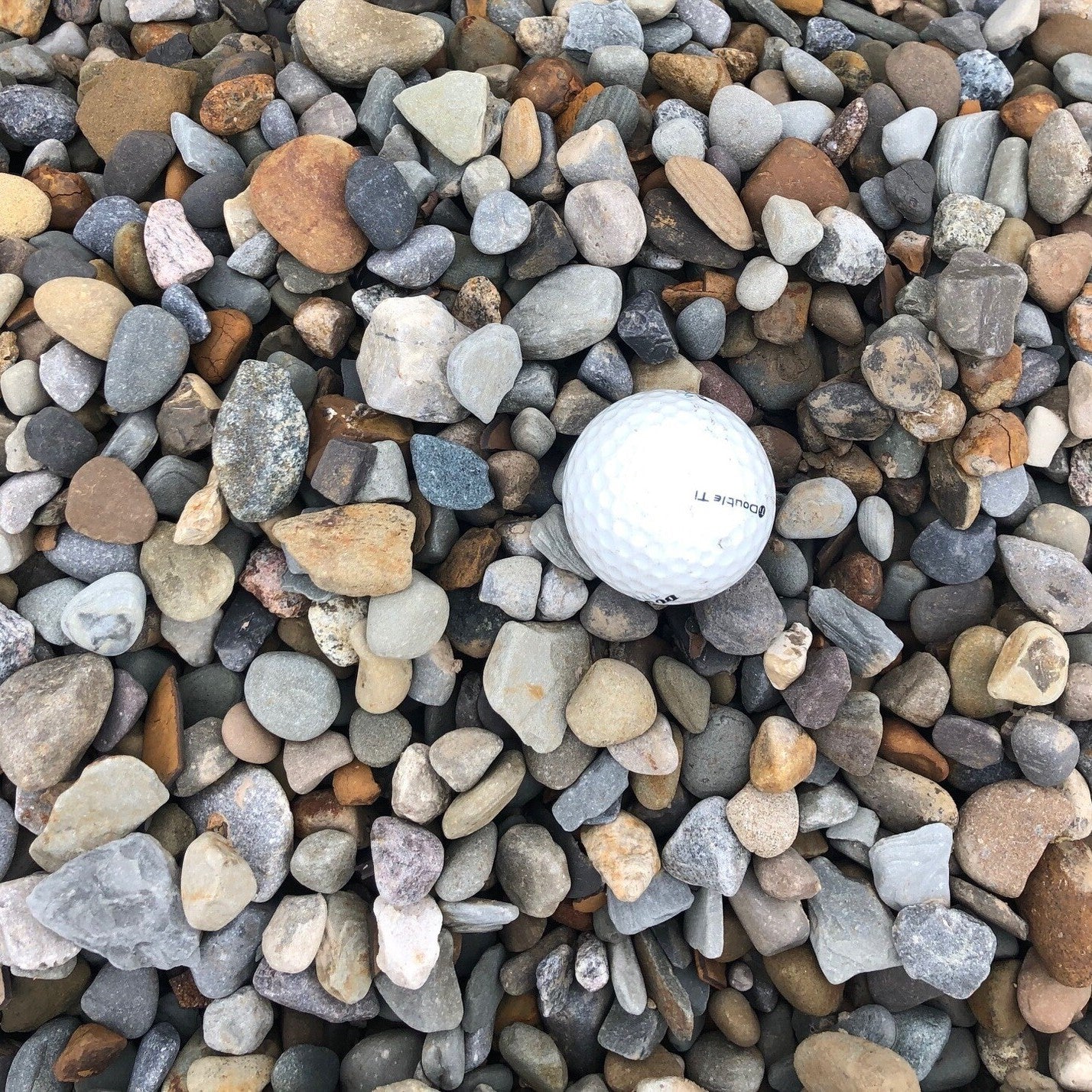
Number 57 crushed stone, angular limestone graded to about three quarters of an inch. The standard driveway, base and drainage gravel, it locks together under traffic and drains fast.
My experience with Mulch Mound was great and super easy. I ordered two yards of screened topsoil and was able to get it delivered within 2 days. They came in my requested time frame (afternoon) and dropped it off where I asked on my driveway. The topsoil was exactly what was a...
Tell us what you're looking for
Thanks! We received your request.
Something went wrong. Please try again.
How Much Material Do I Need?
Spread 2 inches for rock three quarters of an inch and under, and 3 inches for larger sizes, with one ton covering roughly 100 square feet at 2 inches deep in typical Indio applications.
Use our free gravel calculator
What is a Yard?
A yard is approximately 27 cubic feet. As a general guideline, one yard of material can cover an area of about 100-160 square feet at a 2-3 inch depth.
We can't take orders for this right now. Tell us what you need and we'll get back to you.
What do you need?
Thanks! We received your request.
Something went wrong. Please try again.
Hand-picked local yards
4,000+ regional deliveries
Dedicated support
Why order through Mulch Mound
The best local , without the guesswork.
We hand-pick and partner with the best yards in your region, keep only the ones our buyers rate well, and back each load with our guarantee.
Mulch Mound Guarantee
If your isn't the quantity or quality you ordered, we'll make it right.
About this stone
Number 57 crushed stone, angular limestone graded to about three quarters of an inch. The standard driveway, base and drainage gravel, it locks together under traffic and drains fast.
My experience with Mulch Mound was great and super easy. I ordered two yards of screened topsoil and was able to get it delivered within 2 days. They came in my requested time frame (afternoon) and dropped it off where I asked on my driveway. The topsoil was exactly what was a...
How Much Material Do I Need?
Spread 2 inches for rock three quarters of an inch and under, and 3 inches for larger sizes, with one ton covering roughly 100 square feet at 2 inches deep in typical Indio applications.
Use our free gravel calculator
What is a Yard?
A yard is approximately 27 cubic feet. As a general guideline, one yard of material can cover an area of about 100-160 square feet at a 2-3 inch depth.
My experience with Mulch Mound was great and super easy. I ordered two yards of screened topsoil and was able to get it delivered within 2 days. Th...
Read full review
My experience with Mulch Mound was great and super easy. I ordered two yards of screened topsoil and was able to get it delivered within 2 days. They came in my requested time frame (afternoon) and dropped it off where I asked on my driveway. The topsoil was exactly what was advertised, clean with no rocks or other debris. The price was reasonable. I plan to use them again in a couple weeks to order compost for my garden beds.
Really appreciate the care and follow thru that this company had with our order. A hiccup came up but they were quick to respond and address all co...
Read full review
Really appreciate the care and follow thru that this company had with our order. A hiccup came up but they were quick to respond and address all concerns, which made our garden day a success! Thank you for your prompt care.
Sketch your Indio yard as a set of rectangles, then subtract planting beds, boulder placements, walkways, and any artificial turf so you are not paying for coverage you will never spread. Stone is sold by weight, so pick your depth first, since going from 2 inches to 3 inches raises the tonnage by half. Order a small extra allowance for settling into sandy loam and for topping off after the spring winds shuffle the surface.
Complete Your Outdoor Stone Project
Round out your stone project with decomposed granite for pathways, boulders for vertical interest among low desert plantings, and metal or concrete edging to hold everything in place through wind season. A few yards of mulch for the planting pockets keeps root zones cooler than gravel alone.
Keep a rock free ring around every plant. Piling gravel right up to the base of a shrub in Indio traps radiated heat against the stem and makes it nearly impossible to check whether your drip emitter is still working. Leave a clean 12 to 18 inch mulched or bare basin at each plant, which also gives you a place to catch irrigation water. It looks more deliberate and it dramatically improves plant survival through August.
Mulch Mound Pro Tip
Choose your rock color with the valley sun in mind. Under Indio's intense light, bright white and very pale gravels create glare that is genuinely uncomfortable on a south or west facing frontage and can wash out the whole design. Warm tans, Palm Springs gold, and desert browns handle the light better, hide dust between cleanings, and blend with the surrounding Santa Rosa and Indio Hills tones. Look at samples outdoors at midday, not in a shaded yard.
Mulch Mound Pro Tip
Plan for dust and debris maintenance from day one. Coachella Valley wind deposits fine silt into rock beds continuously, and within a few years that silt becomes a seedbed. Rake or blow the surface a couple of times a year, especially after spring wind events, and refresh the top layer every five to seven years rather than replacing everything. A leaf blower on low along with a stiff landscape rake will restore the look surprisingly fast.
The Unique Landscape of Indio
Decorative rock is the workhorse of Indio landscaping because it does not decompose, does not blow away in spring wind, and does not need a drop of the 3 inches of rain we get each year. In a valley where summer surfaces hit extreme temperatures, the right stone in the right place gives you clean, permanent coverage over bare sandy loam that would otherwise erode, dust up, and grow weeds under every drip emitter. Crushed rock and decomposed granite also solve real drainage problems, since our sandy soil often hides caliche layers and low spots that trap irrigation runoff. Stone is what Coachella Valley water agencies are effectively rewarding when they push turf conversion, and it is the material most Indio HOAs expect in front yard designs. Used well, it also anchors the desert look, letting boulders, palms, and agaves read as intentional rather than sparse. The tradeoff is heat, so where you place organic mulch versus rock matters more here than almost anywhere else.
Frequently Asked Questions
Click a question to see the answer
Answer
How hot does decorative rock get in Indio, and will it cook my plants?
Rock surfaces in full Indio sun can reach well over 150 degrees on a 118 degree afternoon, and they radiate that heat sideways and upward all evening. That is fine around agaves, barrel cactus, ocotillo, and other true desert species. It is hard on citrus, roses, and anything with soft foliage. The practical solution most valley homeowners use is rock in the open zones and organic mulch inside the planting basins, which keeps root zones cooler while the overall look stays desert appropriate.
Answer
Do I need to put fabric under my rock?
It helps for the first few years but it is not a permanent fix in Indio. Windblown dust and organic debris build a thin soil layer on top of the rock within two or three seasons, and weeds like spurge and Sahara mustard germinate in that layer regardless of what is underneath. Fabric mainly keeps rock from sinking into sandy loam and makes future removal easier. Skip it inside planting areas where you want roots and water moving freely.
Answer
How thick should I spread rock for good coverage?
Two inches for three quarter inch or smaller material, and 3 inches for one and a half inch rock or larger. Thinner than that and Indio's pale sandy loam shows through, especially after a wind event redistributes the surface. In high traffic areas or along driveway edges where cars clip the corner, go to 3 or 4 inches. Decomposed granite pathways want 2 to 3 inches compacted in lifts, not dumped loose.
Answer
Which rock size holds up best against Coachella Valley wind?
Three quarter inch and larger angular crushed rock is the safe choice. Fine gravel and quarter inch screenings migrate and drift in the spring gusts that sweep the valley, and they end up in pools, on sidewalks, and packed against block walls. Smooth river pebbles roll on slopes. If your lot is on the exposed west side or faces an open desert parcel, size up and use edging or a soldier course of cobble along the perimeter.
Answer
Can I use rock to fix drainage problems in my yard?
Sometimes, but diagnose first. Indio's sandy loam usually drains fast, so standing water almost always means a caliche layer, a compacted pad, or a grading problem rather than a soil type problem. A gravel filled dry well or a rock lined swale can move that occasional summer monsoon burst away from your foundation, but rock alone over hardpan just creates a wet gravel pit. Break through the hardpan or regrade to daylight, then use stone to line the path.
Answer
How many tons of rock do I need for my front yard?
Roughly one ton covers about 100 square feet at 2 inches deep, or about 70 square feet at 3 inches. A typical Indio front yard turf conversion of 1,000 square feet takes somewhere in the range of 10 to 14 tons depending on depth and rock size. Subtract the footprint of planting areas, boulders, and hardscape before ordering, and add a little cushion for topping off thin spots after settling.
Answer
Will rock help me qualify for a turf rebate?
Coachella Valley Water District and other regional programs have offered turf conversion incentives, and most require a percentage of live plant coverage rather than wall to wall gravel. Check the current rules before you order, but plan on a design that mixes decorative stone with desert adapted shrubs and accents. Keeping a plant list and photos of the existing lawn before you remove it will make the paperwork much simpler.