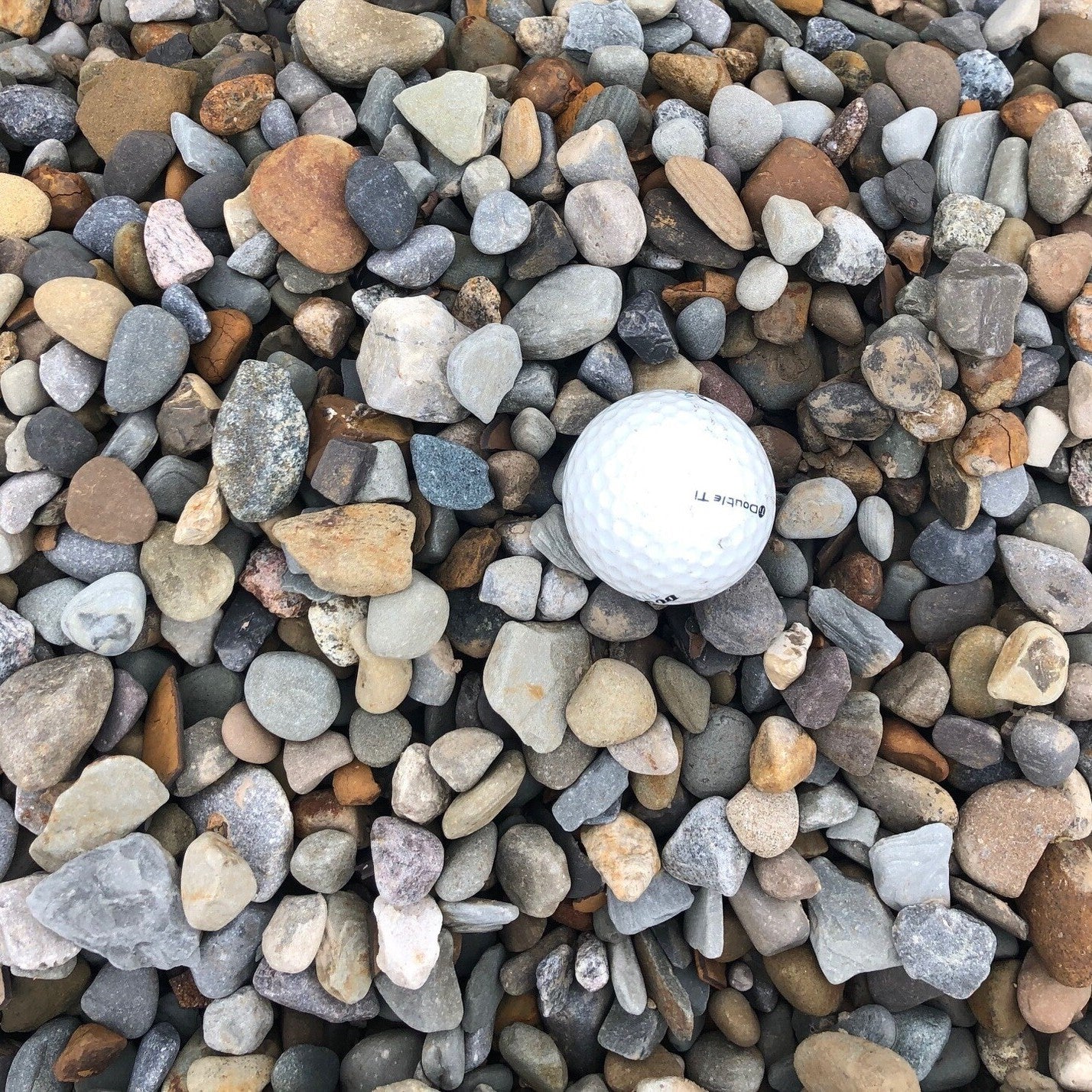
Number 57 crushed stone, angular limestone graded to about three quarters of an inch. The standard driveway, base and drainage gravel, it locks together under traffic and drains fast.
I contacted Mulch Mound for #57 river rocks and it was easy and fast to get a delivery right before the holiday weekend. Stone was delivered as promised and place exactly where I asked. Excellent service! I will be ordering mulch next!
Tell us what you're looking for
Thanks! We received your request.
Something went wrong. Please try again.
How Much Material Do I Need?
For decorative ground cover and planting bed applications in Montrose, a 2 to 3 inch layer of stone provides good weed suppression and a finished appearance while keeping costs reasonable on larger areas. For drainage applications along foundations or in low spots where clay soil causes pooling, a 4 to 6 inch depth ensures water moves through the stone layer freely rather than backing up.
Use our free gravel calculator
What is a Yard?
A yard is approximately 27 cubic feet. As a general guideline, one yard of material can cover an area of about 100-160 square feet at a 2-3 inch depth.
We can't take orders for this right now. Tell us what you need and we'll get back to you.
What do you need?
Thanks! We received your request.
Something went wrong. Please try again.
Hand-picked local yards
4,000+ regional deliveries
Dedicated support
Why order through Mulch Mound
The best local , without the guesswork.
We hand-pick and partner with the best yards in your region, keep only the ones our buyers rate well, and back each load with our guarantee.
Mulch Mound Guarantee
If your isn't the quantity or quality you ordered, we'll make it right.
About this stone
Number 57 crushed stone, angular limestone graded to about three quarters of an inch. The standard driveway, base and drainage gravel, it locks together under traffic and drains fast.
I contacted Mulch Mound for #57 river rocks and it was easy and fast to get a delivery right before the holiday weekend. Stone was delivered as promised and place exactly where I asked. Excellent service! I will be ordering mulch next!
How Much Material Do I Need?
For decorative ground cover and planting bed applications in Montrose, a 2 to 3 inch layer of stone provides good weed suppression and a finished appearance while keeping costs reasonable on larger areas. For drainage applications along foundations or in low spots where clay soil causes pooling, a 4 to 6 inch depth ensures water moves through the stone layer freely rather than backing up.
Use our free gravel calculator
What is a Yard?
A yard is approximately 27 cubic feet. As a general guideline, one yard of material can cover an area of about 100-160 square feet at a 2-3 inch depth.
I contacted Mulch Mound for #57 river rocks and it was easy and fast to get a delivery right before the holiday weekend. Stone was delivered as pro...
Read full review
I contacted Mulch Mound for #57 river rocks and it was easy and fast to get a delivery right before the holiday weekend. Stone was delivered as promised and place exactly where I asked. Excellent service! I will be ordering mulch next!
Measure your coverage area by breaking irregular shapes into simple rectangles and triangles, calculating each section separately and then adding them together. For a 3 inch application depth, divide your total square footage by 100 to estimate the number of cubic yards needed for standard gravel. Stone is denser than mulch, so it is worth double-checking your numbers before ordering since bulk stone is heavier to move if you overestimate significantly.
Complete Your Outdoor Stone Project
Pairing a stone delivery with a quality soil order makes sense for Montrose homeowners who are building new planting beds within a stone-bordered xeriscape layout. Adding a bulk mulch order for any in-ground planting areas that will sit within or alongside your stone installation keeps the organic material where roots benefit from it while letting the stone handle the low-maintenance coverage zones.
Montrose's clay soil does not allow water to drain freely, which means that simply laying stone over bare clay can create a surface that pools during monsoon rains and stays wet longer than you want. Before placing any bulk stone, grade the area with a slight slope of 1 to 2 percent away from structures, and lay a permeable landscape fabric to separate the stone from the clay below. This combination of grading, fabric, and stone creates a drainage system that moves water efficiently even when the clay beneath is saturated.
Mulch Mound Pro Tip
Decomposed granite is one of the most popular materials in Montrose xeriscapes, but it tends to migrate onto adjacent lawn or soil areas over time, especially after the heavy runoff events that follow summer thunderstorms. Installing a solid aluminum or steel landscape edging border at least 3 inches tall along all DG edges keeps the material contained and maintains the clean lines of your design through the season. This small upfront step eliminates the annual chore of raking DG back into bounds after each storm.
Mulch Mound Pro Tip
For Montrose homeowners using stone around trees and large shrubs, be cautious about applying deep stone layers directly over the root flare at the base of the trunk. A thick stone layer can trap moisture against the bark and raise soil temperature around the crown, stressing or damaging plants over time. Keep stone pulled back at least 6 inches from any trunk, and create a slight bowl shape in the stone grade around trees so that when you do irrigate, water flows toward the root zone rather than away from it.
The Unique Landscape of Montrose
In a climate like Montrose, where annual rainfall totals only 11 inches and clay soil makes drainage management a constant concern, decorative and functional stone is one of the most durable landscaping investments you can make. Stone does not decompose, does not blow away in the valley winds, and does not need to be refreshed each season the way organic mulch does. At 5,807 feet, landscaping materials are exposed to intense UV radiation, dramatic temperature swings, and occasional heavy monsoon rain events, all of which organic materials handle less gracefully than stone. Gravel, decomposed granite, and river rock also improve drainage around foundations and along pathways where clay soil would otherwise stay saturated after rain and cause erosion. For Montrose homeowners looking for a lower maintenance landscape that holds up through the short growing season and the long dry stretches in between, bulk stone delivery is a practical and visually appealing solution.
Frequently Asked Questions
Click a question to see the answer
Answer
Does stone help with the drainage problems I have in my clay yard after Montrose gets a monsoon storm?
Stone is one of the best tools available for managing the drainage challenges that Montrose clay soil creates during summer monsoon events. A layer of gravel or decomposed granite along the edges of your home, in low-lying areas, or along pathways creates a permeable surface that absorbs water quickly rather than letting it sheet-flow across compacted clay. For foundation drainage specifically, a 12-inch wide border of crushed gravel sloped slightly away from the house directs storm water away before it can pool against the foundation.
Answer
Will decorative rock get too hot in the Montrose sun and hurt my plants?
This is a real concern at Montrose's elevation where summer sun intensity is high. Dark-colored stones like black lava rock or dark crushed granite can absorb and radiate significant heat, which can stress shallow-rooted plants in adjacent beds. Light-colored materials like tan decomposed granite or buff river rock reflect more heat and are a safer choice around plants. Using stone as a border or pathway material while keeping organic mulch in actual planting areas is a common and practical approach for Montrose landscapes.
Answer
How does stone handle the freeze and thaw cycles we get in Montrose between September and May?
Bulk stone handles freeze and thaw cycles extremely well, which is one of its biggest advantages in a Zone 6a climate like Montrose. Individual stone pieces do not crack or degrade from repeated freezing, and the small gaps between pieces actually accommodate ground movement without heaving or buckling the way solid surfaces can. Decomposed granite will compact over time with freeze and thaw action, which can be a benefit for pathway applications where a firm surface is desired, but may require occasional raking in planting areas.
Answer
What size gravel works best for a driveway or parking area in Montrose?
For driveways in Montrose, a crushed angular gravel in the 3/4 inch to 1.5 inch range compacts well and provides a stable driving surface. Angular crushed stone locks together better than smooth round river rock when driven over, reducing the rutting and displacement that smooth stone causes on high-traffic surfaces. Laying a 4 inch base layer of coarser material and topping with 2 inches of the finer crushed gravel gives you good structure that handles the weight of vehicles without sinking into the clay subgrade.
Answer
Can I use decomposed granite around my vegetable garden in Montrose, or will it affect the soil?
Decomposed granite works well as a pathway and border material around vegetable gardens in Montrose, though you want to keep it separated from the actual planting soil with landscape fabric or a solid edging border. DG can migrate into garden soil over time and while it does not add harmful compounds, the fine gritty material can alter soil texture. As a walking surface between raised beds, DG drains exceptionally well and stays firm, which is practical during the summer rain events when garden paths can otherwise become muddy in clay soil conditions.
Answer
I want to do a low-water xeriscape yard. What stone materials work best in Montrose for that kind of project?
Montrose is well-suited to xeriscape design given the 11-inch annual rainfall and the water costs associated with maintaining a traditional irrigated lawn. Decomposed granite in a natural tan or buff color creates a clean ground cover that pairs well with native plants like rabbitbrush, blue grama grass, and desert willow that thrive in Zone 6a conditions. Larger accent boulders and river rock of mixed sizes add visual texture and help define plant groupings without requiring any watering at all. A well-designed stone xeriscape in Montrose can reduce landscape water use dramatically while requiring almost no seasonal maintenance.
Answer
How much stone do I need to cover a large area, and is it better to order too much or too little?
For most Montrose projects, ordering slightly more than your calculation suggests is the right call, especially if you are covering an irregular area with curves or around existing plants. One cubic yard of standard gravel or decomposed granite covers approximately 100 square feet at a 3 inch depth. Stone, unlike mulch, does not compress or break down after delivery, so any overage can be stored or used to fill low spots without wasting material. Having a small reserve pile is useful after winter when freeze and thaw cycles occasionally shift stone in pathways or borders.
Answer
What is road base used for?
Under driveways, parking pads, and paver patios, road base is the compacted layer that supports the surface above it and keeps water moving away from the structure. In Montrose, where clay soil already makes drainage tricky, we deliver Crushed Stone #57 instead, which drains freely and works well as a stable, functional base for many of the same projects.