


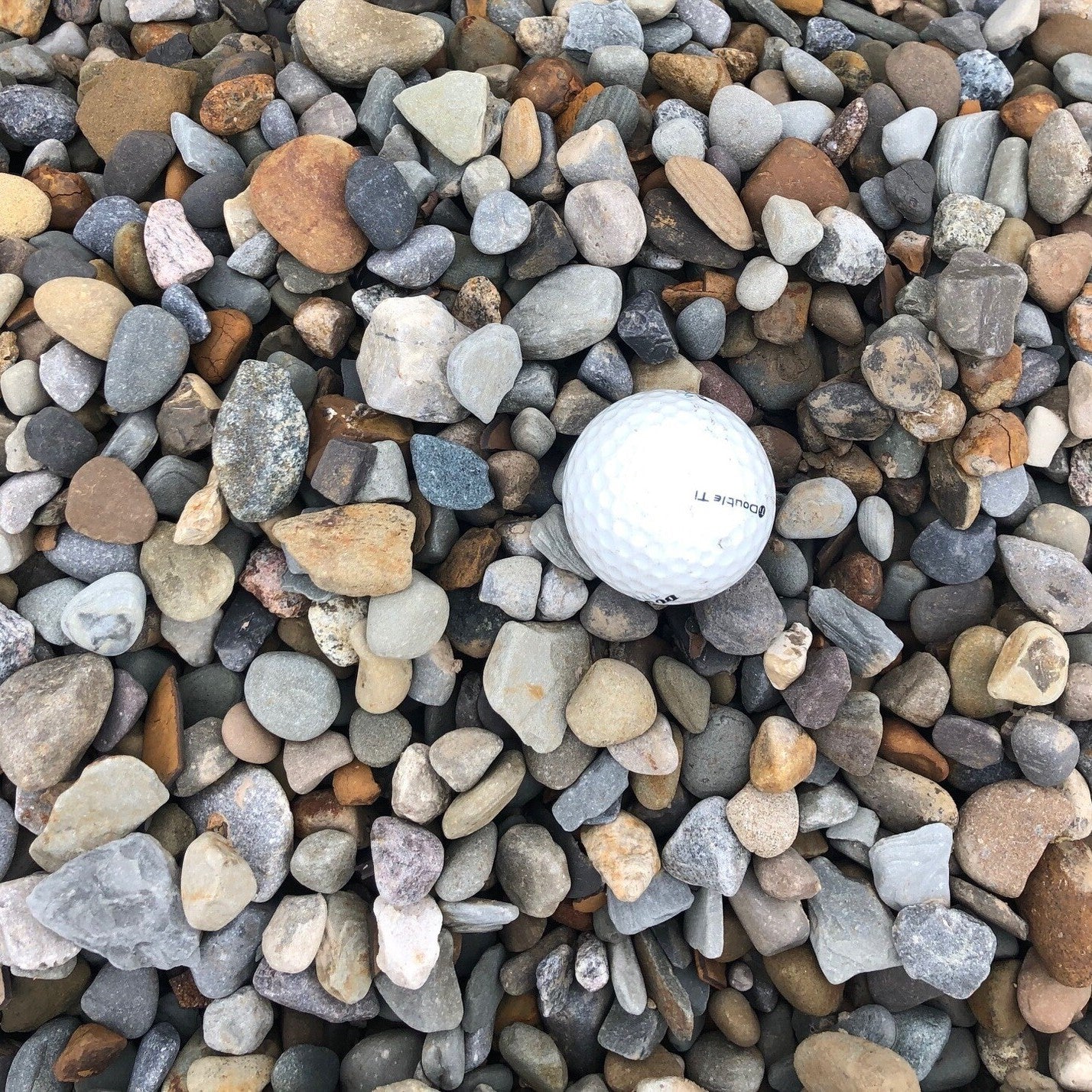

The driver nailed it on putting the gravel I ordered in front of my trailer and between the sidewalk. Very satisfied with how my flowerbeds look now.
About this stone
Number 57 crushed stone, angular limestone graded to about three quarters of an inch. The standard driveway, base and drainage gravel, it locks together under traffic and drains fast.
The driver nailed it on putting the gravel I ordered in front of my trailer and between the sidewalk. Very satisfied with how my flowerbeds look now.
Tell us what you're looking for
Thanks! We received your request.
Something went wrong. Please try again.
How Much Material Do I Need?
How Much Material Do I Need?
Two to three inches is right for decorative beds and walkways, while driveways and French drain trenches need four to six inches or a full trench fill.
Use our free gravel calculator
What is a Yard?
What is a Yard?
FAQs
FAQs
Mount Pleasant Gravel Delivery
Mount Pleasant Gravel Delivery
Regular price
$133.00
per
Yard
Regular price
Sale price
$133.00
Unit price
per
Shipping calculated at checkout.
Minimum of 3 Yard
Couldn't load pickup availability
Not currently available
We can't take orders for this right now. Tell us what you need and we'll get back to you.
Hand-picked local yards
4,000+ regional deliveries
Dedicated support
Why order through Mulch Mound
The best local , without the guesswork.
We hand-pick and partner with the best yards in your region, keep only the ones our buyers rate well, and back each load with our guarantee.
Mulch Mound Guarantee
If your isn't the quantity or quality you ordered, we'll make it right.
About this stone
Number 57 crushed stone, angular limestone graded to about three quarters of an inch. The standard driveway, base and drainage gravel, it locks together under traffic and drains fast.
The driver nailed it on putting the gravel I ordered in front of my trailer and between the sidewalk. Very satisfied with how my flowerbeds look now.
How Much Material Do I Need?
How Much Material Do I Need?
Two to three inches is right for decorative beds and walkways, while driveways and French drain trenches need four to six inches or a full trench fill.
Use our free gravel calculator
What is a Yard?
What is a Yard?
FAQs
FAQs
Tell us what you're looking for
Thanks! We received your request.
Something went wrong. Please try again.

How It Works
Getting started is easy — just follow these simple steps
1
Choose your stone
Make sure you adjust the quantity to your home's needs. You can use our calculator to estimate how much you'll need.
2
Select your delivery date
Select a delivery date you'd like for the product to be dropped off at your home
3
Sit back and wait
Sit back, wait, and let us work our magic to make sure the highest quality product is delivered to your driveway.

Ordering was easy. Good quality.

So smooth. Placed the order online, it showed up. Easy!
Need Help Calculating How Much Gravel You Need?
Use our NEW Trace from Satellite tool to get an estimate for your project based on an aerial view of your property
Try Our CalculatorMeasure length and width in feet, then choose your depth. Use two to three inches for decorative beds and paths, and four to six inches for driveways or drainage trenches. Because stone does not compress like mulch, order close to your calculated figure and add about five percent for spread and low spots.
Complete Your Outdoor Stone Project
Add geotextile fabric underneath so stone does not vanish into sandy loam, and use steel or paver edging to hold clean lines through heavy Lowcountry rain. Crusher run makes a solid compacted base under any decorative surface stone.

Mulch Mound Pro Tip
Always separate stone from Mount Pleasant sand with woven geotextile fabric. Sandy loam pumps upward under traffic and rainfall, and within two seasons an unlined gravel bed becomes a sand bed with rocks in it. Fabric costs very little compared to reordering stone. Overlap the seams by at least twelve inches and run it a few inches past the edging.
Mulch Mound Pro Tip
Design gravel around downspouts, not just under them. With 51 inches of rain a year, a single downspout can dump hundreds of gallons in an afternoon. A splash pad of river rock over fabric absorbs the impact, prevents a crater in your sandy soil, and spreads the flow. Extend the stone at least three feet out and slope it away from the foundation.
Mulch Mound Pro Tip
Match stone size to slope. On the gentle grades typical in East Cooper yards, small rounded pea gravel travels during a downpour and ends up in the lawn or the street. Use angular stone in the three quarter inch to one and a half inch range on anything with fall to it, since the rough faces lock together and stay where you put them.
The Unique Landscape of Mount Pleasant
Stone earns its keep in Mount Pleasant because water is the constant variable, whether it comes from a 51 inch rainfall year, a summer thunderstorm, or a king tide backing up into low lying yards. Gravel drives, drainage beds, and French drain backfill move water off sandy loam before it stalls, and unlike mulch, stone does not decompose in our heat or float away when a bed floods. It also stands up to salt air and humidity that shorten the life of most organic materials near the Intracoastal and the marsh. For homeowners tired of remulching twice a year, decorative gravel in side yards, around downspouts, and along foundation drip lines is a genuinely low maintenance answer. At 13 feet of elevation, giving water a designed path matters more here than almost anywhere inland.