Really appreciate the care and follow thru that this company had with our order. A hiccup came up but they were quick to respond and address all concerns, which made our garden day a success! Thank you for your prompt care.
Tell us what you're looking for
Thanks! We received your request.
Something went wrong. Please try again.
How Much Sand Do I Need?
One cubic yard of this sand covers about 324 square feet at a 1 inch depth, or roughly half that at 2 inches, which is the deeper end of typical install depth for this material. Most mortar mixing and paver joint jobs in Murray only need a fraction of a yard, but pool base projects can run higher depending on footprint. Measure your square footage first, then decide on depth based on the job, mortar work stays thin while bedding work runs thicker. Use our free sand calculator
What is a Yard?
A yard is approximately 27 cubic feet. As a general guideline, one yard of material can cover an area of about 100-160 square feet at a 2-3 inch depth.
Really appreciate the care and follow thru that this company had with our order. A hiccup came up but they were quick to respond and address all concerns, which made our garden day a success! Thank you for your prompt care.
How Much Sand Do I Need?
One cubic yard of this sand covers about 324 square feet at a 1 inch depth, or roughly half that at 2 inches, which is the deeper end of typical install depth for this material. Most mortar mixing and paver joint jobs in Murray only need a fraction of a yard, but pool base projects can run higher depending on footprint. Measure your square footage first, then decide on depth based on the job, mortar work stays thin while bedding work runs thicker. Use our free sand calculator
What is a Yard?
A yard is approximately 27 cubic feet. As a general guideline, one yard of material can cover an area of about 100-160 square feet at a 2-3 inch depth.
Really appreciate the care and follow thru that this company had with our order. A hiccup came up but they were quick to respond and address all co...
Read full review
Really appreciate the care and follow thru that this company had with our order. A hiccup came up but they were quick to respond and address all concerns, which made our garden day a success! Thank you for your prompt care.
Most paver and patio jobs around Murray pair this sand with a base layer of crushed stone for drainage before the sand goes down for joints or bedding. If you are mixing mortar, you will also want cement on hand before the sand arrives so the job does not sit half finished. For pool base work, some builders add a thin gravel layer underneath first.
Keep this sand covered with a tarp once it is delivered, especially during Murray's wetter spring stretch before last frost in mid April. Because it is finely screened, it absorbs moisture fast, and wet sand throws off your mortar ratios and makes paver joint sweeping a mess. A simple tarp weighted at the corners saves you a full day of drying time before you can use it.
Mulch Mound Pro Tip
A common mistake on paver jobs here is using this material as bedding sand under the pavers instead of just in the joints. It is finer and less stable under load than clean chip stone, which is why chip stone has largely replaced it for bedding, since sand bedding can pump out over time with freeze thaw cycles. Reserve this sand for joints and mortar, not the base layer itself.
Mulch Mound Pro Tip
If you are doing both mortar work and paver joints on the same job, order them together rather than in two trips, since this sand is fine enough to serve both purposes without buying two separate products. It also pairs well with leftover crushed stone from the same delivery run if your supplier stocks both, cutting down on separate trips during the busy spring and fall build season.
Working With Sand in Murray
Murray sits on silt loam that drains slowly compared to sandy soils, so when you are mixing mortar or setting pavers here, this sand needs to stay dry and covered on site or it clumps before you can use it. With the growing season running roughly April to October, most hardscape and masonry jobs cluster in that window, which is also when demand and lead times get tighter. Homeowners near the lake and around town tend to use it for paver joints on patios, since the silt loam base underneath needs a stable, well drained joint fill to keep from shifting after heavy rain. Pool bases are another common local use, especially on the newer builds outside downtown.
Masonry vs Fill Sand
Masonry sand is washed and finely screened, the right choice for mortar work, paver joints, and sandboxes. Fill sand is coarser and less processed, better suited to leveling, bedding pipe, and filling low spots.
Bedding and Leveling
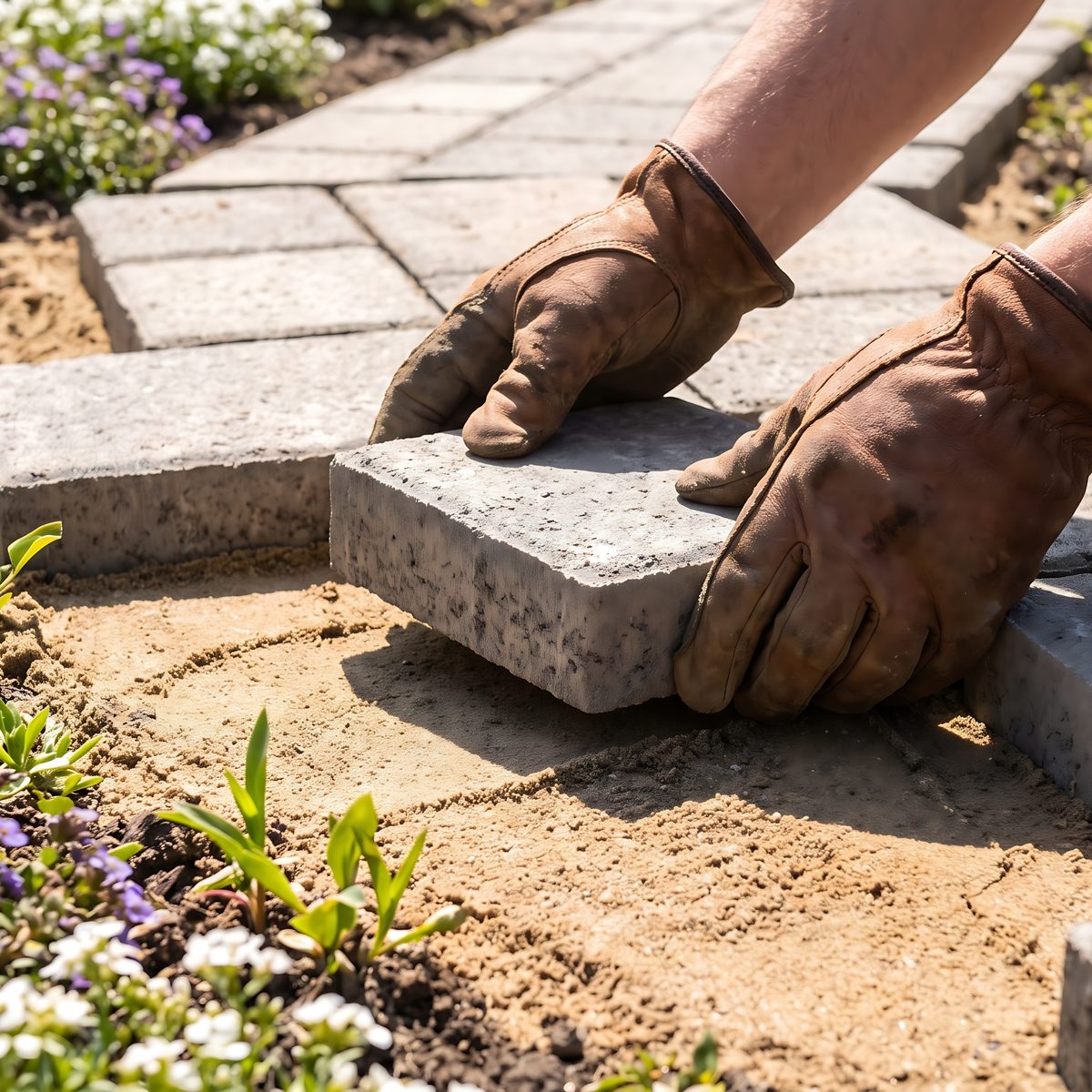
For pavers, screed a 1 inch sand bed over a compacted base rather than using sand to fix deep grade problems. A thin, even bed locks pavers in place. A thick one shifts underfoot.
Working With Moisture
Slightly damp sand spreads, screeds, and compacts far more easily than bone dry sand, which just flows back into your screed lines. Lightly wetting the pile before you work it saves real effort.
Frequently Asked Questions
Click a question to see the answer
Answer
What is this sand actually used for in a typical Murray backyard project?
Locally it is mostly used for mortar mixing on brick or block work, paver joint filling on patios and walkways, and pool base layers on newer builds. It is not intended as general fill or a bedding layer under heavy pavers, since chip stone handles that better now. Think joints and mixing, not structural base.
Answer
How many cubic yards do I need for a paver patio in Murray?
One cubic yard covers about 324 square feet at a 1 inch depth, but paver joints only use a thin fraction of that depth spread across your total patio area. Most standard patios need well under a full yard just for joint fill, so measure your square footage and estimate light, this material goes further than people expect for joints alone.
Answer
When is the best time to install sand joints on a patio here?
Spring through fall is the practical window, since Murray's growing season and drier stretches make it easier to keep the sand dry during install. Installing right before a rain event, especially near first frost in late October, risks the sand shifting before it settles. Aim for a dry multi day stretch if you can.
Answer
Where will the sand be placed when it is delivered to my Murray property?
The load is placed at the driveway or staging area you specify at checkout, so make sure that spot is clear and accessible before the truck arrives. Narrower drives common in older parts of town near the university can limit placement options, so measure your access point ahead of time if space is tight.
Answer
Should I use this sand or chip stone for my paver base?
For paver bedding, chip stone is now the more common choice locally since it does not pump or shift under freeze thaw cycles the way sand can. This sand is better reserved for paver joints and mortar mixing, where its finer, more uniform grain actually helps rather than works against you.