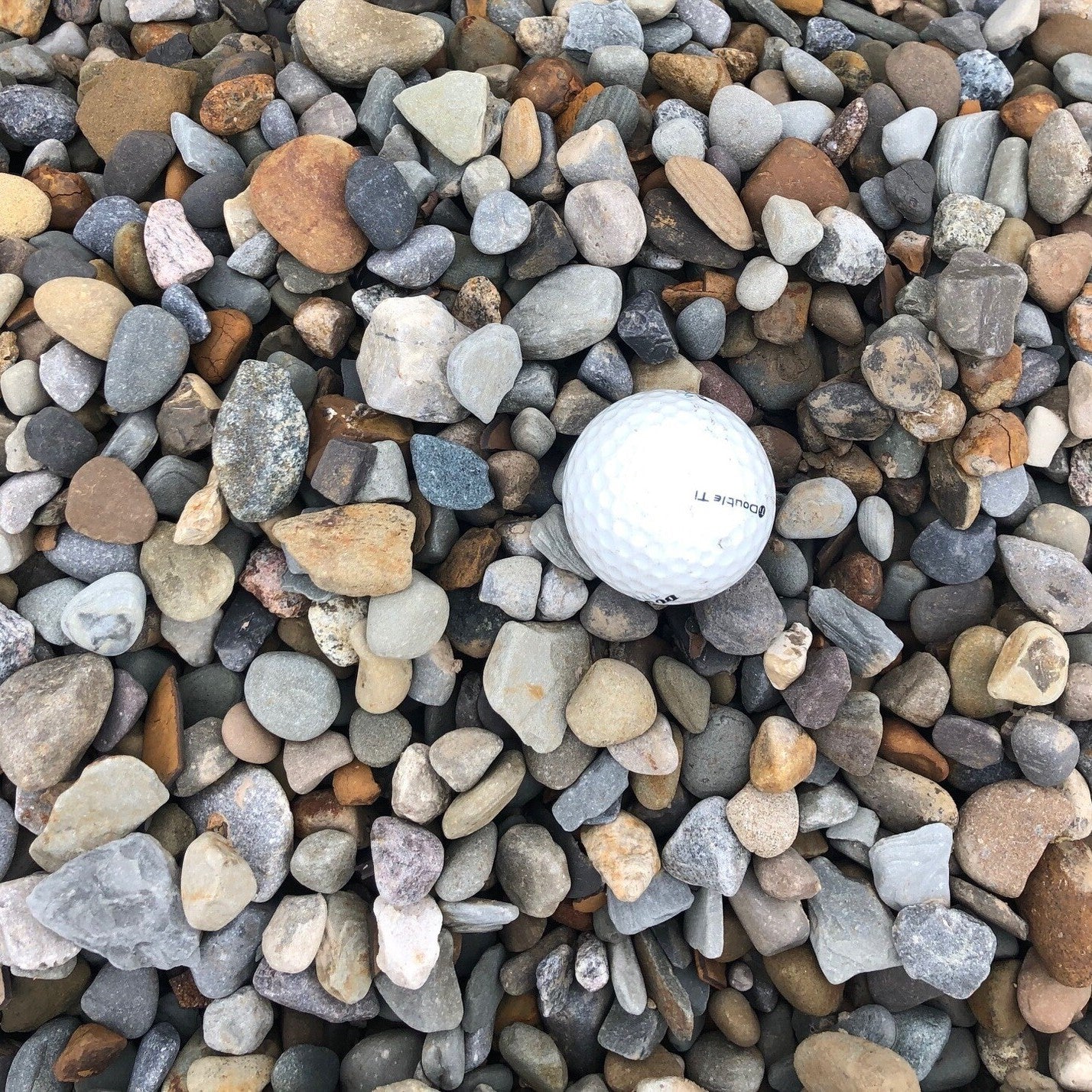
Number 57 crushed stone, angular limestone graded to about three quarters of an inch. The standard driveway, base and drainage gravel, it locks together under traffic and drains fast.
My experience with Mulch Mound was great and super easy. I ordered two yards of screened topsoil and was able to get it delivered within 2 days. They came in my requested time frame (afternoon) and dropped it off where I asked on my driveway. The topsoil was exactly what was a...
Tell us what you're looking for
Thanks! We received your request.
Something went wrong. Please try again.
How Much Material Do I Need?
For decorative stone ground cover and pathways in Myers Corner, a 3 to 4 inch depth provides a stable, weed-resistant surface that holds up through the freeze-thaw season and handles heavy spring rainfall without displacement. For drainage applications such as French drains or dry creek beds, plan on a minimum of 6 to 8 inches to handle the volume of water that Myers Corner's 47-inch annual rainfall can deliver during intense storm events.
Use our free gravel calculator
What is a yard?
A yard is approximately 27 cubic feet. As a general guideline, one yard of material can cover an area of about 100-160 square feet at a 2-3 inch depth.
We can't take orders for this right now. Tell us what you need and we'll get back to you.
What do you need?
Thanks! We received your request.
Something went wrong. Please try again.
Hand-picked local yards
4,000+ regional deliveries
Dedicated support
Why order through Mulch Mound
The best local stone, without the guesswork.
We hand-pick and partner with the best yards in your region, keep only the ones our buyers rate well, and back each load with our guarantee.
Mulch Mound Guarantee
If your stone isn't the quantity or quality you ordered, we'll make it right.
About this stone
Number 57 crushed stone, angular limestone graded to about three quarters of an inch. The standard driveway, base and drainage gravel, it locks together under traffic and drains fast.
My experience with Mulch Mound was great and super easy. I ordered two yards of screened topsoil and was able to get it delivered within 2 days. They came in my requested time frame (afternoon) and dropped it off where I asked on my driveway. The topsoil was exactly what was a...
How Much Material Do I Need?
For decorative stone ground cover and pathways in Myers Corner, a 3 to 4 inch depth provides a stable, weed-resistant surface that holds up through the freeze-thaw season and handles heavy spring rainfall without displacement. For drainage applications such as French drains or dry creek beds, plan on a minimum of 6 to 8 inches to handle the volume of water that Myers Corner's 47-inch annual rainfall can deliver during intense storm events.
Use our free gravel calculator
What is a yard?
A yard is approximately 27 cubic feet. As a general guideline, one yard of material can cover an area of about 100-160 square feet at a 2-3 inch depth.
My experience with Mulch Mound was great and super easy. I ordered two yards of screened topsoil and was able to get it delivered within 2 days. Th...
Read full review
My experience with Mulch Mound was great and super easy. I ordered two yards of screened topsoil and was able to get it delivered within 2 days. They came in my requested time frame (afternoon) and dropped it off where I asked on my driveway. The topsoil was exactly what was advertised, clean with no rocks or other debris. The price was reasonable. I plan to use them again in a couple weeks to order compost for my garden beds.
To calculate stone needs for a Myers Corner project, measure your coverage area in square feet, then multiply by your desired depth in inches and divide by 324 to get cubic yards. For drainage applications where depth is often 6 to 12 inches, the material adds up quickly, so measuring carefully before ordering saves both time and cost. Myers Corner's rainfall means drainage projects should not be undersized, so rounding up by half a cubic yard is a reasonable buffer for trench and creek bed applications.
Stone Types We Deliver in Myers Corner
Myers Corner homeowners and landscapers count on us for convenient bulk gravel by the yard in Myers Corner, delivered straight to the driveway or job site. Whether you are refreshing a garden path or improving drainage around a Hudson Valley property, having the right stone on hand makes all the difference. We deliver by the cubic yard so you get exactly what your project calls for, without the hassle of hauling bags.
Pea Gravel
Smooth and rounded with warm, natural earth tones, pea gravel is one of the most popular choices for New York properties. It works beautifully along walkways, patios, and garden beds, and its excellent drainage properties make it well suited to the clay-heavy soils common in Dutchess County. A clean, classic look at an accessible price.
Complete Your Outdoor Stone Project
Stone borders and drainage beds pair naturally with quality garden soil when you are redesigning planting areas in Myers Corner, since improved soil in the beds and stone in the borders creates both better plant health and better water management across the full yard. Adding a layer of mulch to any planted areas adjacent to stone features ties the landscape together visually while providing the moisture retention and temperature benefits that Myers Corner's Zone 6a growing season requires.
In Myers Corner, installing a 2-inch layer of compacted processed gravel beneath decorative stone in pathways and borders makes a meaningful difference in long-term stability. Silt loam soil is soft enough that stone placed directly on it will shift and sink noticeably after a few heavy rain seasons. The compacted base layer distributes weight evenly and keeps the decorative surface at its original grade through years of Zone 6a freeze-thaw cycles and the wet spring conditions that arrive each year.
Mulch Mound Pro Tip
For Myers Corner homeowners dealing with a slope that erodes during heavy rain, a dry creek bed built with larger river stone or fieldstone is both functional and visually appealing. The stone channel directs runoff along a controlled path rather than letting it cut through silt loam soil and carry material downhill. Sizing the creek bed wide enough to handle peak storm flow, typically 18 to 24 inches for a residential slope, ensures it does not overflow during the intense rain events that occur throughout the spring and summer months.
Mulch Mound Pro Tip
When using stone around foundation plantings in Myers Corner, pitch the surface slightly away from the house to reinforce natural drainage. With 47 inches of annual rainfall, even a modest slope of one inch per foot across a 2-foot stone border moves a meaningful amount of water away from the foundation over the course of a full wet season. Combining properly pitched stone borders with well-maintained gutters and downspout extensions is one of the most effective strategies for keeping Myers Corner basements and crawl spaces dry year-round.
The Unique Landscape of Myers Corner
Myers Corner receives 47 inches of annual rainfall spread across all four seasons, and that consistent moisture load creates erosion, drainage, and surface runoff challenges that organic materials simply cannot solve on their own. Decorative and functional stone provides a permanent solution for pathways, foundation borders, and drainage beds that holds up through Zone 6a freeze-thaw cycles without heaving or decomposing the way softer materials do. At 216 feet of elevation, Myers Corner properties often have subtle grade changes that channel water toward foundations or into low areas of the yard, and crushed stone drainage beds are among the most effective ways to redirect that flow before it causes damage. Unlike mulch, stone does not require seasonal refreshing, which makes it a practical long-term choice for high-traffic areas and beds where maintenance time is limited. The fine-textured silt loam native to Myers Corner also benefits from gravel and stone borders that prevent soil from spreading onto hardscapes during the heavy spring and summer rain events that regularly move surface material.
Frequently Asked Questions
Click a question to see the answer
Answer
What type of stone works best for a garden pathway in my Myers Corner backyard?
Pea gravel and crushed stone are both popular pathway materials in Myers Corner. Pea gravel has a smooth, rounded texture that is comfortable underfoot and visually appealing, while crushed stone compacts into a firmer surface that shifts less with foot traffic over time. Given Myers Corner's 47 inches of annual rainfall, a crushed stone base under pea gravel provides drainage and prevents the pathway from becoming soft and muddy after heavy spring and summer rain events. A depth of 3 to 4 inches gives you a stable, well-drained walking surface year-round.
Answer
Can stone help with the drainage problems I have along the side of my house?
Yes, crushed stone is one of the most effective tools for managing the foundation drainage issues that are common in Myers Corner. A dry creek bed or French drain filled with crushed stone along the foundation directs water away from the house rather than allowing it to pond against silt loam soil that becomes saturated quickly during heavy rain. A 6 to 12 inch deep trench filled with clean crushed stone, graded away from the foundation, handles the volume of water that Myers Corner's rain events deliver without requiring any ongoing maintenance.
Answer
Will decorative stone hold up through Myers Corner's winters without shifting or deteriorating?
Stone is one of the best materials for Zone 6a climates like Myers Corner because it is completely unaffected by freeze-thaw cycles in terms of degradation. Unlike pavers or concrete surfaces, gravel and crushed stone move with frost heave naturally and settle back into place as temperatures rise in spring. The key is having a proper installation depth of 3 to 4 inches so the material stays stable even as the ground beneath it shifts slightly through the October to April cold season.
Answer
How much stone do I need for a decorative border around my foundation planting beds?
For a 2-foot-wide foundation border, plan on about 1 cubic yard of stone for every 40 to 45 linear feet of bed at a 3-inch depth. Myers Corner foundation beds benefit from stone rather than mulch in areas right against the house because stone does not retain moisture against the structure the way organic mulch can, which matters greatly given the 47 inches of annual rainfall this area receives. Measure your total linear footage and factor in your border width to get an accurate cubic yard estimate before ordering.
Answer
Is stone a good alternative to mulch in areas of my yard where nothing seems to grow well?
Stone is an excellent alternative in persistently difficult areas like dense shade under large trees, narrow side yards with poor soil, or slopes that erode regularly under Myers Corner's rainfall. In these spots, the silt loam soil is often compacted and root-bound, making it very difficult to establish plantings. Laying landscape fabric and covering with decorative stone eliminates weed pressure and erosion in one step without requiring the annual refresh that mulch would need. It is a practical, low-maintenance solution for problem areas that have resisted other treatments.
Answer
What size crushed stone is best for a French drain installation on my Myers Corner property?
Clean 3/4-inch crushed stone is the standard choice for French drain installations in Myers Corner. The irregular shape of crushed stone creates more void space than rounded gravel, which means better water flow through the drainage bed during heavy rain events. Avoid using stone with a lot of fines or dust, as those fine particles will migrate into the silt loam soil over time and reduce drainage capacity. Wrapping the drainage trench in permeable landscape fabric before filling with stone is also a good practice in Myers Corner's fine-textured soil.
Answer
How do I keep stone from sinking into my silt loam soil over time?
Silt loam is fine-textured enough that stone will gradually migrate downward into it over several seasons without a barrier layer. Installing a permeable landscape fabric beneath your stone application is the most reliable solution in Myers Corner. The fabric allows water to pass through freely, which is important given the area's rainfall totals, while keeping the stone layer separated from the underlying soil. For pathways and high-traffic areas, a compacted base of processed gravel beneath the decorative stone layer adds extra stability against sinking and shifting.