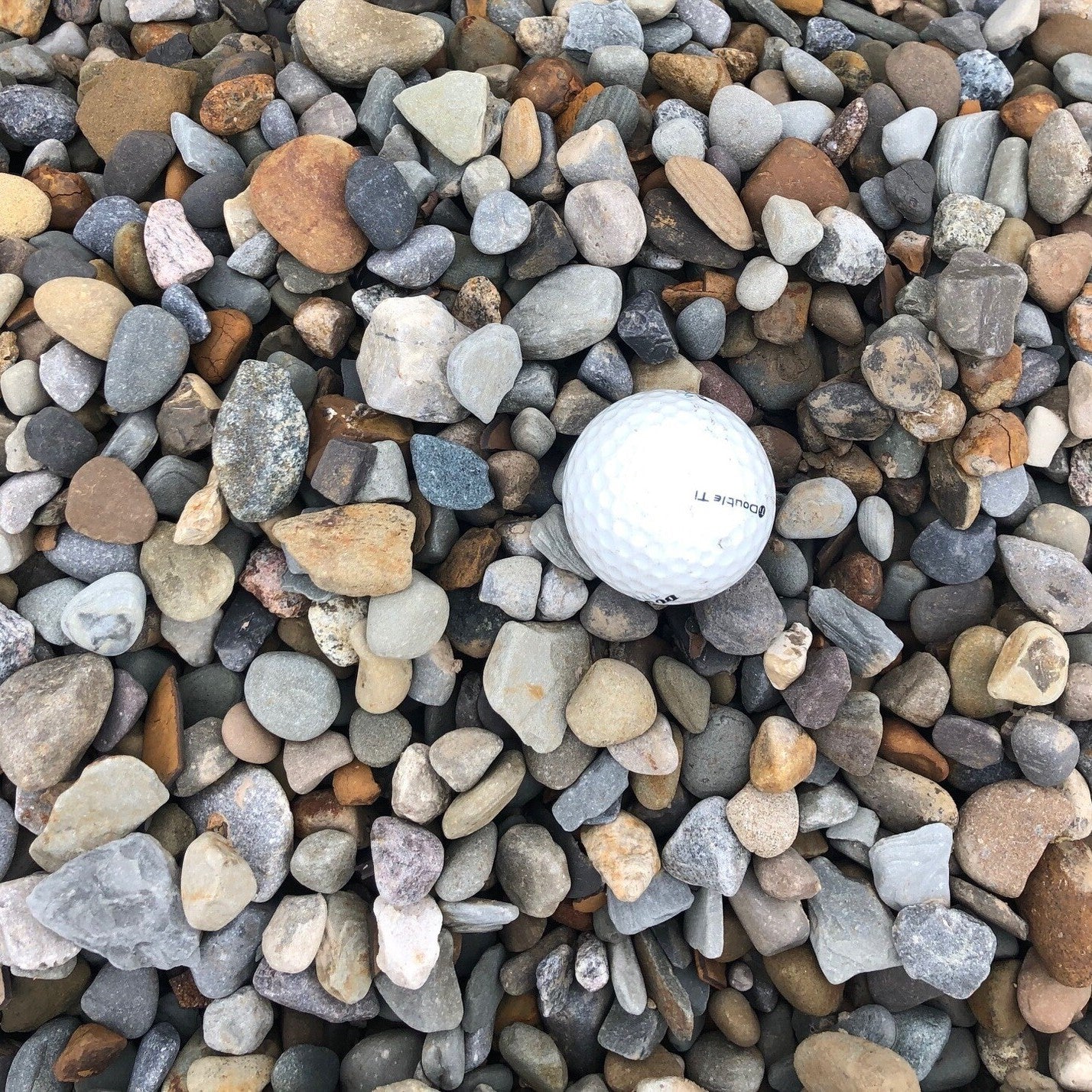
Number 57 crushed stone, angular limestone graded to about three quarters of an inch. The standard driveway, base and drainage gravel, it locks together under traffic and drains fast.
My experience with Mulch Mound was great and super easy. I ordered two yards of screened topsoil and was able to get it delivered within 2 days. They came in my requested time frame (afternoon) and dropped it off where I asked on my driveway. The topsoil was exactly what was a...
Tell us what you're looking for
Thanks! We received your request.
Something went wrong. Please try again.
How Much Material Do I Need?
Use 2 inches of stone for decorative beds over fabric, 3 to 4 inches for walkways, and 4 to 6 inches of compacted base for driveways and parking areas on our soft sandy soil. One ton of three quarter inch stone covers roughly 100 square feet at 2 inches deep.
Use our free gravel calculator
What is a Yard?
A yard is approximately 27 cubic feet. As a general guideline, one yard of material can cover an area of about 100-160 square feet at a 2-3 inch depth.
We can't take orders for this right now. Tell us what you need and we'll get back to you.
What do you need?
Thanks! We received your request.
Something went wrong. Please try again.
Hand-picked local yards
4,000+ regional deliveries
Dedicated support
Why order through Mulch Mound
The best local , without the guesswork.
We hand-pick and partner with the best yards in your region, keep only the ones our buyers rate well, and back each load with our guarantee.
Mulch Mound Guarantee
If your isn't the quantity or quality you ordered, we'll make it right.
About this stone
Number 57 crushed stone, angular limestone graded to about three quarters of an inch. The standard driveway, base and drainage gravel, it locks together under traffic and drains fast.
My experience with Mulch Mound was great and super easy. I ordered two yards of screened topsoil and was able to get it delivered within 2 days. They came in my requested time frame (afternoon) and dropped it off where I asked on my driveway. The topsoil was exactly what was a...
How Much Material Do I Need?
Use 2 inches of stone for decorative beds over fabric, 3 to 4 inches for walkways, and 4 to 6 inches of compacted base for driveways and parking areas on our soft sandy soil. One ton of three quarter inch stone covers roughly 100 square feet at 2 inches deep.
Use our free gravel calculator
What is a Yard?
A yard is approximately 27 cubic feet. As a general guideline, one yard of material can cover an area of about 100-160 square feet at a 2-3 inch depth.
My experience with Mulch Mound was great and super easy. I ordered two yards of screened topsoil and was able to get it delivered within 2 days. Th...
Read full review
My experience with Mulch Mound was great and super easy. I ordered two yards of screened topsoil and was able to get it delivered within 2 days. They came in my requested time frame (afternoon) and dropped it off where I asked on my driveway. The topsoil was exactly what was advertised, clean with no rocks or other debris. The price was reasonable. I plan to use them again in a couple weeks to order compost for my garden beds.
Measure your area in feet, choose a depth, and convert using square feet times depth in inches divided by 324 for cubic yards. Then multiply by roughly 1.4 to get tons, since stone is sold by weight and is far heavier than mulch. For drainage trenches, calculate the trench volume separately and subtract the space your pipe takes up.
Complete Your Outdoor Stone Project
Pair your stone with woven geotextile fabric and steel or paver edging, both essential for keeping gravel out of sandy loam and off the sidewalk. Crusher run makes the compacted base that keeps decorative stone from sinking.
Always install a hard edge with stone. On flat North Charleston lots, sheet flow from a summer downpour will scatter loose gravel across turf and sidewalks within one season, and once stone gets into a lawn it stays there until a mower finds it. Steel edging or a soldier course of pavers set slightly proud of the gravel surface keeps everything contained and makes the whole installation look professionally finished.
Mulch Mound Pro Tip
Compact in lifts, not all at once. Dumping 6 inches of crusher run and running a plate compactor over it leaves the bottom half loose, and North Charleston sandy loam underneath will let it settle unevenly the first time a saturated storm rolls through. Spread 2 to 3 inches, wet it lightly, compact, then repeat. The extra hour saves you from regrading a rutted driveway next spring.
Mulch Mound Pro Tip
Match your stone to salt and moisture exposure. Homes closer to the Cooper River and the harbor deal with salt laden air that pits softer materials over time. Granite and washed river rock hold up well, while some limestone products break down faster in constant humidity and acidic rainwater. If your stone will sit in a swale that stays wet for days after a tropical system, choose a hard angular granite product that will not soften or crumble.
The Unique Landscape of North Charleston
Stone earns its keep in North Charleston because our 52 inches of annual rain has to go somewhere, and on flat 39 foot elevation lots it often goes exactly where you do not want it. Gravel swales, French drains, and dry creek beds move water off the sandy loam and away from slabs and crawl spaces during tropical downpours. Stone also solves the problems mulch cannot, holding a permanent edge along driveways, staying put in wind driven rain, and never needing an annual refresh in a climate where organic material decomposes in a single season. In Zone 9a heat, light colored gravel reflects rather than absorbs, keeping walkways and utility areas cooler underfoot. Add in the salt air near the rivers, which chews up organic materials, and durable stone starts to look like the low maintenance choice.
Frequently Asked Questions
Click a question to see the answer
Answer
What stone should I use for a French drain in my low lying North Charleston yard?
Use washed 57 stone, which is roughly three quarter inch angular rock with plenty of void space for water to move through. Wrap the trench in filter fabric so our fine sandy loam does not migrate in and clog the voids within a season. On flat lots here, drain length and outfall matter as much as the stone, so make sure the pipe has somewhere to actually discharge.
Answer
Will gravel sink into my sandy soil?
Yes, if you skip the base. North Charleston sandy loam has no load bearing strength when saturated, and after a few heavy rains loose gravel simply disappears into it. Lay woven geotextile fabric first, then 3 to 4 inches of compacted crusher run, then your decorative stone on top. Done that way a gravel path here lasts many years with minimal topping off.
Answer
Is stone or mulch better around my foundation?
Stone is the safer bet close to the house in the Lowcountry. It does not hold the moisture that draws termites toward your crawl space vents and weep holes, and it will not float away when water sheets across the yard during a tropical system. Keep plantings that need cool roots, like azaleas and camellias, in mulched beds further out.
Answer
Does light colored gravel get too hot in a Charleston summer?
Light gravel actually reflects heat rather than absorbing it, so it stays noticeably cooler than dark river rock or black lava rock during our stretch of 95 degree days. That said, any stone bed radiates more heat than mulch, so keep gravel away from heat sensitive plants like hydrangeas and use it in walkways, drives, and utility areas instead.
Answer
How much stone do I need for a driveway or parking pad?
For a residential drive on North Charleston sand, plan 4 inches of compacted crusher run as a base plus 1 to 2 inches of surface stone. A 10 by 40 foot pad at 6 inches total is about 7.5 cubic yards. Order tonnage rather than yards for stone, since 1 cubic yard runs about 1.4 tons depending on the product.
Answer
Can I use stone to stop erosion where water runs off my roof?
Absolutely, and it is one of the most common fixes we see here. Downspouts dumping onto bare sandy loam carve trenches fast with our rainfall totals. A 3 foot splash pad of 2 to 4 inch river rock over filter fabric, or a proper dry creek bed carrying water toward the swale, stops the scouring and looks intentional.
Answer
Do I need landscape fabric under decorative stone?
Under stone, yes, unlike under mulch. Fabric keeps our sandy loam from pumping up into the voids and slows nutsedge and Florida betony, which push through almost anything during our long nine month growing season. Use a woven geotextile rather than the thin big box fabric, and expect to spot spray weeds that sprout in the dust and leaf litter that collects on top over time.
Answer
Is crush and run the same as crusher run?
Crush and run refers to crushed stone blended with stone dust that compacts into a solid base under driveways and pavers. On the flat, low lying lots common around North Charleston, that packed base matters less than moving water, which is why we deliver Crushed Stone #57, a clean, free draining stone suited for swales and drainage work.
More delivery around North Charleston, South Carolina