


We had a great experience with mulch mound! Our mulch arrived when we requested. The delivery fee was so reasonable. We’ll use them again for sure!
About this compost
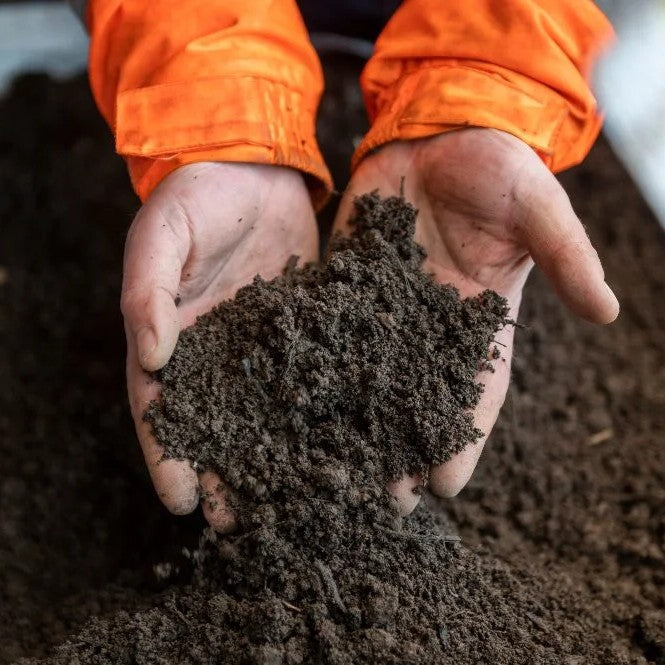
Spent mushroom substrate, straw and manure based and rich in organic matter. Blend it into beds a season ahead of heavy planting.
We had a great experience with mulch mound! Our mulch arrived when we requested. The delivery fee was so reasonable. We’ll use them again for sure!
Tell us what you're looking for
Thanks! We received your request.
Something went wrong. Please try again.
How Much Compost Do I Need?
How Much Compost Do I Need?
One cubic yard of our compost covers about 324 square feet at a 1 inch depth, which is the right amount for topdressing an established lawn. For bed prep, plan on 2 to 3 inches tilled into the soil, which drops coverage to roughly 110 to 160 square feet per yard depending on depth. Measure your bed or lawn area first, then match it to the depth you're using rather than guessing at a round number of yards.
Use our free compost calculator
What is a Yard?
What is a Yard?
FAQs
FAQs
Parkland Compost Delivery
Parkland Compost Delivery
Regular price
$70.00
per
Yard
Regular price
Sale price
$70.00
Unit price
per
Shipping calculated at checkout.
Minimum of 3 Yard
Couldn't load pickup availability
Not currently available
We can't take orders for this right now. Tell us what you need and we'll get back to you.
Hand-picked local yards
4,000+ regional deliveries
Dedicated support
Why order through Mulch Mound
The best local compost, without the guesswork.
We hand-pick and partner with the best yards in your region, keep only the ones our buyers rate well, and back each load with our guarantee.
Mulch Mound Guarantee
If your compost isn't the quantity or quality you ordered, we'll make it right.
About this compost
Spent mushroom substrate, straw and manure based and rich in organic matter. Blend it into beds a season ahead of heavy planting.
We had a great experience with mulch mound! Our mulch arrived when we requested. The delivery fee was so reasonable. We’ll use them again for sure!
How Much Compost Do I Need?
How Much Compost Do I Need?
One cubic yard of our compost covers about 324 square feet at a 1 inch depth, which is the right amount for topdressing an established lawn. For bed prep, plan on 2 to 3 inches tilled into the soil, which drops coverage to roughly 110 to 160 square feet per yard depending on depth. Measure your bed or lawn area first, then match it to the depth you're using rather than guessing at a round number of yards.
Use our free compost calculator
What is a Yard?
What is a Yard?
FAQs
FAQs
Tell us what you're looking for
Thanks! We received your request.
Something went wrong. Please try again.

How It Works
Getting started is easy — just follow these simple steps
1
Choose your quantity
Adjust the quantity to match your project. One cubic yard covers about 100 to 160 square feet at a 2 to 3 inch depth.
2
Select your delivery date
Select a delivery date you'd like for the product to be dropped off at your home
3
Sit back and wait
Sit back, wait, and let us work our magic to make sure the highest quality product is delivered to your driveway.


First time going with this company for mulch and it was an efficient process from start to finish. Website was easy—I told them exactly where I wan...
Read full review
First time going with this company for mulch and it was an efficient process from start to finish. Website was easy—I told them exactly where I wanted the mulch put on my driveway, and it was delivered perfectly when I got home from work the next day. Best deal around when I compared it to competitors and I will definitely be becoming back.
Complete Your Outdoor Project
Compost pairs well with a mulch topdressing once it's worked in, since the mulch holds moisture over the amended soil instead of letting sandy ground dry it out again. If you're building new beds from scratch, many people order a soil blend alongside the compost to fill depth before finishing with compost as the top layer. For lawns, a light sand topdressing before compost can help level low spots first.


Mulch Mound Pro Tip
Don't pile finished compost thick and walk away. In Parkland's sandy ground, a couple inches tilled 4 to 6 inches deep into the soil does more than a thick untilled layer sitting on top, because the sand needs the organic matter mixed through its profile to hold water at all. Lawns should get no more than 1 inch topdressed and raked in, never dumped in clumps, since thick compost on turf can smother grass blades before it breaks down.
Mulch Mound Pro Tip
A common mistake is treating compost like mulch and piling it on thinking more will feed plants faster. Excess compost can actually tie up nitrogen temporarily as microbes work through the extra organic material, which shows up as pale, slow growth right when you expected the opposite. Stick to the 1 to 3 inch range depending on use and let it work into the sand over a season instead of forcing a shortcut with a heavier layer.
Mulch Mound Pro Tip
Compost and mulch aren't the same job even though people order them together. Compost feeds and structures the soil, mulch just protects the surface above it, so lay compost first, work it in, then mulch on top rather than mixing them together. Ordering both in the same delivery for a bed rebuild saves a second trip and gets the whole project sequenced correctly the first time.
Building Better Soil in Parkland
Sandy soil around Parkland lets water and nutrients drain straight through before roots can use them, which is the main reason beds near Pine Trails Park and similar developments struggle to hold a planting. Compost worked into that sand adds the organic matter and microbial life that sand lacks entirely. In zone 10b, growth doesn't fully stop in winter, so soil building projects can happen in more than one season without waiting for a narrow window. A couple inches tilled into a new bed changes how that sand behaves within one growing cycle.
What Finished Compost Is
Finished compost is organic matter that has fully broken down into a dark, crumbly material with an earthy smell. It feeds soil life, improves structure, and helps beds hold water without staying soggy.
How Much to Apply
Work 1 to 2 inches into new beds, or topdress lawns with a quarter to half inch and rake it in. More is not better. Too thick a layer can smother roots instead of feeding them.
When to Apply
Spring and fall are both good windows. Spring applications feed the growing season ahead, and fall applications break down over winter so beds are ready at first thaw.