


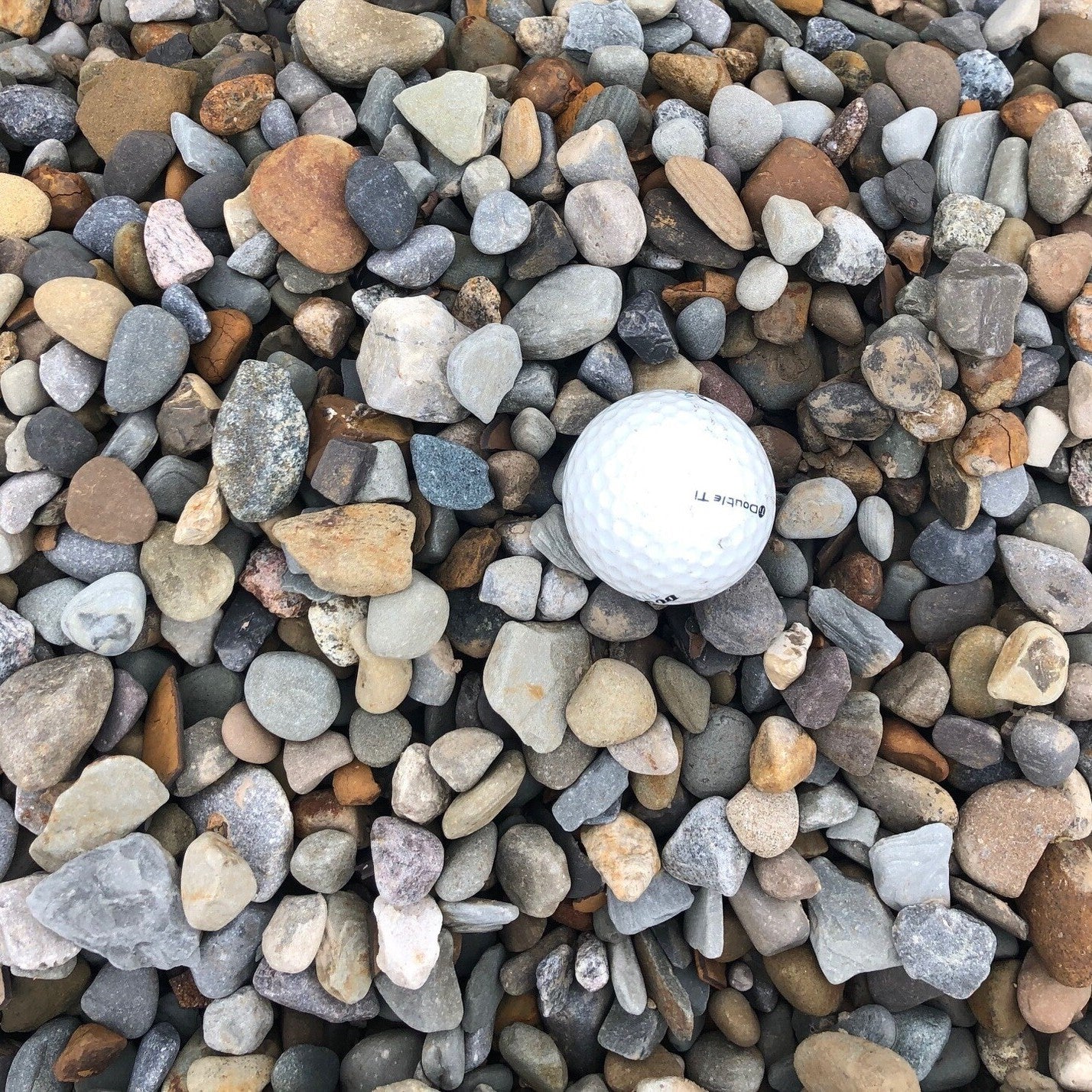


The driver nailed it on putting the gravel I ordered in front of my trailer and between the sidewalk. Very satisfied with how my flowerbeds look now.
About this stone
Number 57 crushed stone, angular limestone graded to about three quarters of an inch. The standard driveway, base and drainage gravel, it locks together under traffic and drains fast.
The driver nailed it on putting the gravel I ordered in front of my trailer and between the sidewalk. Very satisfied with how my flowerbeds look now.
Tell us what you're looking for
Thanks! We received your request.
Something went wrong. Please try again.
How Much Material Do I Need?
How Much Material Do I Need?
Two inches is enough for decorative stone over fabric, while drainage trenches and dry creek beds want four inches or more. One cubic yard covers roughly 160 square feet at two inches deep.
Use our free gravel calculator
What is a Yard?
What is a Yard?
FAQs
FAQs
Pearland Gravel Delivery
Pearland Gravel Delivery
Regular price
$133.00
per
Yard
Regular price
Sale price
$133.00
Unit price
per
Shipping calculated at checkout.
Minimum of 3 Yard
Couldn't load pickup availability
Not currently available
We can't take orders for this right now. Tell us what you need and we'll get back to you.
Hand-picked local yards
4,000+ regional deliveries
Dedicated support
Why order through Mulch Mound
The best local , without the guesswork.
We hand-pick and partner with the best yards in your region, keep only the ones our buyers rate well, and back each load with our guarantee.
Mulch Mound Guarantee
If your isn't the quantity or quality you ordered, we'll make it right.
About this stone
Number 57 crushed stone, angular limestone graded to about three quarters of an inch. The standard driveway, base and drainage gravel, it locks together under traffic and drains fast.
The driver nailed it on putting the gravel I ordered in front of my trailer and between the sidewalk. Very satisfied with how my flowerbeds look now.
How Much Material Do I Need?
How Much Material Do I Need?
Two inches is enough for decorative stone over fabric, while drainage trenches and dry creek beds want four inches or more. One cubic yard covers roughly 160 square feet at two inches deep.
Use our free gravel calculator
What is a Yard?
What is a Yard?
FAQs
FAQs
Tell us what you're looking for
Thanks! We received your request.
Something went wrong. Please try again.

How It Works
Getting started is easy — just follow these simple steps
1
Choose your stone
Make sure you adjust the quantity to your home's needs. You can use our calculator to estimate how much you'll need.
2
Select your delivery date
Select a delivery date you'd like for the product to be dropped off at your home
3
Sit back and wait
Sit back, wait, and let us work our magic to make sure the highest quality product is delivered to your driveway.


Need Help Calculating How Much Gravel You Need?
Use our NEW Trace from Satellite tool to get an estimate for your project based on an aerial view of your property
Try Our CalculatorMeasure the length and width of each stone area and settle on a depth before calculating, since two inches versus four inches doubles your tonnage. Remember that stone is priced and hauled by weight, so a small looking area can still be a heavy load. Our calculator converts square footage and depth into the yardage you need, and it is worth adding five percent for edges and settling.
Complete Your Outdoor Stone Project
Add woven landscape fabric, steel or concrete edging, and a few accent boulders to keep your stone contained and looking intentional after Pearland's heaviest rains.

Mulch Mound Pro Tip
Always run stone to a real outlet. At Pearland's 49 foot elevation the ground offers almost no natural fall, so a gravel trench that dead ends simply fills with water and sits. Identify where the water is supposed to go, whether that is a curb inlet, a rear easement, or a pop up emitter in the lawn, and shoot your grade to that point before you order a single ton of rock.
Mulch Mound Pro Tip
Do not cheap out on the fabric. The thin nonwoven material sold in big box rolls tears during installation and clogs within two seasons in our silty clay. Spend more on a woven geotextile rated for separation, overlap seams by at least twelve inches, and pin it every few feet. On Pearland gumbo that single upgrade is the difference between a stone bed that looks sharp for a decade and one that turns muddy in three years.
Mulch Mound Pro Tip
Give stone beds a rinse and a rake each spring, ideally in March once the last frost has passed. Pearland's pollen, leaf litter, and clay dust settle into the voids between rocks and dull the color fast. A stiff rake to loosen debris followed by a hose or pressure washer on a wide fan brings river rock and limestone back to life. Do this before spring weeds germinate and you will cut your maintenance for the whole year.
The Unique Landscape of Pearland
Stone earns its keep in Pearland because our combination of flat terrain, 52 inches of rain, and slow draining gumbo clay creates drainage problems that plants alone cannot solve. Gravel swales, French drains, and dry creek beds move water off a lot that sits at only 49 feet of elevation, where gravity offers very little help. Stone also holds its ground when organic mulch floats away, which makes it ideal for side yards, downspout outfalls, and the narrow strips between Pearland homes that flood first. In Zone 9b heat, light colored river rock and limestone reflect sun rather than absorbing it the way dark mulch does, keeping walkway edges more comfortable. And because stone never decomposes, it is the low maintenance answer for homeowners tired of remulching twice a year in our humid climate. Used thoughtfully, stone solves drainage and cuts maintenance at the same time.