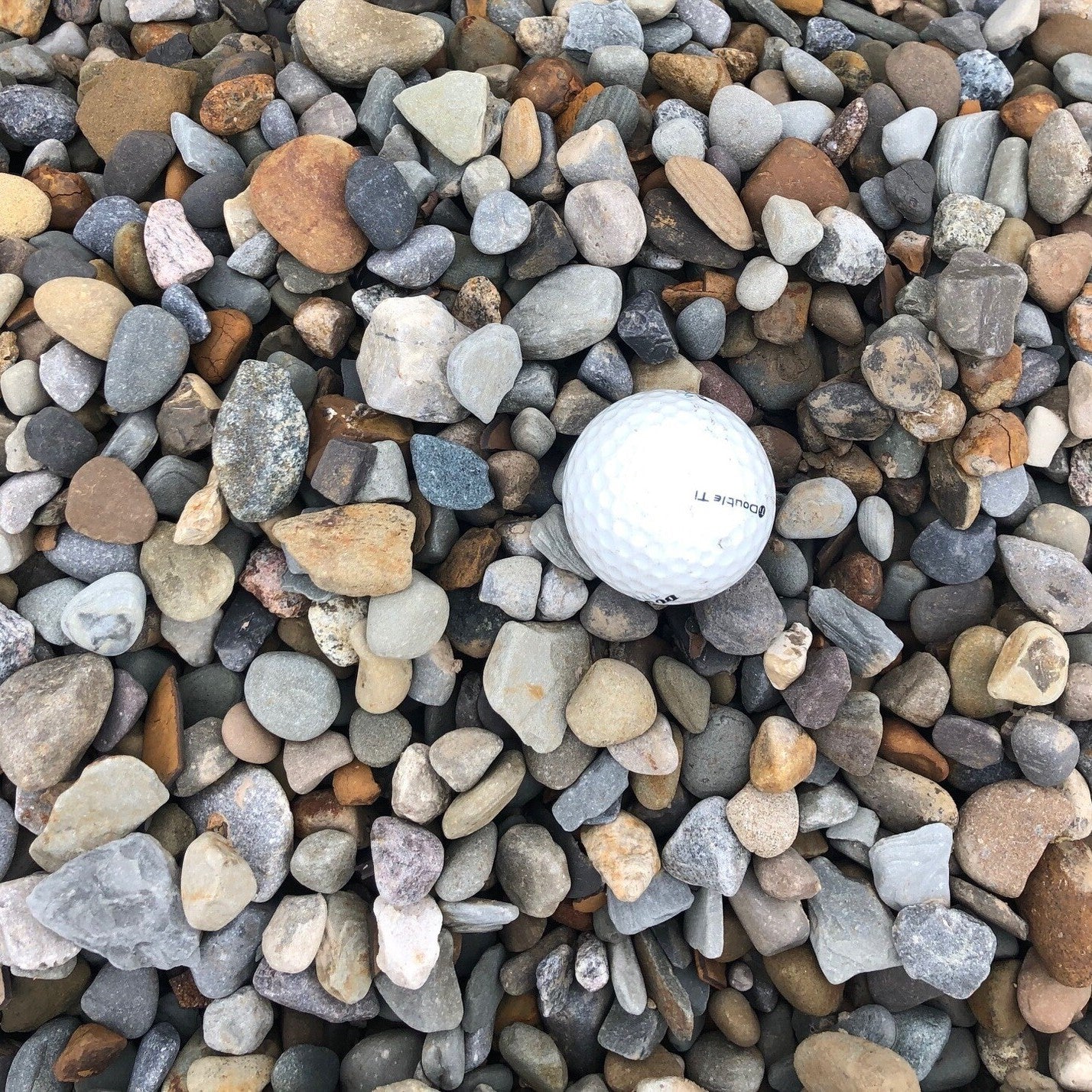
- 3” West Texas Black Crushed Stone landscape rock, sourced from our local supply yard. Color and gradation may vary slightly by quarry lot. Sold by the yard.
My experience with Mulch Mound was great and super easy. I ordered two yards of screened topsoil and was able to get it delivered within 2 days. They came in my requested time frame (afternoon) and dropped it off where I asked on my driveway. The topsoil was exactly what was a...
Tell us what you're looking for
Thanks! We received your request.
Something went wrong. Please try again.
How Much Material Do I Need?
Two inches is enough for decorative ground cover over fabric, while 3 to 4 inches suits pathways and 6 or more inches suits drainage trenches. One ton generally covers about 100 square feet at 2 inches deep.
Use our free stone calculator
What is a yard?
A yard is approximately 27 cubic feet. As a general guideline, one yard of material can cover an area of about 100 square feet at 3 inches deep.
We hand-pick and partner with the best yards in your region, keep only the ones our buyers rate well, and back each load with our guarantee.
Mulch Mound Guarantee
If your isn't the quantity or quality you ordered, we'll make it right.
About this stone
- 3” West Texas Black Crushed Stone landscape rock, sourced from our local supply yard. Color and gradation may vary slightly by quarry lot. Sold by the yard.
My experience with Mulch Mound was great and super easy. I ordered two yards of screened topsoil and was able to get it delivered within 2 days. They came in my requested time frame (afternoon) and dropped it off where I asked on my driveway. The topsoil was exactly what was a...
How Much Material Do I Need?
Two inches is enough for decorative ground cover over fabric, while 3 to 4 inches suits pathways and 6 or more inches suits drainage trenches. One ton generally covers about 100 square feet at 2 inches deep.
Use our free stone calculator
What is a yard?
A yard is approximately 27 cubic feet. As a general guideline, one yard of material can cover an area of about 100 square feet at 3 inches deep.
My experience with Mulch Mound was great and super easy. I ordered two yards of screened topsoil and was able to get it delivered within 2 days. Th...
Read full review
My experience with Mulch Mound was great and super easy. I ordered two yards of screened topsoil and was able to get it delivered within 2 days. They came in my requested time frame (afternoon) and dropped it off where I asked on my driveway. The topsoil was exactly what was advertised, clean with no rocks or other debris. The price was reasonable. I plan to use them again in a couple weeks to order compost for my garden beds.
Measure length times width in feet for the area, then choose a depth of 2 to 3 inches for decorative coverage or 4 or more for drainage and base applications. Stone is priced by the ton, so use our converter rather than thinking in cubic yards. Round up, because you will lose a little to leveling and settling into Plano's uneven clay grade.
Complete Your Outdoor Stone Project
Add heavy duty landscape fabric, steel or stone edging to hold the rock in place during Plano's downpours, and a few accent boulders to break up long gravel runs.
Route your downspouts before you set a single stone. Plano homes on clay pads suffer most from water pooling near the slab, so extend downspouts at least six feet out and terminate them into a gravel swale or dry creek. Building your decorative rock work around that drainage plan means the stone is doing real work, not just sitting there, and your foundation stays on a more even moisture cycle year round.
Mulch Mound Pro Tip
Order by weight, not by eye. Stone is deceptively heavy, and a single cubic yard of river rock runs well over a ton. Plano driveways handle a standard delivery fine, but plan the drop point carefully because moving three tons twice with a wheelbarrow in August heat is a genuinely miserable weekend. Stage the pile as close to the work area as your access allows and lay down a tarp to protect the concrete.
Mulch Mound Pro Tip
Use edging that anchors deep. Plano's clay heaves and settles enough through the wet and dry cycle that shallow plastic edging pops out of the ground within a year or two. Steel edging staked at twelve to eighteen inch intervals, or a mortared limestone border, keeps your gravel line crisp. It also stops rock from washing onto the lawn during the heavy May storms, which protects both your mower blades and your neighbors' opinion of the project.
The Unique Landscape of Plano
Stone solves problems in Plano that mulch simply cannot. With 41 inches of rain a year arriving in concentrated spring and fall storms, flat lots on slow draining clay end up with soggy side yards and washed out bed edges, and gravel is the durable fix. Decorative rock also stands up to the Zone 8b summer without fading or blowing away, which matters on the exposed west facing beds common in Plano's newer subdivisions. Because Blackland clay shifts underfoot as it swells and dries, a properly built base of crushed stone is essential under any patio, walkway, or paver project here. River rock in a dry creek bed is one of the most effective ways to route roof and downspout runoff away from a slab foundation. And for homeowners tired of replacing mulch every year in the heat, stone is a one time investment that holds its look for decades.
Frequently Asked Questions
Click a question to see the answer
Answer
Will rock make my beds hotter in the Plano summer?
Yes, noticeably. Light colored limestone and river rock reflect heat, and a south or west facing bed with gravel can run considerably warmer than a mulched bed on a 100 degree Plano afternoon. Use stone for pathways, drainage, and beds with heat tolerant plants like agave, yucca, and Texas sage, and keep mulch around anything that wilts in the sun.
Answer
How do I keep rock from sinking into my clay?
Install commercial grade woven geotextile fabric under the stone, not the thin plastic weed barrier from a big box store. Blackland clay pumps up through gravel every time it gets saturated and then dries, and without fabric your river rock will be half buried within two Plano rainy seasons. A compacted base layer under decorative rock helps as well.
Answer
What size rock works best for a dry creek bed?
Mix sizes for a natural look and better function. Use 1 to 3 inch river rock as the main bed, then set larger 6 to 12 inch cobbles and a few boulders along the edges and bends. Plano storms can dump an inch of rain in under an hour, so a channel roughly two feet wide and six inches deep handles typical downspout and roof runoff on a standard lot.
Answer
How many tons of gravel do I need?
One ton of crushed stone covers about 100 square feet at 2 inches deep, or roughly 80 square feet at 3 inches. For a typical Plano side yard path 3 feet wide and 40 feet long at 3 inches, plan on about 1.5 tons. River rock covers slightly less per ton because of the air space between the rounded stones.
Answer
Do I still get weeds if I use rock instead of mulch?
You get fewer, but Plano's climate is generous to weeds year round. Windblown soil and organic debris collect in the gaps and Bermuda grass in particular will find its way through. Quality fabric underneath, a blower pass a few times a year, and a spring pre emergent application will keep a gravel bed looking clean with very little effort.
Answer
What should I use as a base for a paver patio on Plano clay?
Crushed limestone base rock, often called flex base or crushed concrete, compacted in two to three inch lifts. Plan on six inches of compacted base for a patio and eight or more for a driveway, because our clay moves seasonally more than soils in most of the country. Excavate, compact the subgrade, then compact each lift before adding your leveling sand.
Answer
Is decomposed granite a good choice for Plano walkways?
It is a popular choice and it looks great with limestone and native plantings. Just be aware that our heavy spring downpours will move loose decomposed granite, so use a stabilized product or install solid edging and a slight crown. On slopes it can migrate, in which case a crushed angular stone that locks together holds up better.