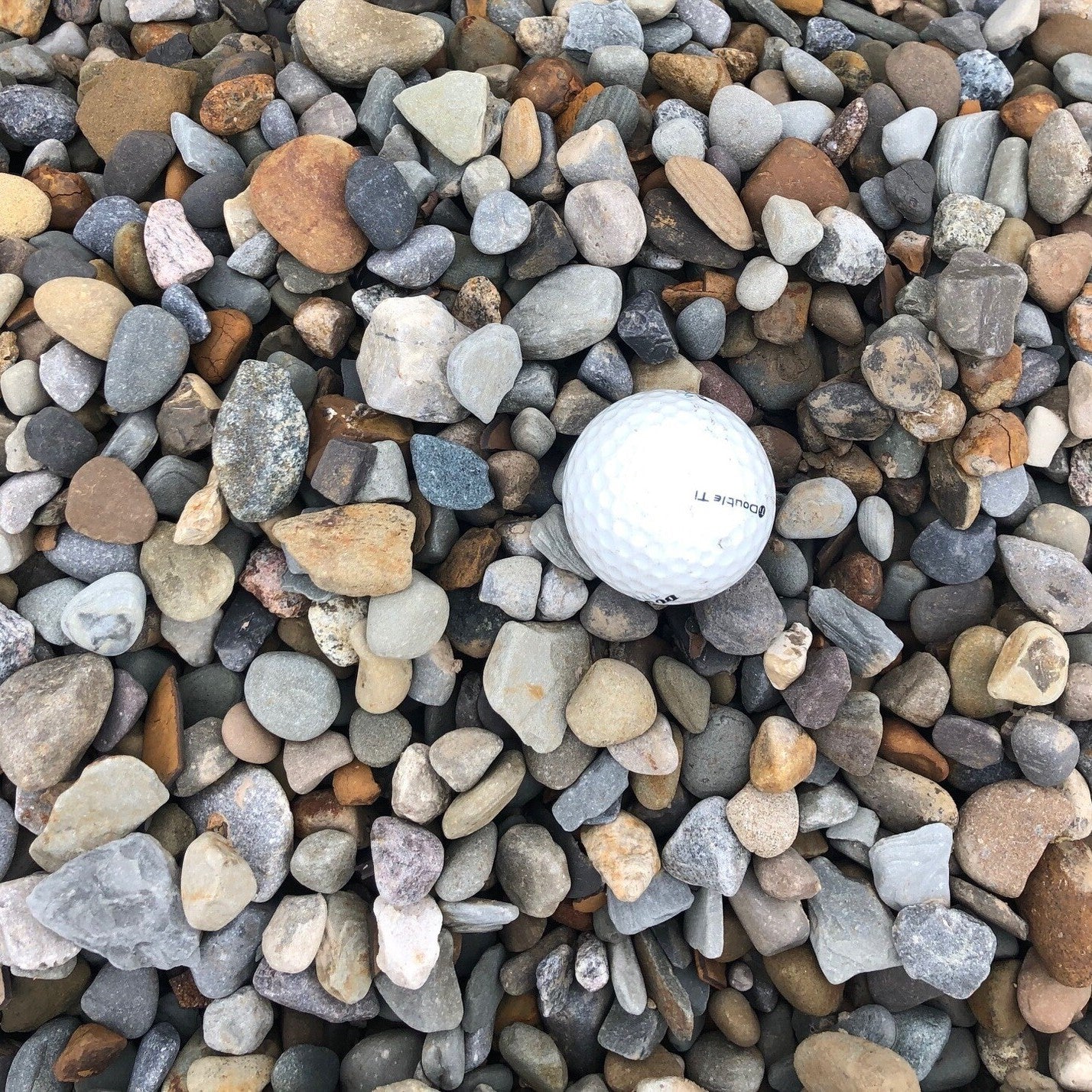
Number 57 crushed stone, angular limestone graded to about three quarters of an inch. The standard driveway, base and drainage gravel, it locks together under traffic and drains fast.
I used Mulch Mound to have 3 cubic yards of garden soil delivered. The process was easy and I love that I didn't have to call anyone. I placed my order online, picked my delivery date, laid out my tarp and the dirt was delivered. My delivery had to be pushed back, but I was ke...
Tell us what you're looking for
Thanks! We received your request.
Something went wrong. Please try again.
How Much Material Do I Need?
Two to three inches is right for decorative beds and drainage bands, while driveways and parking pads need four to six inches of stone over a compacted, fabric lined base. Deeper is always better on red clay, which shifts and softens with our heavy rainfall.
Use our free gravel calculator
What is a Yard?
A yard is approximately 27 cubic feet. As a general guideline, one yard of material can cover an area of about 100-160 square feet at a 2-3 inch depth.
We can't take orders for this right now. Tell us what you need and we'll get back to you.
What do you need?
Thanks! We received your request.
Something went wrong. Please try again.
Hand-picked local yards
4,000+ regional deliveries
Dedicated support
Why order through Mulch Mound
The best local , without the guesswork.
We hand-pick and partner with the best yards in your region, keep only the ones our buyers rate well, and back each load with our guarantee.
Mulch Mound Guarantee
If your isn't the quantity or quality you ordered, we'll make it right.
About this stone
Number 57 crushed stone, angular limestone graded to about three quarters of an inch. The standard driveway, base and drainage gravel, it locks together under traffic and drains fast.
I used Mulch Mound to have 3 cubic yards of garden soil delivered. The process was easy and I love that I didn't have to call anyone. I placed my order online, picked my delivery date, laid out my tarp and the dirt was delivered. My delivery had to be pushed back, but I was ke...
How Much Material Do I Need?
Two to three inches is right for decorative beds and drainage bands, while driveways and parking pads need four to six inches of stone over a compacted, fabric lined base. Deeper is always better on red clay, which shifts and softens with our heavy rainfall.
Use our free gravel calculator
What is a Yard?
A yard is approximately 27 cubic feet. As a general guideline, one yard of material can cover an area of about 100-160 square feet at a 2-3 inch depth.
I used Mulch Mound to have 3 cubic yards of garden soil delivered. The process was easy and I love that I didn't have to call anyone. I placed my o...
Read full review
I used Mulch Mound to have 3 cubic yards of garden soil delivered. The process was easy and I love that I didn't have to call anyone. I placed my order online, picked my delivery date, laid out my tarp and the dirt was delivered. My delivery had to be pushed back, but I was kept informed via text, which was great. So why not 5 stars? The description of garden soil on the website is "A balanced mix of topsoil and organic amendments ready for raised beds, flower gardens, and new planting areas. Good drainage, solid nutrients, easy to work with." What I got was more like fill dirt. It had a lot of gravel, a lot of clay, and random trash mixed in. I didn't test the soil to see if it actually had "amendments" because I already have compost and alpaca manure ready to add, but if I'd known the quality of the dirt was going to be the same as the bagged dirt I bought last year, I probably would have gotten 2 yards of top soil and a yard of leaf compost for better quality, especially since the leaf compost is cheaper. Photo of my mountain of dirt and just some of the trash I found in it.
Measure the length and width of the area, decide on depth, and remember that stone is priced by weight rather than volume, so the calculator converts for you. For driveways, measure the full driving surface plus a foot of overhang on each side, since Rainbow City drives tend to get wider with use. Add ten percent for settling and for filling the low spots that clay yards inevitably develop.
Complete Your Outdoor Stone Project
Pair your stone with geotextile fabric underneath and steel or paver edging along the borders so gravel stays out of the lawn during heavy runoff. Screened topsoil is useful for shaping the grade and swale contours before the stone goes down.
Compact your base in layers instead of dumping everything at once. Spread three inches, run a plate compactor or drive over it repeatedly, then add the next three inches and repeat. On Rainbow City clay, a base placed in one thick lift never fully consolidates and it will rut the first time a delivery truck or heavy rain hits it. Layered compaction is the difference between a driveway that lasts a decade and one that fails in two seasons.
Mulch Mound Pro Tip
Point every downspout at stone. Rainbow City roofs shed enormous volume during our 55 inch rainfall year, and concentrated water hitting bare red clay carves a trench in one storm. Set a splash area of three to five inch river rock at each outlet, or extend the downspout underground and daylight it into a rock lined swale downhill. This one change prevents most of the erosion complaints we hear from Etowah County homeowners.
Mulch Mound Pro Tip
Match the stone size to the slope. On flat beds, small pea gravel and number 57 look clean and stay put. On any grade steeper than about ten percent, which describes plenty of Rainbow City yards, small stone will migrate downhill with every big storm. Step up to three to six inch river rock or angular cobble there, since the weight and irregular faces let the pieces lock against each other and resist moving.
The Unique Landscape of Rainbow City
With 55 inches of rain falling on Rainbow City every year and red clay that refuses to absorb much of it, stone is the material that gives water somewhere to go. Gravel driveways, drip line beds, dry creek beds, and French drain fills all do the same job here, which is moving runoff without letting it carve channels through your yard. Stone also solves the problems mulch cannot, holding its place on steep spots near the Coosa River bluffs and staying put in the shady, perpetually damp areas along north facing foundations. Because it never decomposes, it holds up through the humid stretch between the April 1 last frost and the November 5 first frost without needing a refresh. In a climate this wet, the right stone in the right place is a long term drainage investment, not just decoration.
Frequently Asked Questions
Click a question to see the answer
Answer
What size gravel works best for a driveway in Rainbow City?
A layered approach holds up best on our clay. Start with four to six inches of crusher run or number 57 as a base, then top with three quarter inch crushed gravel or crusher run for a surface that locks together. Avoid smooth river rock on driveways here, because it rolls under tires and migrates to the edges after every heavy rain we get.
Answer
How much stone do I need and how is it sold?
Stone is sold by the ton, and one ton of crushed stone covers roughly 100 square feet at two inches deep or about 70 square feet at three inches. For a 12 by 40 foot driveway section at three inches, plan on about seven tons. Use the calculator on this page and round up, because you will always want a little extra for low spots.
Answer
Will gravel sink into my red clay?
Without a barrier, yes. Rainbow City clay softens after our frequent heavy rains and stone works down into it, which means you are buying gravel again in two years. Lay a woven geotextile fabric over compacted clay before the first layer of stone. Fabric is cheap compared to a second load of gravel and it keeps clay from pumping up through the base.
Answer
Is river rock a good idea around my foundation?
It is one of the better uses for it here. A two foot wide, three inch deep band of river rock under the drip line handles roof runoff during our heaviest storms, keeps splash back off siding, and dries quickly instead of staying damp against the house like mulch can. Make sure the ground slopes away from the foundation before you place the stone.
Answer
Can I use stone instead of mulch in my planting beds?
You can, but choose carefully in zone 8a. Stone absorbs and radiates heat, so a rock bed on a south facing Rainbow City wall can run noticeably hotter in July and stress azaleas, hydrangeas, and other shade lovers. Stone works well around succulents, ornamental grasses, and hardscape edges. It also does nothing to improve the red clay underneath, which mulch does over time.
Answer
How do I build a dry creek bed for the runoff in my yard?
Dry creek beds work extremely well in Rainbow City because we get intense, short duration downpours. Dig a shallow channel following the natural water path, line it with fabric, place larger six to twelve inch stone along the edges, and fill the center with three to five inch river rock. Slight curves slow the flow and look more natural than a straight ditch.
Answer
Do weeds come up through gravel here?
They will if you skip the fabric, and our long humid growing season gives them plenty of time. Seeds also blow in and germinate in the dust and organic debris that collects between stones. Lay quality landscape fabric underneath, blow leaves and pine straw off the gravel a couple of times a year, and spot treat what does come through. That routine keeps a Rainbow City stone bed clean for years.
Answer
Is crush and run the same as crusher run?
Crush and run refers to crushed stone blended with stone dust that compacts into a firm base, common under driveways and pavers. With 55 inches of rain hitting Rainbow City yards each year and clay soil that will not drain, we deliver Crushed Stone #57 instead, since its washed, open structure moves water through rather than trapping it against your driveway base.