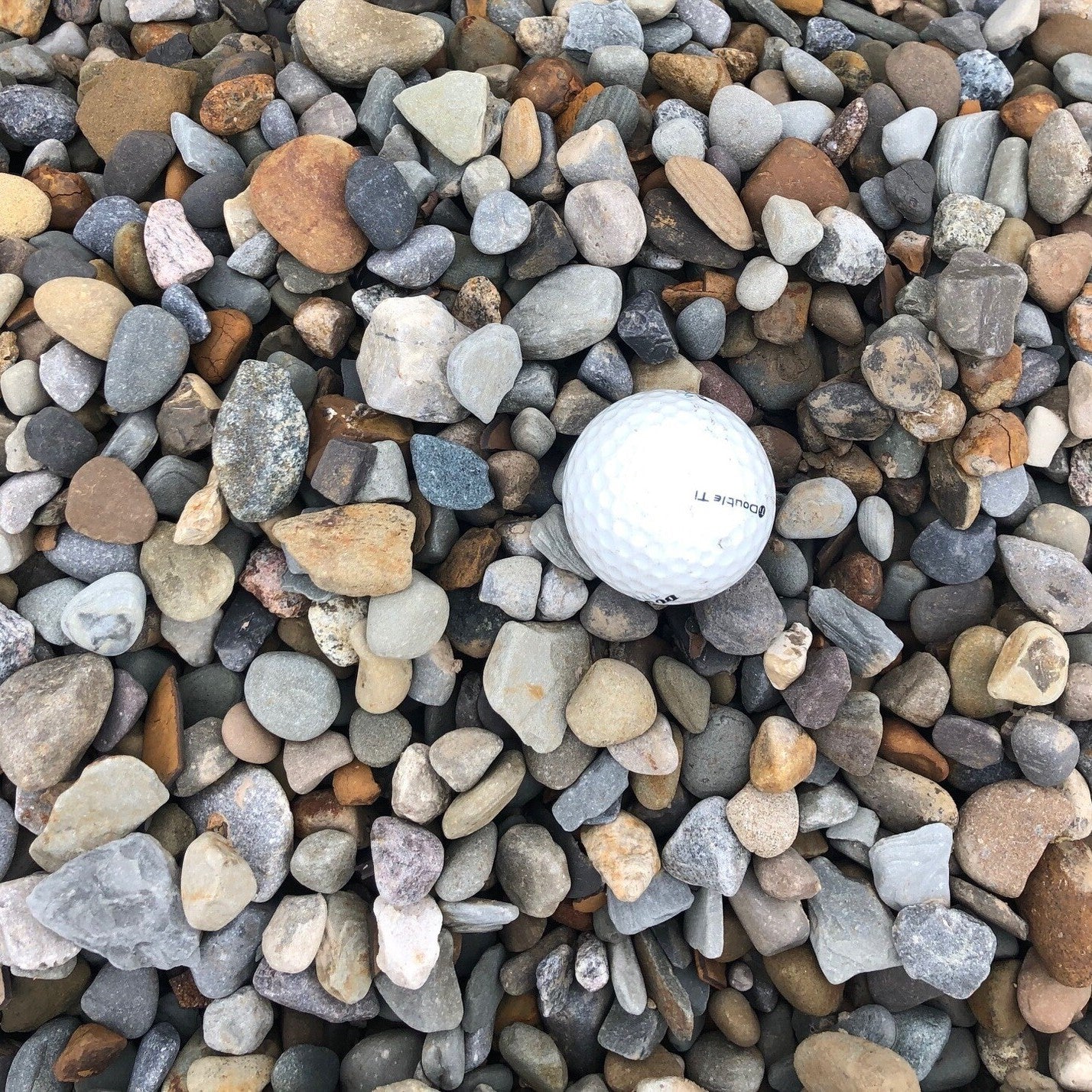
Number 57 crushed stone, angular limestone graded to about three quarters of an inch. The standard driveway, base and drainage gravel, it locks together under traffic and drains fast.
My experience with Mulch Mound was great and super easy. I ordered two yards of screened topsoil and was able to get it delivered within 2 days. They came in my requested time frame (afternoon) and dropped it off where I asked on my driveway. The topsoil was exactly what was a...
Tell us what you're looking for
Thanks! We received your request.
Something went wrong. Please try again.
How Much Material Do I Need?
One cubic yard of stone covers roughly 100 square feet at 3 inches or 80 square feet at 4 inches. Use 3 inches for decorative beds and 4 to 6 inches for driveways, paths, and drainage channels that carry monsoon runoff.
Use our free gravel calculator
What is a Yard?
A yard is approximately 27 cubic feet. As a general guideline, one yard of material can cover an area of about 100-160 square feet at a 2-3 inch depth.
We can't take orders for this right now. Tell us what you need and we'll get back to you.
What do you need?
Thanks! We received your request.
Something went wrong. Please try again.
Hand-picked local yards
4,000+ regional deliveries
Dedicated support
Why order through Mulch Mound
The best local , without the guesswork.
We hand-pick and partner with the best yards in your region, keep only the ones our buyers rate well, and back each load with our guarantee.
Mulch Mound Guarantee
If your isn't the quantity or quality you ordered, we'll make it right.
About this stone
Number 57 crushed stone, angular limestone graded to about three quarters of an inch. The standard driveway, base and drainage gravel, it locks together under traffic and drains fast.
My experience with Mulch Mound was great and super easy. I ordered two yards of screened topsoil and was able to get it delivered within 2 days. They came in my requested time frame (afternoon) and dropped it off where I asked on my driveway. The topsoil was exactly what was a...
How Much Material Do I Need?
One cubic yard of stone covers roughly 100 square feet at 3 inches or 80 square feet at 4 inches. Use 3 inches for decorative beds and 4 to 6 inches for driveways, paths, and drainage channels that carry monsoon runoff.
Use our free gravel calculator
What is a Yard?
A yard is approximately 27 cubic feet. As a general guideline, one yard of material can cover an area of about 100-160 square feet at a 2-3 inch depth.
My experience with Mulch Mound was great and super easy. I ordered two yards of screened topsoil and was able to get it delivered within 2 days. Th...
Read full review
My experience with Mulch Mound was great and super easy. I ordered two yards of screened topsoil and was able to get it delivered within 2 days. They came in my requested time frame (afternoon) and dropped it off where I asked on my driveway. The topsoil was exactly what was advertised, clean with no rocks or other debris. The price was reasonable. I plan to use them again in a couple weeks to order compost for my garden beds.
Measure each area separately and use actual square footage rather than pacing it off, since stone is heavy and ordering short means a second delivery fee. Multiply square feet by depth in feet and divide by 27 for cubic yards, then remember that a yard of rock weighs roughly 2,500 to 3,000 pounds. Order about 10 percent extra for uneven grade and edge losses.
Complete Your Outdoor Stone Project
Add woven landscape fabric and steel or paver edging to keep stone out of sidewalks and lawn, and pick up a few yards of mulch for the planted pockets where shrubs and perennials will do better in organic material. Road base makes a solid compacted foundation under any walkway or parking area.
Do your grading and irrigation before the rock arrives. Once you have spread several tons of stone, moving a drip line or fixing a low spot means shoveling all of it back off, and rock mixed with clay loam is nearly impossible to clean up. Run drip tubing, set emitters, test the whole zone under pressure, and confirm water flows away from the house. Then, and only then, bring in the stone.
Mulch Mound Pro Tip
Choose color with Reno's light in mind. Sunlight at 4,505 feet is intense and glare off very light rock next to a south facing wall can be genuinely uncomfortable and hard on nearby plants. Mid tone tans, browns, and the local desert gold and Sierra grays read naturally against sagebrush hillsides and hide dust far better. Bring a sample home and look at it at midday before committing to a full yard.
Mulch Mound Pro Tip
Leave real planting pockets instead of scattering plants through a rock field. Cut generous openings in the fabric, at least twice the width of the root ball, and mulch inside the pocket rather than piling gravel against the crown. Reno shrubs surrounded by hot rock already deal with extra reflected heat, so giving each one a cooler organic zone at its base dramatically improves survival through the first two summers.
The Unique Landscape of Reno
Stone belongs in Reno landscapes in a way it simply does not in wetter climates. With 7 inches of annual rain, water restrictions, and cash for grass style turf removal programs across the Truckee Meadows, decorative rock and gravel have become the practical surface for the majority of front yard square footage in this region. Stone does not fade in the high UV we get at 4,505 feet, it will not blow out of beds in our spring canyon winds, and it never needs replacing the way organic mulch does. It also solves real drainage problems, since compacted clay loam sheds the sudden thunderstorm downpours we get in July and August, and gravel swales and drip lines give that water somewhere to go. Sized correctly, stone also creates the defensible space that matters on the western edges of town where sage and bitterbrush meet the property line.
Frequently Asked Questions
Click a question to see the answer
Answer
What size rock works best for a Reno front yard conversion?
Three quarter inch to 1.5 inch material is the sweet spot for most Truckee Meadows front yards. It is heavy enough that spring wind will not move it, small enough to walk on and rake clean, and it does not trap as much windblown dust and cheatgrass seed as larger cobble does. Very fine gravel tends to migrate onto sidewalks, and large cobble makes weeding a real chore.
Answer
How do I keep weeds from growing in my rock?
Weeds in Reno rock almost never come up from below. They germinate in the dust and organic debris that settles into the rock from our windy, dusty spring. Install quality woven fabric underneath, keep the rock at least 3 inches deep, blow or rake debris out once or twice a year, and spot treat cheatgrass and tumbleweed seedlings in April before they set seed. That routine handles the vast majority of it.
Answer
Does decorative rock make my yard hotter?
Yes, meaningfully. Rock stores daytime heat and releases it into the evening, which can raise nearby air temperature and stress plants against a south or west facing wall. In Reno our dry nights help shed some of that heat, but you should still keep large rock fields away from foundations where you want shade trees, and use lighter colored stone on the hottest exposures. Shrubs planted in rock need more irrigation than the same plant in mulch.
Answer
Can I use gravel for a driveway or parking pad out in the North Valleys?
Absolutely, and it is common practice on larger Cold Springs, Palomino Valley, and Spanish Springs parcels. Build with 4 to 6 inches of angular road base compacted in lifts, then top with three quarter inch minus. Angular material locks together, while round river rock will rut and spread under tires. Expect to regrade and add a top layer every few years, more often if snowplowing scrapes material off.
Answer
How deep does the stone layer need to be?
Three inches minimum for decorative beds, which is enough to hide the fabric and block light from weed seed. Go 4 inches in high traffic areas or where wind funnels between houses. For drainage channels and dry creek beds handling monsoon runoff, 4 to 6 inches of larger material over fabric holds up better and will not wash out during a heavy August cell.
Answer
Will river rock or gravel help with the runoff I get during summer thunderstorms?
It can, if you shape the ground first. Reno clay loam is nearly impermeable when it is baked dry, so a July downpour runs across the surface rather than soaking in. A gravel filled swale or a rock lined dry creek that carries water away from the foundation and toward a planted low spot handles that volume well. The rock slows the water and prevents the erosion channels you otherwise see cut through bare clay.
Answer
Is rock a good idea for wildfire defensible space around my house?
It is one of the best tools available on Reno's west side and in the foothill neighborhoods. A noncombustible stone or gravel band 5 feet out from the structure removes fuel right where embers land, which fire officials in Washoe County specifically recommend. Keep that band swept clear of pine needles and leaf litter, since accumulated debris in rock is still fuel even though the rock itself is not.