


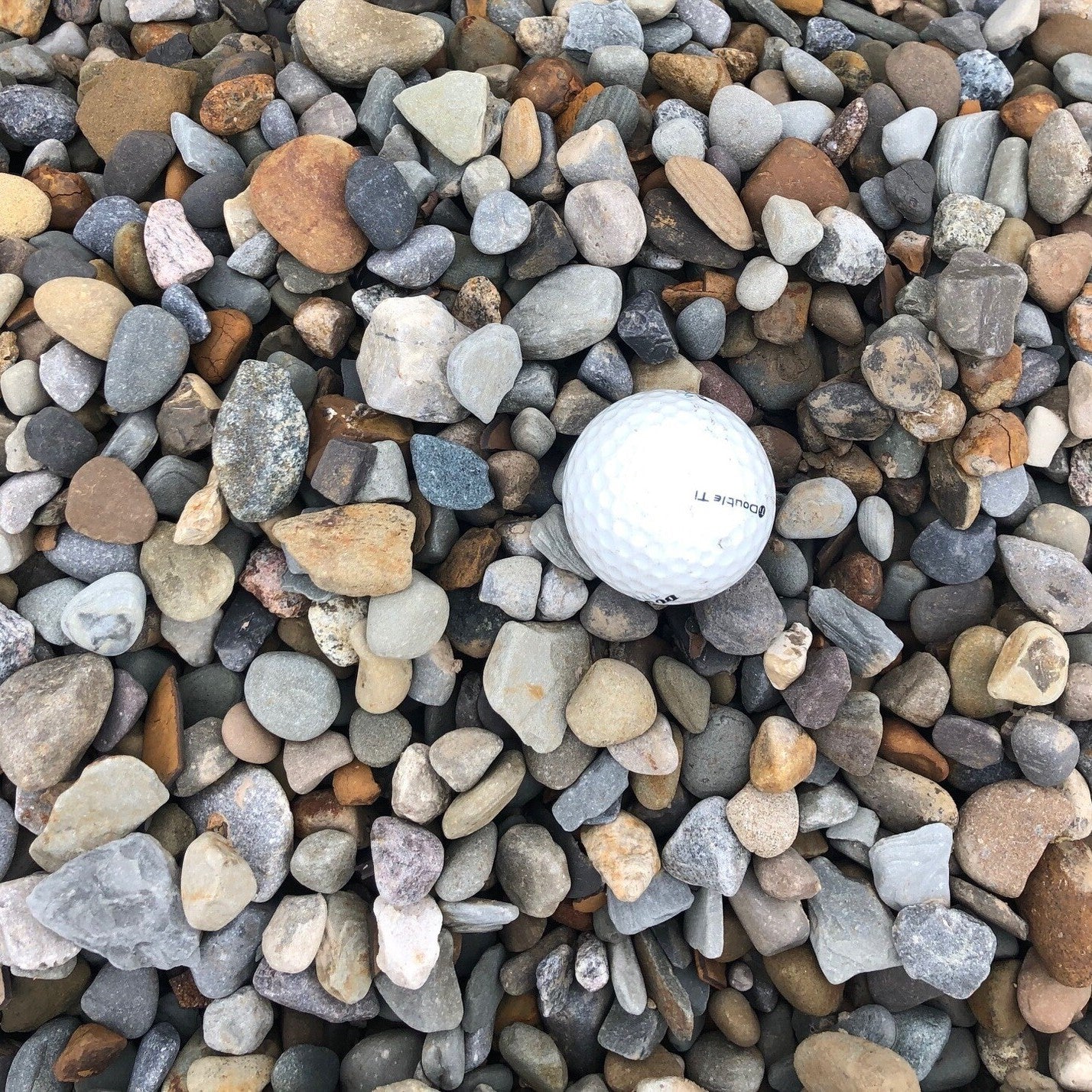

The driver nailed it on putting the gravel I ordered in front of my trailer and between the sidewalk. Very satisfied with how my flowerbeds look now.
About this stone
Number 57 crushed stone, angular limestone graded to about three quarters of an inch. The standard driveway, base and drainage gravel, it locks together under traffic and drains fast.
The driver nailed it on putting the gravel I ordered in front of my trailer and between the sidewalk. Very satisfied with how my flowerbeds look now.
Tell us what you're looking for
Thanks! We received your request.
Something went wrong. Please try again.
How Much Material Do I Need?
How Much Material Do I Need?
For decorative pathways and turf replacements in San Francisco, a depth of three to four inches of crushed gravel or decomposed granite provides solid coverage and effective weed suppression when laid over landscape fabric. For drainage-focused applications in areas prone to winter pooling, increase that depth to five or six inches to ensure the gravel layer is thick enough to handle the volume of rainfall the site receives.
Use our free gravel calculator
What is a Yard?
What is a Yard?
FAQs
FAQs
San Francisco Gravel Delivery
San Francisco Gravel Delivery
Regular price
$133.00
per
Yard
Regular price
Sale price
$133.00
Unit price
per
Shipping calculated at checkout.
Minimum of 3 Yard
Couldn't load pickup availability
Not currently available
We can't take orders for this right now. Tell us what you need and we'll get back to you.
Hand-picked local yards
4,000+ regional deliveries
Dedicated support
Why order through Mulch Mound
The best local , without the guesswork.
We hand-pick and partner with the best yards in your region, keep only the ones our buyers rate well, and back each load with our guarantee.
Mulch Mound Guarantee
If your isn't the quantity or quality you ordered, we'll make it right.
About this stone
Number 57 crushed stone, angular limestone graded to about three quarters of an inch. The standard driveway, base and drainage gravel, it locks together under traffic and drains fast.
The driver nailed it on putting the gravel I ordered in front of my trailer and between the sidewalk. Very satisfied with how my flowerbeds look now.
How Much Material Do I Need?
How Much Material Do I Need?
For decorative pathways and turf replacements in San Francisco, a depth of three to four inches of crushed gravel or decomposed granite provides solid coverage and effective weed suppression when laid over landscape fabric. For drainage-focused applications in areas prone to winter pooling, increase that depth to five or six inches to ensure the gravel layer is thick enough to handle the volume of rainfall the site receives.
Use our free gravel calculator
What is a Yard?
What is a Yard?
FAQs
FAQs
Tell us what you're looking for
Thanks! We received your request.
Something went wrong. Please try again.

How It Works
Getting started is easy — just follow these simple steps
1
Choose your stone
Make sure you adjust the quantity to your home's needs. You can use our calculator to estimate how much you'll need.
2
Select your delivery date
Select a delivery date you'd like for the product to be dropped off at your home
3
Sit back and wait
Sit back, wait, and let us work our magic to make sure the highest quality product is delivered to your driveway.

Quick delivery, amazing service. Highly recommend!

They delivered next day as requested. The website was easy to work with and the product is wonderful:)
Need Help Calculating How Much Gravel You Need?
Use our NEW Trace from Satellite tool to get an estimate for your project based on an aerial view of your property
Try Our CalculatorMeasure your stone coverage area carefully in feet, including any irregular corners or curves, and break complex shapes into smaller rectangles for accuracy. Enter those measurements into our calculator along with your desired depth, three to four inches for pathways and four to six inches for drainage applications, to get your cubic yardage. Stone is denser than mulch or soil, so a little goes further than you might expect, but ordering slightly extra ensures you can achieve an even, consistent depth across the whole area.
Complete Your Outdoor Stone Project
Pair your stone order with a quality landscape fabric to prevent weeds from pushing up through the gravel and to keep your clay loam soil from mixing into the stone layer over time. Adding decorative boulders or flagstone stepping elements within a gravel field creates visual anchors that make the space feel designed rather than simply practical.

Service area
Areas we deliver stone and gravel in San Francisco, California
- Alamo, California
- Albany, California
- Atherton, California
- Blackhawk, California
- Cherryland, California
- Contra Costa Centre, California
- Corte Madera, California
- El Granada, California
- Emeryville, California
- Fairfax, California
- Fairview, California
- Half Moon Bay, California
- Hillsborough, California
- Kensington, California
- Kentfield, California
- Larkspur, California
- Lucas Valley-Marinwood, California
- Mill Valley, California
- Moraga, California
- North Fair Oaks, California
- Orinda, California
- Piedmont, California
- Pinole, California
- Rodeo, California
- San Anselmo, California
- San Miguel, California
- Saranap, California
- Sausalito, California
- Strawberry, California
- Tamalpais-Homestead Valley, California
- Tara Hills, California
- Tiburon, California
- Woodside, California
Mulch Mound Pro Tip
San Francisco gets nearly all of its 24 inches of annual rainfall in a roughly five-month window, which means your stone surfaces need to handle significant water volume in a short period. Before placing stone, grade the base layer so it slopes gently away from structures and toward the street or a drainage point. Even a one percent slope is enough to move water across a gravel surface without pooling, and doing this grading work before the stone goes down is far easier than trying to correct drainage problems after installation.
Mulch Mound Pro Tip
Decomposed granite is a beautiful, natural-looking choice that pairs well with the California native and Mediterranean plantings that thrive in San Francisco's climate. However, in its unstabilized form it can slowly migrate into lawn areas or wash downhill during heavy rains. For areas adjacent to lawn or on any slope, choose stabilized decomposed granite or use a firm edging material like steel or aluminum benderboard to contain the stone and keep your landscape lines crisp through wet winters and dry summers alike.
Mulch Mound Pro Tip
Many San Francisco homeowners are eligible for turf replacement rebates and water conservation incentives through the local utilities and regional water agencies. Installing permeable gravel or decomposed granite in place of irrigated lawn can qualify your property for these programs, helping offset the cost of materials and installation. Before ordering, check with the San Francisco Public Utilities Commission and the Bay Area regional programs to understand current rebate amounts and any requirements around the type of permeable surface material that qualifies.
The Unique Landscape of San Francisco
Decorative stone and gravel are increasingly popular choices in San Francisco landscapes where water conservation, low maintenance, and clean modern aesthetics all matter. The city's 24-inch annual rainfall arrives almost entirely between November and April, and permeable gravel surfaces allow that water to soak into the ground rather than running off into storm drains. San Francisco's clay loam soil can become muddy and slick during wet months, and a layer of crushed stone or decomposed granite over landscape fabric keeps pathways and garden areas clean and passable all winter long. Stone also handles the city's salt air and coastal humidity better than most organic materials, making it a durable long-term investment for front yards, driveways, and side yards. With water bills running high and drought conditions a recurring concern in California, replacing turf and bare soil with decorative stone is a practical choice that also qualifies for many local rebate programs.