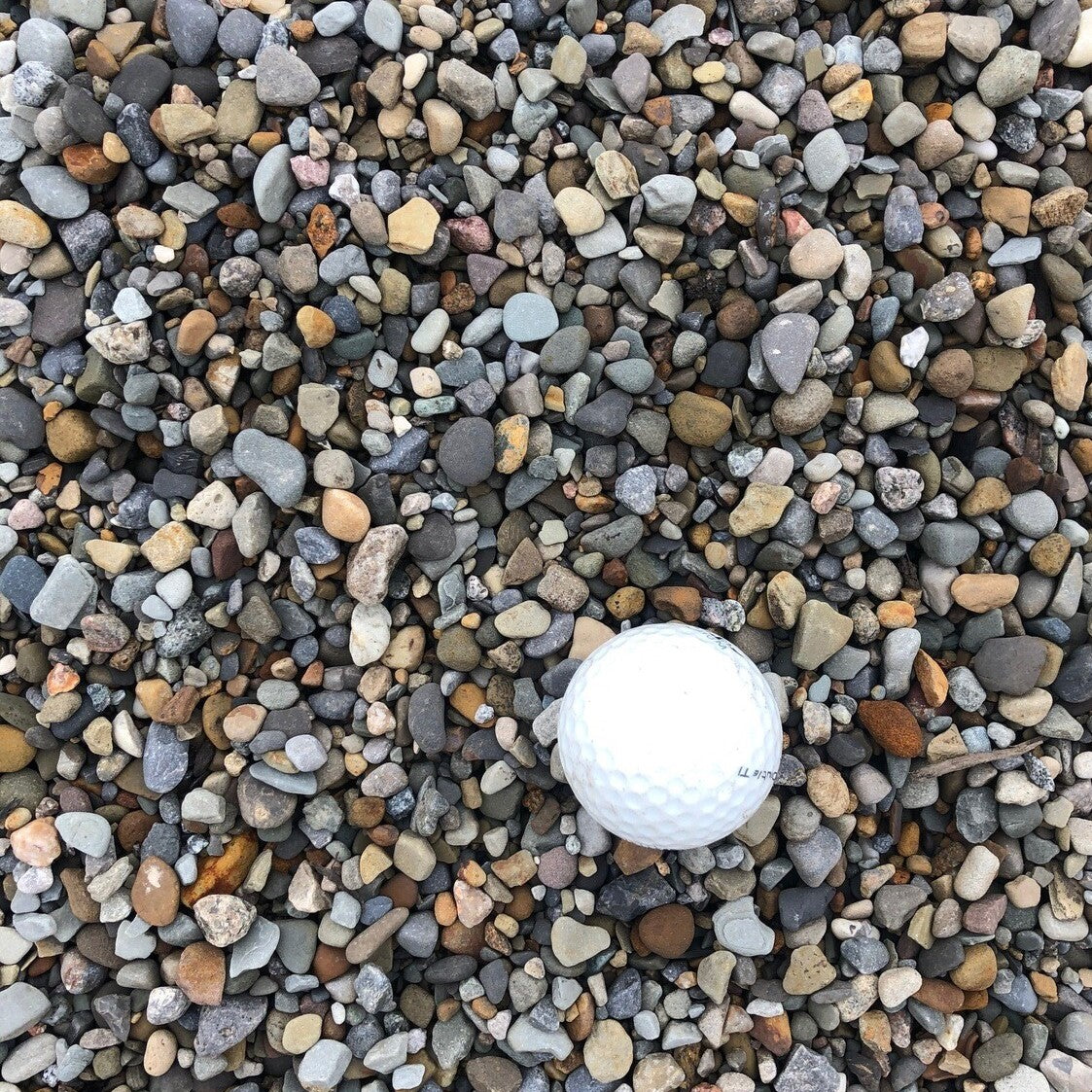
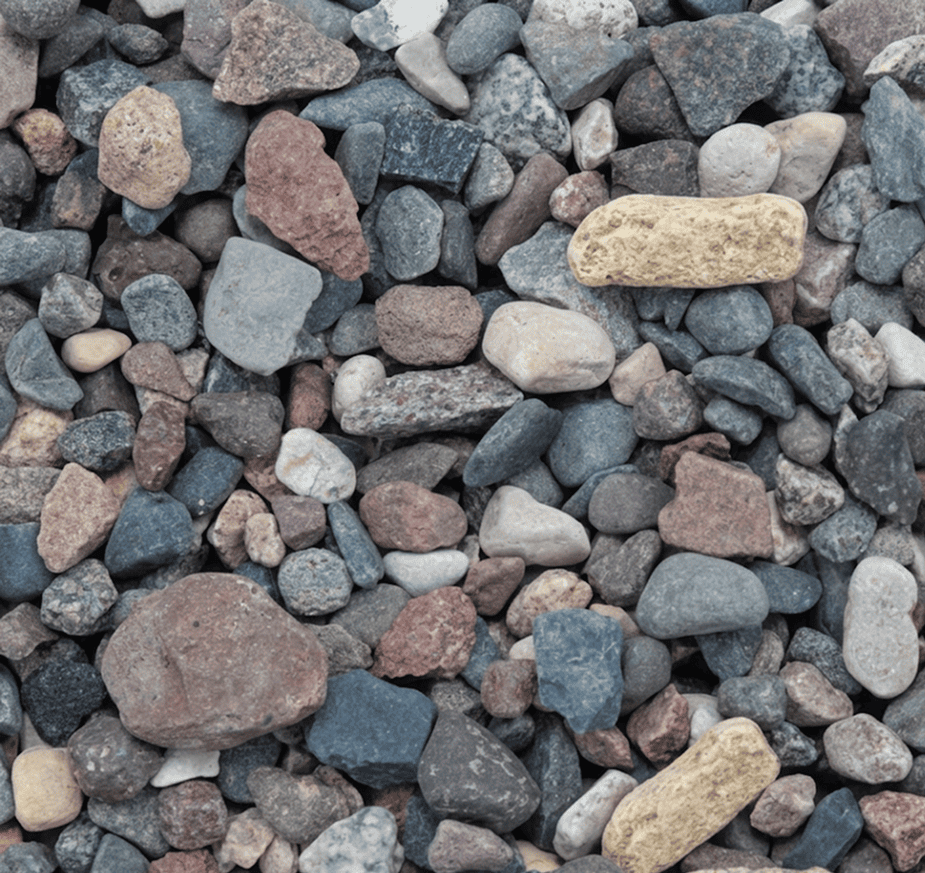
Classic pea gravel with smooth, rounded edges and natural earth tones. A versatile favorite for pathways, patios, drainage, and decorative ground cover.
Placing an order online was so easy. Delivery was on time. When the driver realized we had a newly poured driveway they erred on the side of caution and opted not ti drive in it. The company even sent me a message explaining that call. Would recommend!
Tell us what you're looking for
Thanks! We received your request.
Something went wrong. Please try again.
How Much Landscape Rock Do I Need?
At a 2 to 3 inch install depth, one cubic yard covers roughly 162 square feet at the shallow end of that range. Measure your bed length by width, decide whether you want a tight 2 inch cap or a fuller 3 inch layer, then order by the cubic yard rather than guessing bags. Most Tucson front yard conversions run somewhere between 3 and 8 cubic yards depending on lot size. Use our free stone calculator
What is a Yard?
A yard is approximately 27 cubic feet. As a general guideline, one yard of material can cover an area of about 100-160 square feet at a 2-3 inch depth.
What is a ton?
A ton is 2,000 pounds of material. As a general guideline, one ton covers roughly 100 square feet at 2 inches deep, depending on the size and density of the material.
We can't take orders for this right now. Tell us what you need and we'll get back to you.
What do you need?
Thanks! We received your request.
Something went wrong. Please try again.
Hand-picked local yards
4,000+ regional deliveries
Dedicated support
Why order through Mulch Mound
The best local landscape rock, without the guesswork.
We hand-pick and partner with the best yards in your region, keep only the ones our buyers rate well, and back each load with our guarantee.
Mulch Mound Guarantee
If your landscape rock isn't the quantity or quality you ordered, we'll make it right.
About this landscape rock
Classic pea gravel with smooth, rounded edges and natural earth tones. A versatile favorite for pathways, patios, drainage, and decorative ground cover.
Placing an order online was so easy. Delivery was on time. When the driver realized we had a newly poured driveway they erred on the side of caution and opted not ti drive in it. The company even sent me a message explaining that call. Would recommend!
How Much Landscape Rock Do I Need?
At a 2 to 3 inch install depth, one cubic yard covers roughly 162 square feet at the shallow end of that range. Measure your bed length by width, decide whether you want a tight 2 inch cap or a fuller 3 inch layer, then order by the cubic yard rather than guessing bags. Most Tucson front yard conversions run somewhere between 3 and 8 cubic yards depending on lot size. Use our free stone calculator
What is a Yard?
A yard is approximately 27 cubic feet. As a general guideline, one yard of material can cover an area of about 100-160 square feet at a 2-3 inch depth.
What is a ton?
A ton is 2,000 pounds of material. As a general guideline, one ton covers roughly 100 square feet at 2 inches deep, depending on the size and density of the material.
Placing an order online was so easy. Delivery was on time. When the driver realized we had a newly poured driveway they erred on the side of cautio...
Read full review
Placing an order online was so easy. Delivery was on time. When the driver realized we had a newly poured driveway they erred on the side of caution and opted not ti drive in it. The company even sent me a message explaining that call. Would recommend!
One of the easiest customer service experiences I've had in a long time! Mulch Mound made it so simple. After putting it off for a while, I looked ...
Read full review
One of the easiest customer service experiences I've had in a long time! Mulch Mound made it so simple. After putting it off for a while, I looked at the weather and knew I needed to get to mulching ASAP before the rain came if I didn't want to wait another week. I put my order in for the next day online and they came right at 9 AM. The employee who dropped off the mulch did a great job, putting it right on the tarp I laid out, she even made sure none of it got on the yard and double checked the truck bed to make sure it all came out. The mulch was exactly what I needed and arrived right on time.
Landscape fabric underneath is worth doing right the first time, since pulling rock back up later to fix a bare fabric patch is a real chore. Steel or paver edging keeps the rock from migrating onto walkways and driveways, which matters more here than in yards with grass borders to catch stray stone. Some Tucson customers pair a rock groundcover zone with a small mulch bed near shade trees or agave plantings that actually benefit from organic matter.
In Tucson's caliche soil, do not skip the fabric layer if you want this to be a true one time install. Caliche is nearly impermeable in spots, so weeds that do sprout usually come from windblown seed landing on top of the rock rather than pushing up from below, and fabric stops that seed bed from forming in the first place. Skipping it means hand weeding the rock every spring instead of just rinsing it off.
Mulch Mound Pro Tip
The most common mistake in Tucson yards is laying rock right up against stucco or block foundations with no gap. Monsoon runoff splashes rock dust and grit onto lower wall surfaces over years, staining light colored stucco. Leave a few inches of bare decomposed granite or a small gravel strip between the rock bed and the wall, and keep the depth at 2 inches near structures so runoff has somewhere to go besides straight up the wall.
Mulch Mound Pro Tip
If you are covering a large front yard, mixing rock with a few boulders or larger accent stone breaks up the cost and the visual monotony without needing more cubic yards of the base material. Buying the full amount in one bulk delivery instead of several bagged runs also means the color lot matches throughout, which matters since screened rock can vary slightly between batches at the quarry.
Decorative Stone in Tucson
Tucson's sandy caliche drains fast and holds almost no organic matter, which is exactly the kind of ground rock does not mind sitting on. With last frost not lifting until mid February and the first frost not landing until December, this material sits under sun for most of the year, so a rock that will not fade or bleach matters more here than in wetter climates. Around downspouts and foundation lines, rock also handles the hard monsoon bursts that hit Tucson in July and August without washing away like mulch does. It is a common choice for the low water, low maintenance front yards you see all over the Old Pueblo.
What Landscape Rock Is
Landscape rock is stone chosen for how it looks as much as what it does. River rock is smooth and rounded, decomposed granite is fine and packs firm underfoot. Both are sold by the cubic yard for beds, borders, paths, and dry creek beds.
River Rock vs Decomposed Granite
River rock stays loose and rolls, so it suits beds, borders, and drainage runs where it can sit in place. Decomposed granite compacts into a firm surface, so it suits paths, patios, and anywhere you will walk or roll a wheelbarrow.
Depth and Coverage
Spread river rock 2 to 3 inches deep over landscape fabric so it stays put and weeds stay down. Lay decomposed granite 3 to 4 inches deep, wet it, and compact it in lifts for a surface that sheds water instead of rutting.
Frequently Asked Questions
Click a question to see the answer
Answer
Will landscape rock actually stay in place through monsoon season?
Yes, screened rock at 2 to 3 inches over fabric handles monsoon runoff far better than mulch, since it will not float or wash out from a hard July downpour. The main risk is rock migrating toward low points in the yard over several seasons, which edging solves. It will not need replacing after storms the way organic mulch sometimes does.
Answer
How many cubic yards do I need for a typical Tucson front yard?
At 162 square feet per cubic yard for a 2 inch depth, a 1,000 square foot front yard bed needs roughly 6 cubic yards. Smaller side yard strips or foundation borders often run 1 to 2 cubic yards. Measure your actual bed area first since Tucson lots vary a lot in landscaped square footage.
Answer
Do I need to remove existing gravel or caliche before installing new rock?
If your existing gravel is thin, weedy, or mixed with dirt, pulling it and starting fresh with fabric gives a cleaner, longer lasting result. Caliche itself does not need to be dug out, since it makes a stable, well draining base to build on. Just rake it level before laying fabric and rock.
Answer
Where will the rock be placed when it's delivered?
Delivery is scheduled at checkout, and the load gets dropped in your driveway or another accessible spot you specify beforehand. Have a clear path free of parked cars or low hanging branches, since the delivery vehicle needs room to tip the load without spilling onto sidewalks or streets.
Answer
Should I choose rock or decomposed granite for my Tucson yard?
Both handle Tucson heat and caliche soil well, but they serve different jobs. Rock works best as a defined bed groundcover around plants or structures, while DG is usually the better call for walkways and open patio areas since it compacts into a firmer, walkable surface. Many Tucson yards use both in different zones of the same property.
Answer
What is decomposed granite, or DG, best used for?
Monsoon bursts in July and August can strip bare caliche around Tucson downspouts in a single afternoon. Decomposed granite, or DG, is weathered granite in small tan to gold chips and fines that compacts into a firm, natural surface. With edging it suits paths, patios, and side yards, and rain soaks in.