This was the easiest process to purchase mulch! It arrived on time and the driver did an amazing job putting it exactly where I wanted it. I will be a return customer for sure.
Tell us what you're looking for
Thanks! We received your request.
Something went wrong. Please try again.
How Much Sand Do I Need?
At the typical 1 to 2 inch install depth, one cubic yard covers roughly 324 square feet at 1 inch, so figure half that coverage if you're going a full 2 inches for a pool base or bedding layer. Mortar mixing and paver joint filling use much less volume per square foot of finished patio, so measure your joint width and total area before ordering. Most residential paver patios and small pool decks in Tucson run in the 1 to 3 cubic yard range. Use our free sand calculator
What is a Yard?
A yard is approximately 27 cubic feet. As a general guideline, one yard of material can cover an area of about 100-160 square feet at a 2-3 inch depth.
What is a ton?
A ton is 2,000 pounds of material. As a general guideline, one ton of rock covers roughly 100 square feet at 2 inches deep, depending on rock size and density.
This was the easiest process to purchase mulch! It arrived on time and the driver did an amazing job putting it exactly where I wanted it. I will be a return customer for sure.
How Much Sand Do I Need?
At the typical 1 to 2 inch install depth, one cubic yard covers roughly 324 square feet at 1 inch, so figure half that coverage if you're going a full 2 inches for a pool base or bedding layer. Mortar mixing and paver joint filling use much less volume per square foot of finished patio, so measure your joint width and total area before ordering. Most residential paver patios and small pool decks in Tucson run in the 1 to 3 cubic yard range. Use our free sand calculator
What is a Yard?
A yard is approximately 27 cubic feet. As a general guideline, one yard of material can cover an area of about 100-160 square feet at a 2-3 inch depth.
What is a ton?
A ton is 2,000 pounds of material. As a general guideline, one ton of rock covers roughly 100 square feet at 2 inches deep, depending on rock size and density.
This was the easiest process to purchase mulch! It arrived on time and the driver did an amazing job putting it exactly where I wanted it. I will b...
Read full review
This was the easiest process to purchase mulch! It arrived on time and the driver did an amazing job putting it exactly where I wanted it. I will be a return customer for sure.
Really appreciate the care and follow thru that this company had with our order. A hiccup came up but they were quick to respond and address all co...
Read full review
Really appreciate the care and follow thru that this company had with our order. A hiccup came up but they were quick to respond and address all concerns, which made our garden day a success! Thank you for your prompt care.
Most orders here pair this sand with pavers or flagstone, since the sand fills joints and sits under the base course. If you're mixing mortar for a block wall or veneer stone, you'll also want to have your cement and aggregate on site before the sand arrives so the mix goes together in one pass. Some crews are switching to chip stone for paver bedding since it locks in place instead of shifting, worth asking about if pumping sand is a concern.
In Tucson's dry heat, mortar mixed with mason sand can set up faster than you expect, especially working outdoors in direct sun during summer. Mix smaller batches than you would in a milder climate and keep your sand pile shaded and lightly damp before use. A tarp over the pile cuts evaporation loss and keeps the sand from drying into clumps that are harder to screen and mix evenly.
Mulch Mound Pro Tip
A common mistake is assuming this sand works for paver bedding the same way it works for joints. Bedding sand needs to compact and hold a grade, and mason sand's fine uniform grain can shift or wash out under freeze thaw or heavy rain, which is part of why chip stone has become the preferred bedding material for pavers. Save the mason sand for mortar and joint filling where its fine texture is actually an advantage.
Mulch Mound Pro Tip
If you're doing both a mortar job and joint filling on the same project, order the full quantity at once rather than in two smaller deliveries. It saves on trip charges and means you're not stuck mid project waiting on a second load, and any leftover sand stores fine in a covered pile for the next patch job or planter build.
Working With Sand in Tucson
Tucson sits on sandy caliche, a hardpan mix that is nothing like washed mason sand even though both are technically sand. Native soil here is gritty and inconsistent, fine for some grading work but wrong for mortar or a pool shell base where you need a predictable, uniform material. With Saguaro National Park's rocky bajadas ringing the valley, most hardscape crews are working with imported stone and pavers anyway, and this sand is what ties those installs together in the joints and bedding. It stays workable in our dry heat longer than a coarser product, which matters when you're mixing mortar outdoors in July.
Masonry vs Fill Sand
Masonry sand is washed and finely screened, the right choice for mortar work, paver joints, and sandboxes. Fill sand is coarser and less processed, better suited to leveling, bedding pipe, and filling low spots.
Bedding and Leveling
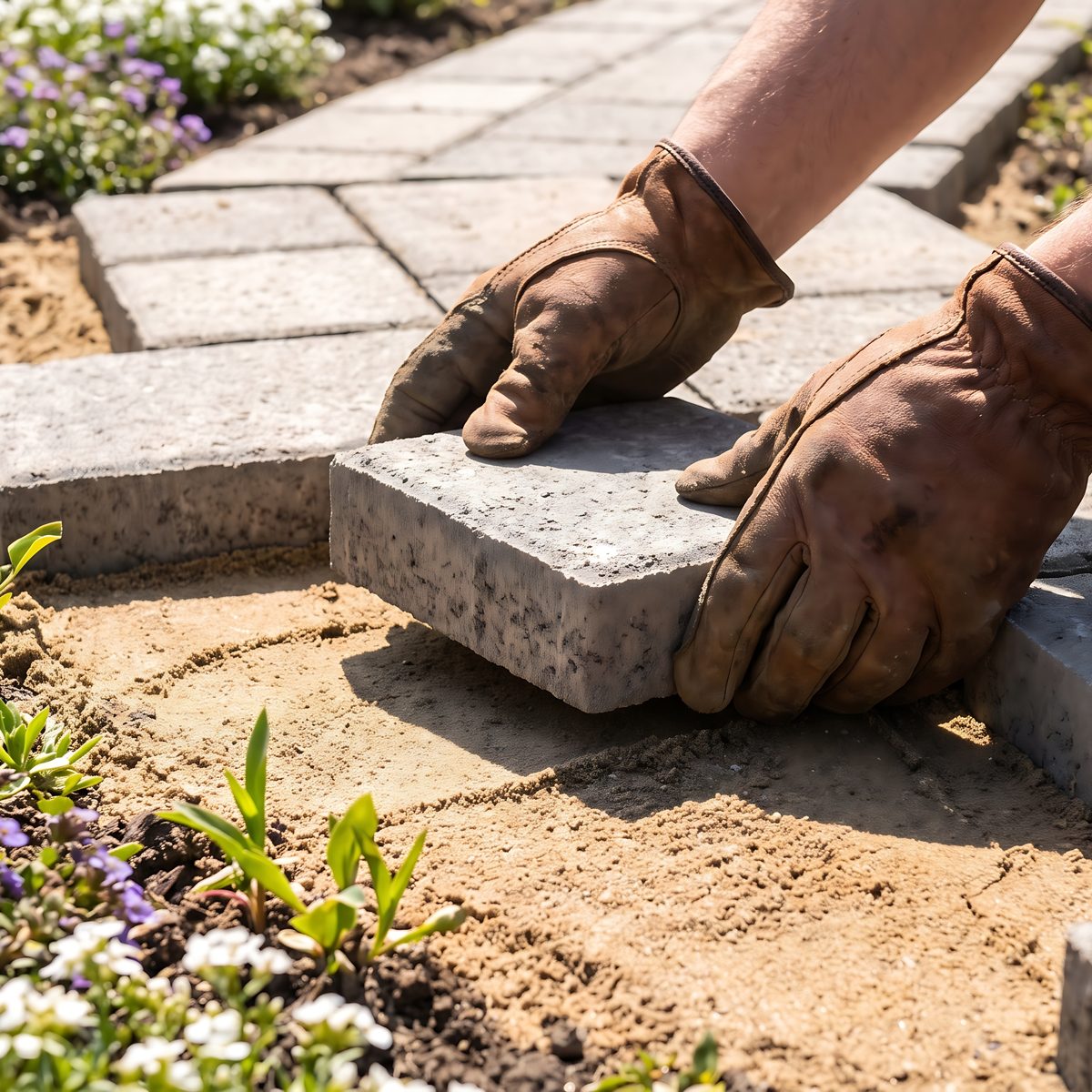
For pavers, screed a 1 inch sand bed over a compacted base rather than using sand to fix deep grade problems. A thin, even bed locks pavers in place. A thick one shifts underfoot.
Working With Moisture
Slightly damp sand spreads, screeds, and compacts far more easily than bone dry sand, which just flows back into your screed lines. Lightly wetting the pile before you work it saves real effort.
Frequently Asked Questions
Click a question to see the answer
Answer
Is this the same sand used for pool bases in Tucson?
Yes, mason sand is a standard choice for pool bases because it is fine, washed, and free of the debris you'd find in native caliche soil. It compacts into a smooth, even layer under the liner or shell. Just plan for roughly a 2 inch depth rather than the 1 inch typical for joint work, which changes your coverage math per yard.
Answer
How much sand do I need for paver joints on a 300 square foot patio?
Joint filling uses far less volume than a full bedding layer, often a quarter yard or less for 300 square feet depending on joint width. One cubic yard covers about 324 square feet at a full 1 inch depth, but joints only take a thin sliver of that per square foot, so most patio joint jobs need well under a yard.
Answer
Can I mix mortar with this sand in summer heat?
Yes, but work in smaller batches since Tucson's heat speeds up set time significantly. Keep the sand pile covered and slightly damp before mixing, and try to work early morning or late afternoon when temperatures are lower. This keeps your mortar workable long enough to place before it stiffens up.
Answer
Can the delivery truck get into a tight backyard or alley?
The truck places the load where it can access safely, typically a driveway or curb, since a full load of sand is heavy and the truck cannot maneuver into narrow side yards. Plan to move material by wheelbarrow from the drop point if your work area is fenced or set back from the street.
Answer
Should I use this sand or chip stone under my pavers?
For paver bedding, chip stone has become the more reliable choice locally since it locks together and resists pumping and shifting, while mason sand tends to migrate under load over time. This sand is still the right call for filling the joints between pavers once they're set, just not for the base layer beneath them.