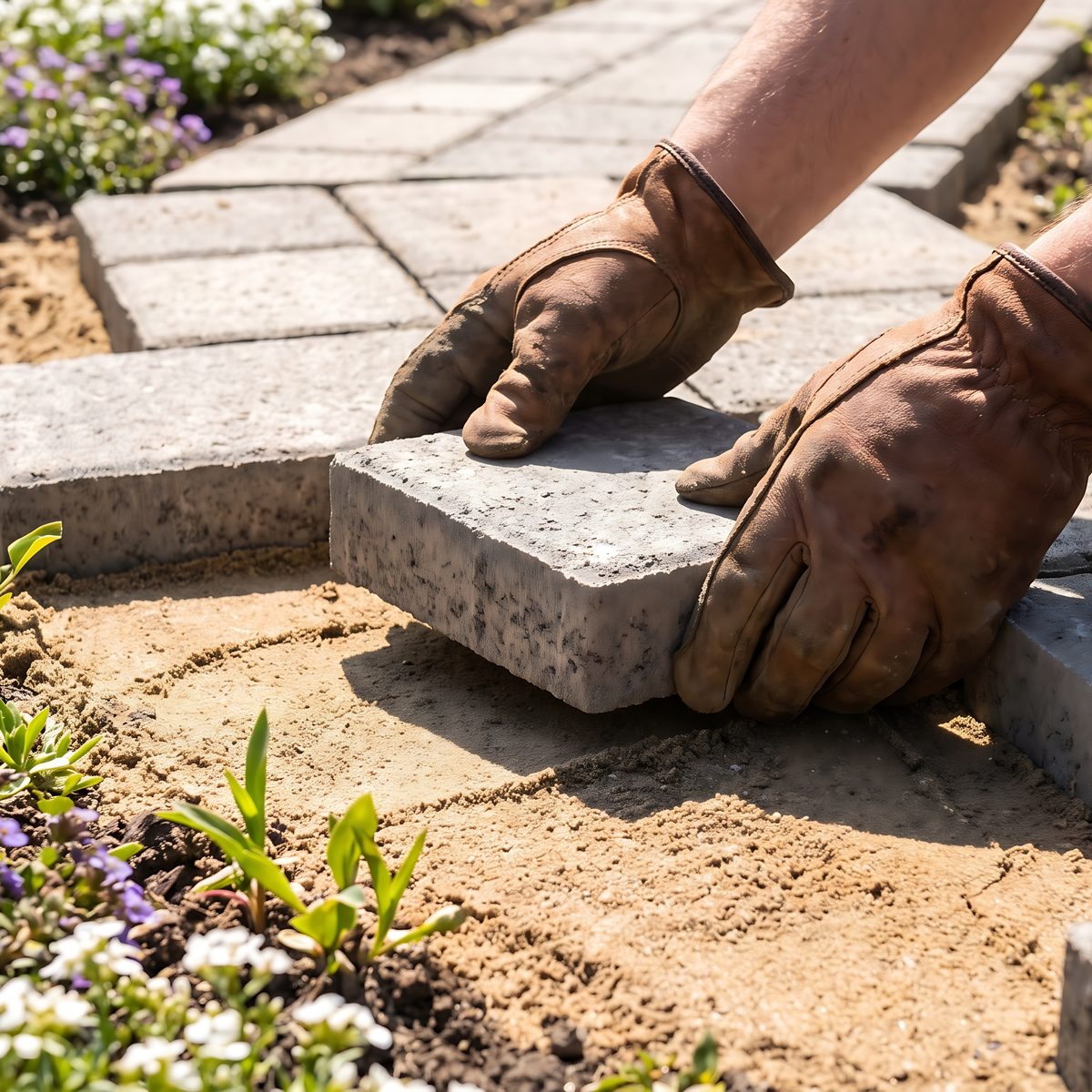
About this sand

Washed and finely screened masonry sand for mortar, paver joints, and pool bases. Consistent grain, ready to screed.

I recently ordered from mulch mound and was thoroughly impressed with every aspect of the experience. The entire process, from placing the order to delivery was seamless and efficient. The mulch arrived exactly on time, and the quality exceeded my expectations. The color was r...

One cubic yard of this sand covers roughly 324 square feet at a 1 inch depth, so a typical DC patio or walkway project in the 150 to 300 square foot range usually needs a half yard to a full yard depending on whether you are going 1 or 2 inches deep. Mortar mixing and paver joint work use far less volume per square foot than a bedding layer, so measure your actual joint area rather than the whole patio footprint. Sand is sold by the cubic yard here, so round up slightly rather than run short mid pour.

A yard is approximately 27 cubic feet. As a general guideline, one yard of material can cover an area of about 100-160 square feet at a 2-3 inch depth.

Washington Sand Delivery

Washington Sand Delivery

4.7
137 reviews
Regular price $74.00 per Yard
Regular price Sale price $74.00
Sale Sold out
Shipping calculated at checkout.
Type
Size
Minimum of 3 Yard
Hand-picked local yards
4,000+ regional deliveries
Dedicated support
Why order through Mulch Mound

The best local sand, without the guesswork.

We hand-pick and partner with the best yards in your region, keep only the ones our buyers rate well, and back each load with our guarantee.

Mulch Mound Guarantee

If your sand isn't the quantity or quality you ordered, we'll make it right.

About this sand

Washed and finely screened masonry sand for mortar, paver joints, and pool bases. Consistent grain, ready to screed.

I recently ordered from mulch mound and was thoroughly impressed with every aspect of the experience. The entire process, from placing the order to delivery was seamless and efficient. The mulch arrived exactly on time, and the quality exceeded my expectations. The color was r...

One cubic yard of this sand covers roughly 324 square feet at a 1 inch depth, so a typical DC patio or walkway project in the 150 to 300 square foot range usually needs a half yard to a full yard depending on whether you are going 1 or 2 inches deep. Mortar mixing and paver joint work use far less volume per square foot than a bedding layer, so measure your actual joint area rather than the whole patio footprint. Sand is sold by the cubic yard here, so round up slightly rather than run short mid pour.

A yard is approximately 27 cubic feet. As a general guideline, one yard of material can cover an area of about 100-160 square feet at a 2-3 inch depth.

View full details

How It Works

Getting started is easy — just follow these simple steps

1

Choose your quantity

Adjust the quantity to match your project. One cubic yard covers about 100 to 160 square feet at a 2 to 3 inch depth.

2

Select your delivery date

Select a delivery date you'd like for the product to be dropped off at your home

3

Sit back and wait

Sit back, wait, and let us work our magic to make sure the highest quality product is delivered to your driveway.

From The Mouths of Washington Folks

4.7
out of 5 based on 137 reviews
Google Reviews

Complete Your Outdoor Project

Most sand orders in DC pair with paver base gravel underneath and either pavers or natural stone on top. If you are mixing mortar for a retaining wall or brick repair common in the older rowhouse neighborhoods, pair this sand with bagged cement rather than pre-mixed concrete mix. For pool installations, a layer of paver base beneath the sand keeps the whole system from settling unevenly in our silt loam soil.

Mulch Mound Pro Tip

Mason sand is finer and more uniform than concrete sand, which is exactly why it works for mortar but is being phased out as paver bedding in a lot of DC jobs. Contractors are shifting to clean chip stone under pavers because it will not pump moisture up through the joints the way sand can during our heavier spring rains. If you are doing a mortared wall or steps, stick with sand, but for a paver patio base ask your crew whether chip stone makes more sense here.

Mulch Mound Pro Tip

A common mistake on rowhouse patios is skipping compaction between lifts. Lay sand in thin layers, no more than 2 inches, and compact each one before adding the next, especially over our silt loam subgrade which compresses unevenly if you dump it all at once. Skipping this step is why patios near the Mall area develop that rippled, uneven look within a year or two.

Mulch Mound Pro Tip

Order slightly more than your calculated volume, since compaction settles sand down by a noticeable margin once it is tamped, and running a second delivery for a small top off costs more in time than it saves in material. Pairing your sand order with gravel delivery on the same trip also cuts down on separate delivery windows to manage around DC traffic.

Working With Sand in Washington

Washington sits on silt loam, which drains slower than a sandy soil and holds water after the spring rains that roll through before hardscape season starts. That makes a clean sand base important for anything set on grade, whether it is a paver patio behind a rowhouse or a small pool deck. The finer grain of mason sand packs tighter than the silt loam beneath it, giving mortar joints and paver bedding a stable layer that does not shift as the ground freezes and thaws between the Mar 29 last frost and the Oct 26 first frost.

Masonry vs Fill Sand

Masonry sand is washed and finely screened, the right choice for mortar work, paver joints, and sandboxes. Fill sand is coarser and less processed, better suited to leveling, bedding pipe, and filling low spots.

Bedding and Leveling

For pavers, screed a 1 inch sand bed over a compacted base rather than using sand to fix deep grade problems. A thin, even bed locks pavers in place. A thick one shifts underfoot.

Working With Moisture

Slightly damp sand spreads, screeds, and compacts far more easily than bone dry sand, which just flows back into your screed lines. Lightly wetting the pile before you work it saves real effort.

Frequently Asked Questions

Click a question to see the answer

Answer

Is mason sand the same as regular sand for my DC patio project?

Not quite. Mason sand is washed and finely screened, which makes it ideal for mortar mixing and paver joints. For a paver bedding layer, many DC contractors now prefer clean chip stone since it drains better and does not pump moisture up through joints during heavy rain.

Answer

How many cubic yards do I need for a small pool base or patio?

One cubic yard covers about 324 square feet at 1 inch deep. A typical 200 square foot pool base or patio at that depth needs roughly two thirds of a yard, so most homeowners order a full yard to have a safety margin for compaction and uneven ground.

Answer

When is the best time to install a paver patio with sand base in DC?

Spring through fall is peak hardscape season here, once the ground clears after the Mar 29 last frost. Working before the Oct 26 first frost gives the sand and any mortar joints time to set fully before freezing temperatures arrive.

Answer

Where will the sand be dumped on delivery day in a rowhouse neighborhood?

Delivery is scheduled at checkout, and the driver will place the load as close to your work area as street access allows, typically curbside or in a driveway if you have one. Narrow DC streets can limit truck positioning, so let us know at checkout if your block has tight access.

Answer

Should I use sand or chip stone for my paver patio base?

It depends on your project. Sand is still the standard for mortar mixing and paver joints, but for the bedding layer under pavers, chip stone is increasingly used locally because it will not pump or shift under heavy spring rain the way sand sometimes does on our silt loam subgrade.

More delivery around Washington, District of Columbia

All Washington, District of Columbia landscape supply
