


I needed 3 yards of top soil and that's what I got! Right on time and right where I asked it to be placed (Order# 2041).
About this compost
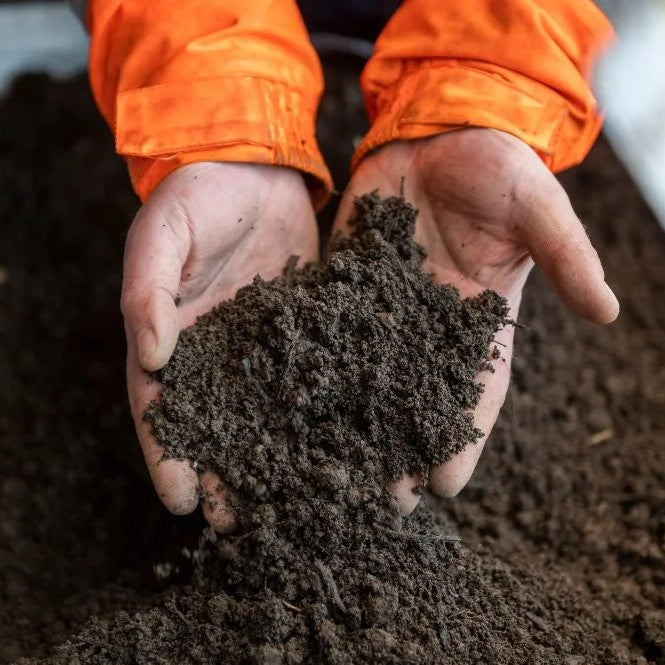
Finished screened compost, fully broken down and ready to work into beds. The general purpose choice for building soil that holds water and feeds roots.
I needed 3 yards of top soil and that's what I got! Right on time and right where I asked it to be placed (Order# 2041).
Tell us what you're looking for
Thanks! We received your request.
Something went wrong. Please try again.
How Much Compost Do I Need?
How Much Compost Do I Need?
Compost is sold by the cubic yard, and one yard covers about 324 square feet at a 1 inch depth. For lawn topdressing you want that thin 1 inch layer, but for bed prep or new planting areas in Aurora's clay loam, plan on 2 to 3 inches tilled in, which means closer to 110 to 160 square feet of coverage per yard. Measure your bed or lawn area first, then match it to the depth you actually need.
What is a Yard?
What is a Yard?
FAQs
FAQs
Aurora Compost Delivery
Aurora Compost Delivery
Regular price
$60.00
per
Yard
Regular price
Sale price
$60.00
Unit price
per
Shipping calculated at checkout.
Couldn't load pickup availability
Hand-picked local yards
4,000+ regional deliveries
Dedicated support
Why order through Mulch Mound
The best local compost, without the guesswork.
We hand-pick and partner with the best yards in your region, keep only the ones our buyers rate well, and back each load with our guarantee.
Mulch Mound Guarantee
If your compost isn't the quantity or quality you ordered, we'll make it right.
About this compost
Finished screened compost, fully broken down and ready to work into beds. The general purpose choice for building soil that holds water and feeds roots.
I needed 3 yards of top soil and that's what I got! Right on time and right where I asked it to be placed (Order# 2041).
How Much Compost Do I Need?
How Much Compost Do I Need?
Compost is sold by the cubic yard, and one yard covers about 324 square feet at a 1 inch depth. For lawn topdressing you want that thin 1 inch layer, but for bed prep or new planting areas in Aurora's clay loam, plan on 2 to 3 inches tilled in, which means closer to 110 to 160 square feet of coverage per yard. Measure your bed or lawn area first, then match it to the depth you actually need.
What is a Yard?
What is a Yard?
FAQs
FAQs
Tell us what you're looking for
Thanks! We received your request.
Something went wrong. Please try again.

How It Works
Getting started is easy — just follow these simple steps
1
Choose your quantity
Adjust the quantity to match your project. One cubic yard covers about 100 to 160 square feet at a 2 to 3 inch depth.
2
Select your delivery date
Select a delivery date you'd like for the product to be dropped off at your home
3
Sit back and wait
Sit back, wait, and let us work our magic to make sure the highest quality product is delivered to your driveway.

We had a great experience with mulch mound! Our mulch arrived when we requested. The delivery fee was so reasonable. We’ll use them again for sure!

Complete Your Outdoor Project
Compost works well ahead of mulch, since a layer of compost worked into the soil first gives the mulch something healthier to sit on top of. It also pairs naturally with topsoil on new beds where the existing clay loam needs both structure and organic matter. If you are reseeding a lawn this fall or next spring, compost topdressing before seed down gives germinating grass a better root environment in Aurora's heavy soil.


Service area
Areas we deliver compost in Aurora, Colorado
- Applewood, Colorado
- Castle Pines, Colorado
- Castle Rock, Colorado
- Cherry Creek, Colorado
- Cherry Hills Village, Colorado
- Dacono, Colorado
- Derby, Colorado
- Dove Valley, Colorado
- Edgewater, Colorado
- Fairmount, Colorado
- Fort Lupton, Colorado
- Lochbuie, Colorado
Mulch Mound Pro Tip
Aurora's clay loam is dense enough that surface applied compost can sit on top instead of soaking in, especially if you skip working it into the top few inches. For beds, till or fork 2 to 3 inches of compost into the existing soil rather than just laying it on top. For lawns, keep it thin, a true 1 inch topdress raked into the turf canopy, or you risk smothering grass blades in a slow draining soil that already holds moisture longer than sandy ground would.
Mulch Mound Pro Tip
A common mistake here is applying compost right before a hard freeze and expecting it to help this season. With first frost landing around October 7, fall applications should go down early enough, ideally by mid September, so soil biology has time to work the material in before the ground locks up. Spring applications after the May 7 last frost line up better if you want immediate benefit for a growing season instead of a head start on next year.
Mulch Mound Pro Tip
Compost is not a one time fix for clay loam, it is a build up practice. Rather than one heavy 3 inch application, many Aurora customers order smaller yardage twice a year, spring and fall, and work it in each time. This spreads cost over two seasons and avoids the nutrient lockup that can happen when too much fresh compost gets buried at once in soil that is already slow to process organic matter.
Building Better Soil in Aurora
Aurora sits at 5471 feet with clay loam soil that compacts hard and sheds water instead of absorbing it, especially after the dry stretches common on the Front Range. Compost breaks that structure open, letting roots push down and water soak in rather than pool or run off. With a zone 6a growing season bookended by a May 7 last frost and an October 7 first frost, gardeners here have a workable window to build soil before planting or before winter dormancy. Whether you are prepping beds near the Aurora Reservoir side of town or topdressing turf in an established yard, compost is doing the same job, fixing what the clay won't do on its own.
What Finished Compost Is
Finished compost is organic matter that has fully broken down into a dark, crumbly material with an earthy smell. It feeds soil life, improves structure, and helps beds hold water without staying soggy.
How Much to Apply
Work 1 to 2 inches into new beds, or topdress lawns with a quarter to half inch and rake it in. More is not better. Too thick a layer can smother roots instead of feeding them.
When to Apply
Spring and fall are both good windows. Spring applications feed the growing season ahead, and fall applications break down over winter so beds are ready at first thaw.