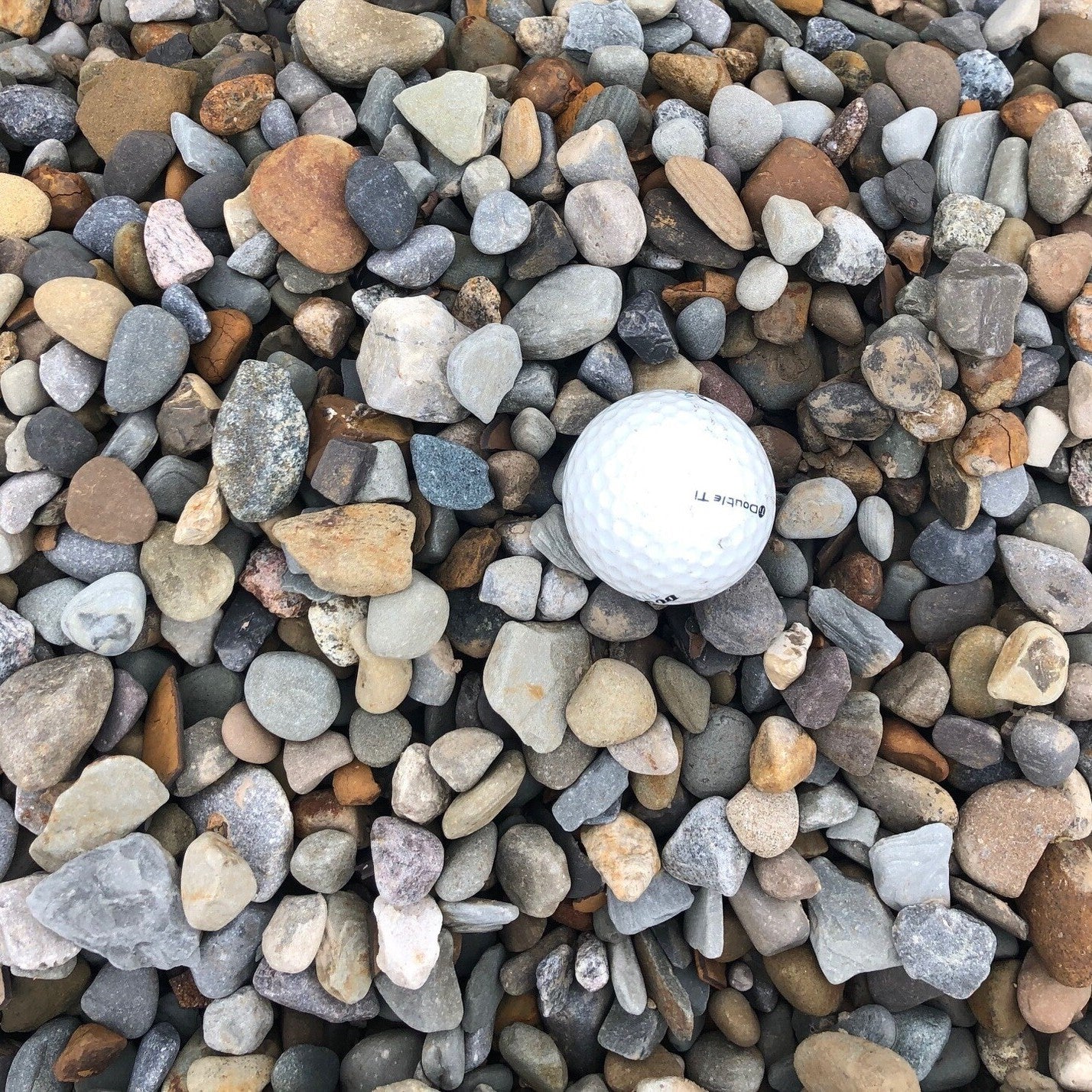
Number 57 crushed stone, angular limestone graded to about three quarters of an inch. The standard driveway, base and drainage gravel, it locks together under traffic and drains fast.
I used Mulch Mound to have 3 cubic yards of garden soil delivered. The process was easy and I love that I didn't have to call anyone. I placed my order online, picked my delivery date, laid out my tarp and the dirt was delivered. My delivery had to be pushed back, but I was ke...
Tell us what you're looking for
Thanks! We received your request.
Something went wrong. Please try again.
How Much Material Do I Need?
Use 2 to 3 inches for decorative beds and walkways, 4 inches or more for parking and driveway surfaces, and 8 to 12 inches of clean washed stone in drainage trenches. Order about 10 percent extra since stone settles into the clay subgrade during the first heavy rains.
Use our free gravel calculator
What is a Yard?
A yard is approximately 27 cubic feet. As a general guideline, one yard of material can cover an area of about 100-160 square feet at a 2-3 inch depth.
We can't take orders for this right now. Tell us what you need and we'll get back to you.
What do you need?
Thanks! We received your request.
Something went wrong. Please try again.
Hand-picked local yards
4,000+ regional deliveries
Dedicated support
Why order through Mulch Mound
The best local , without the guesswork.
We hand-pick and partner with the best yards in your region, keep only the ones our buyers rate well, and back each load with our guarantee.
Mulch Mound Guarantee
If your isn't the quantity or quality you ordered, we'll make it right.
About this stone
Number 57 crushed stone, angular limestone graded to about three quarters of an inch. The standard driveway, base and drainage gravel, it locks together under traffic and drains fast.
I used Mulch Mound to have 3 cubic yards of garden soil delivered. The process was easy and I love that I didn't have to call anyone. I placed my order online, picked my delivery date, laid out my tarp and the dirt was delivered. My delivery had to be pushed back, but I was ke...
How Much Material Do I Need?
Use 2 to 3 inches for decorative beds and walkways, 4 inches or more for parking and driveway surfaces, and 8 to 12 inches of clean washed stone in drainage trenches. Order about 10 percent extra since stone settles into the clay subgrade during the first heavy rains.
Use our free gravel calculator
What is a Yard?
A yard is approximately 27 cubic feet. As a general guideline, one yard of material can cover an area of about 100-160 square feet at a 2-3 inch depth.
I used Mulch Mound to have 3 cubic yards of garden soil delivered. The process was easy and I love that I didn't have to call anyone. I placed my o...
Read full review
I used Mulch Mound to have 3 cubic yards of garden soil delivered. The process was easy and I love that I didn't have to call anyone. I placed my order online, picked my delivery date, laid out my tarp and the dirt was delivered. My delivery had to be pushed back, but I was kept informed via text, which was great. So why not 5 stars? The description of garden soil on the website is "A balanced mix of topsoil and organic amendments ready for raised beds, flower gardens, and new planting areas. Good drainage, solid nutrients, easy to work with." What I got was more like fill dirt. It had a lot of gravel, a lot of clay, and random trash mixed in. I didn't test the soil to see if it actually had "amendments" because I already have compost and alpaca manure ready to add, but if I'd known the quality of the dirt was going to be the same as the bagged dirt I bought last year, I probably would have gotten 2 yards of top soil and a yard of leaf compost for better quality, especially since the leaf compost is cheaper. Photo of my mountain of dirt and just some of the trash I found in it.
Measure the length and width of the area in feet, then multiply by your depth in inches divided by twelve to get cubic feet, and divide by twenty seven for cubic yards. For a dry creek bed, measure the width of the channel at its average point rather than the widest. Stone is sold by weight as often as volume, so confirm the conversion before ordering.
Complete Your Outdoor Stone Project
Add woven geotextile fabric under every stone installation over our clay, plus steel or paver edging to keep gravel in its lane. Pair decorative river rock with a soil blend and mulch in the planting areas nearby for a finished, layered look.
Match the stone to the water. Clean washed stone with no fines is what you want in French drains and swales, because fines clog the voids and the drain stops working within a season. Crusher run with fines is the opposite choice, made to compact and shed water on driveways and paths. Buying the wrong one is the most common and most expensive stone mistake made in Bayou Cane yards.
Mulch Mound Pro Tip
Design dry creek beds to actually carry water. Map where runoff naturally travels across your flat lot after a heavy rain, then build the channel along that line rather than where it looks prettiest. Make it wider and shallower than you think, line it with fabric, place larger stone along the edges and smaller in the center, and set a few boulders to break the flow during the four to six inch rain events we regularly get.
Mulch Mound Pro Tip
Plan for hurricane season. Loose small gravel near a coastal home can become debris in high wind, so use heavier river rock or larger crushed stone within throwing distance of windows and glass doors. Keep gravel beds edged and slightly recessed below the surrounding grade so the material stays put. Before a storm, clear stone drainage channels of leaves and debris so they can handle the volume.
The Unique Landscape of Bayou Cane
In a place that receives 66 inches of rain a year and sits about 7 feet above sea level, moving water is the defining landscape problem, and stone is the material that manages it. Gravel swales, French drains, and crushed stone dry creek beds give runoff somewhere to go instead of pooling on silty clay that cannot absorb it fast enough. Stone also solves the mud problem that plagues Bayou Cane driveways, side yards, and walkways where grass simply will not hold through a wet season. Unlike organic mulch, it does not decompose in our heat and humidity, so a stone installation done right lasts for years with only occasional topping off. Decorative river rock and rubble also give beds a clean, permanent edge that survives tropical downpours without floating away. For foundation strips, stone offers the added benefit of a dry, inorganic buffer in Formosan termite country.
Frequently Asked Questions
Click a question to see the answer
Answer
What stone works best for a driveway that keeps turning to mud?
A layered approach is what holds up on Bayou Cane clay. Start with a woven geotextile fabric over the subgrade so the stone does not sink into the silty clay, then 4 to 6 inches of a larger base rock, topped with 2 inches of crushed limestone with fines that lock together. Skipping the fabric is the number one reason local gravel drives disappear into the mud within a couple of years.
Answer
Will stone in my beds help with our drainage problems?
Only if it is part of a drainage plan. Stone spread flat over clay does not create drainage, it just sits on top of it. To actually move water, dig a swale or trench, line it with fabric, add perforated pipe if needed, and backfill with clean washed stone that has no fines. Then the stone gives water a fast path away from your foundation.
Answer
Does stone get too hot for plants in our summers?
Yes, light colored gravel radiates real heat during a Zone 9b July, and it can stress azaleas, hydrangeas, and other shallow rooted shrubs common in Bayou Cane yards. Reserve stone for pathways, drainage features, foundation strips, and beds planted with heat tolerant material like agave, yucca, muhly grass, and palms. Keep organic mulch around tender ornamentals.
Answer
How does stone hold up against weeds here?
Better than mulch, but not permanently. In our climate, organic debris blows in and decomposes on top of the stone within a year or two, creating a seedbed. Use quality landscape fabric underneath, blow or rake debris off the surface a few times a year, and expect to spot treat. Deeper stone at 3 inches or more suppresses far more than a thin scatter.
Answer
Is stone a good idea right against my house foundation?
It is one of the smarter choices in Formosan termite territory. A 12 to 18 inch band of crushed stone against the slab stays drier than mulch, gives no organic food source, and makes it easy to spot mud tubes during inspection. Slope the band slightly away from the house so rain sheds outward instead of pooling at the wall.
Answer
How much does a yard of stone weigh and will my driveway handle the truck?
Most crushed stone and gravel runs roughly 1.3 to 1.5 tons per cubic yard, so a few yards adds up quickly. Older concrete drives and any area over a septic field or shallow utility line deserve a second look before a loaded truck rolls over it. Tell us your concerns and we can stage the drop at the street or split the load.
Answer
Will stone sink into my clay soil over time?
Without a barrier, yes. Wet silty clay behaves almost like a liquid under load, and stone migrates down into it, especially in traffic areas. A woven geotextile fabric between the clay and the stone is inexpensive insurance and dramatically extends the life of driveways, paths, and drainage beds around Bayou Cane.