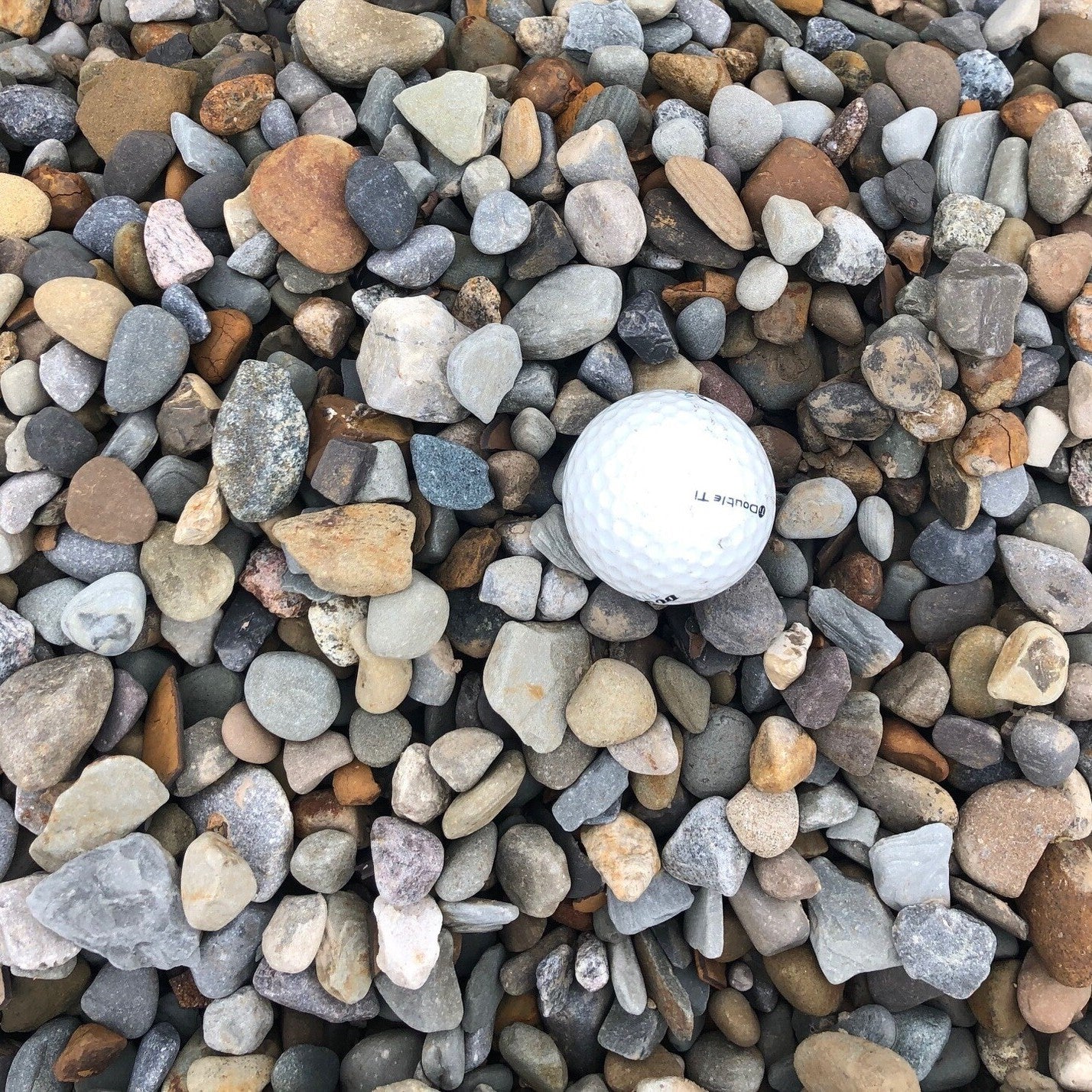
Number 57 crushed stone, angular limestone graded to about three quarters of an inch. The standard driveway, base and drainage gravel, it locks together under traffic and drains fast.
My experience with Mulch Mound was great and super easy. I ordered two yards of screened topsoil and was able to get it delivered within 2 days. They came in my requested time frame (afternoon) and dropped it off where I asked on my driveway. The topsoil was exactly what was a...
Tell us what you're looking for
Thanks! We received your request.
Something went wrong. Please try again.
How Much Material Do I Need?
Decorative stone over fabric goes two to three inches deep, while functional gravel paths and driveways in Bellingham need four to six inches of compacted crushed rock to survive winter saturation. Drain trenches are typically twelve to eighteen inches deep.
Use our free gravel calculator
What is a Yard?
A yard is approximately 27 cubic feet. As a general guideline, one yard of material can cover an area of about 100-160 square feet at a 2-3 inch depth.
We can't take orders for this right now. Tell us what you need and we'll get back to you.
What do you need?
Thanks! We received your request.
Something went wrong. Please try again.
Hand-picked local yards
4,000+ regional deliveries
Dedicated support
Why order through Mulch Mound
The best local , without the guesswork.
We hand-pick and partner with the best yards in your region, keep only the ones our buyers rate well, and back each load with our guarantee.
Mulch Mound Guarantee
If your isn't the quantity or quality you ordered, we'll make it right.
About this stone
Number 57 crushed stone, angular limestone graded to about three quarters of an inch. The standard driveway, base and drainage gravel, it locks together under traffic and drains fast.
My experience with Mulch Mound was great and super easy. I ordered two yards of screened topsoil and was able to get it delivered within 2 days. They came in my requested time frame (afternoon) and dropped it off where I asked on my driveway. The topsoil was exactly what was a...
How Much Material Do I Need?
Decorative stone over fabric goes two to three inches deep, while functional gravel paths and driveways in Bellingham need four to six inches of compacted crushed rock to survive winter saturation. Drain trenches are typically twelve to eighteen inches deep.
Use our free gravel calculator
What is a Yard?
A yard is approximately 27 cubic feet. As a general guideline, one yard of material can cover an area of about 100-160 square feet at a 2-3 inch depth.
My experience with Mulch Mound was great and super easy. I ordered two yards of screened topsoil and was able to get it delivered within 2 days. Th...
Read full review
My experience with Mulch Mound was great and super easy. I ordered two yards of screened topsoil and was able to get it delivered within 2 days. They came in my requested time frame (afternoon) and dropped it off where I asked on my driveway. The topsoil was exactly what was advertised, clean with no rocks or other debris. The price was reasonable. I plan to use them again in a couple weeks to order compost for my garden beds.
Measure length times width in feet, multiply by your depth in feet, and divide by 27 for cubic yards. For a Bellingham path, remember to include the base depth and not just the surface layer, since a durable path here needs four inches of compacted rock minimum. Trench work is easier to figure in linear feet times trench width times depth.
Complete Your Outdoor Stone Project
Filter fabric underneath is essential in silt loam, and edging keeps stone from migrating into beds and lawn during heavy rain. Perforated drain pipe pairs naturally with clean rock for Bellingham drainage work.
Always lay filter fabric under stone in Bellingham. Our silt loam is made of fine particles that move upward through gravel with every freeze, thaw, and saturation cycle, and within two winters an unlined path will have soil pumping through the surface and weeds rooting in it. A quality nonwoven geotextile costs very little compared to the load of rock sitting on it, and it can double the life of the installation.
Mulch Mound Pro Tip
Compact in layers, not all at once. Spreading six inches of three quarter minus and running a plate compactor over the top gives you a firm crust with a soft middle that will rut the first time a wheelbarrow crosses it in a Bellingham January. Place two to three inches, wet it lightly, compact, then repeat. Damp rock locks far better than dry, and around here the moisture is usually already there.
Mulch Mound Pro Tip
Give your drainage rock somewhere to go. Homeowners on Bellingham hillsides often build a beautiful gravel trench that dead ends into compacted subsoil, which just creates an underground bathtub that overflows in November. Map where water will exit before you dig, whether that is a daylight point downslope, a dry well sized for real volume, or a legal storm connection. Slope the trench a consistent quarter inch per foot toward that outlet.
The Unique Landscape of Bellingham
Stone earns its keep in Bellingham because it is the one landscape material that does not care about 38 inches of rain. Gravel paths, drainage swales, and dry creek beds move winter water off your lot instead of letting it stand on silt loam that drains slowly once compacted. In a climate where bark paths turn to mush by December and lawns rut under a wheelbarrow, a properly built crushed rock surface stays usable all twelve months. Stone also solves the moss and mud problem along north facing foundations and under the big conifers that shade so many Bellingham yards. Add in the drainage rock that goes behind retaining walls on our hillside lots, and it becomes structural, not just decorative.
Frequently Asked Questions
Click a question to see the answer
Answer
What stone should I use for a French drain in my Bellingham yard?
Use clean drain rock, typically three quarter or one and a half inch washed round or angular stone with no fines in it. The fines are what clog a drain, and in Whatcom County soils that are silt heavy, that clogging happens fast. Wrap the trench and the rock in filter fabric so silt loam cannot migrate in, and you will get decades of service.
Answer
Will a gravel path stay solid through our wet winters?
It will if you build it right. Three quarter minus crushed rock contains stone dust that locks together when compacted, and a four inch compacted base over filter fabric handles Bellingham rain without turning soft. Skip the fabric or use rounded pea gravel and you will be walking on a sinking, shifting mess by February.
Answer
How do I stop moss from growing on my gravel and stone?
In Bellingham, you slow it down rather than stop it. Moss establishes wherever shade, moisture, and accumulated organic debris meet, so the biggest wins are blowing conifer needles and leaves off stone surfaces a few times each fall and thinning overhanging branches for light. Occasional raking to turn the top layer helps, and a stiff broom in spring clears the green film that builds up over winter.
Answer
Can I use stone mulch around my rhododendrons instead of bark?
It is generally not the best choice here. Rhododendrons and other Bellingham acid lovers have shallow roots that want the cool, organic, fungal rich conditions that decomposing bark provides. Stone adds no organic matter and reflects heat during the dry August stretch. Save the stone for paths, drainage, and areas around structures, and mulch the ericaceous plants.
Answer
What kind of stone works for a dry creek bed?
A mix of sizes looks natural and functions better. Use two to four inch river rock for the channel with larger six to twelve inch cobbles along the edges and a base of drain rock underneath. Bellingham dry creek beds are rarely dry between November and April, so build for real flow with fabric underneath and a defined outlet where the water can go.
Answer
How much stone do I need behind a retaining wall?
Plan on a foot of clean drain rock behind the full height of the wall, plus a perforated pipe at the base daylighting to a low point. On the sloped lots around Bellingham's south side, hydrostatic pressure from winter rain is the number one reason walls fail. That backfill rock is not optional, it is the whole reason the wall stays standing.
Answer
Does stone actually weigh that much more than bark for delivery?
Yes, dramatically. A cubic yard of bark runs roughly 500 to 800 pounds while a yard of crushed rock is around 2,600 pounds. That changes how many yards a truck can carry and where it can safely drive, which matters on Bellingham's older streets and soft spring driveways. We size loads accordingly and will talk through access before delivery.