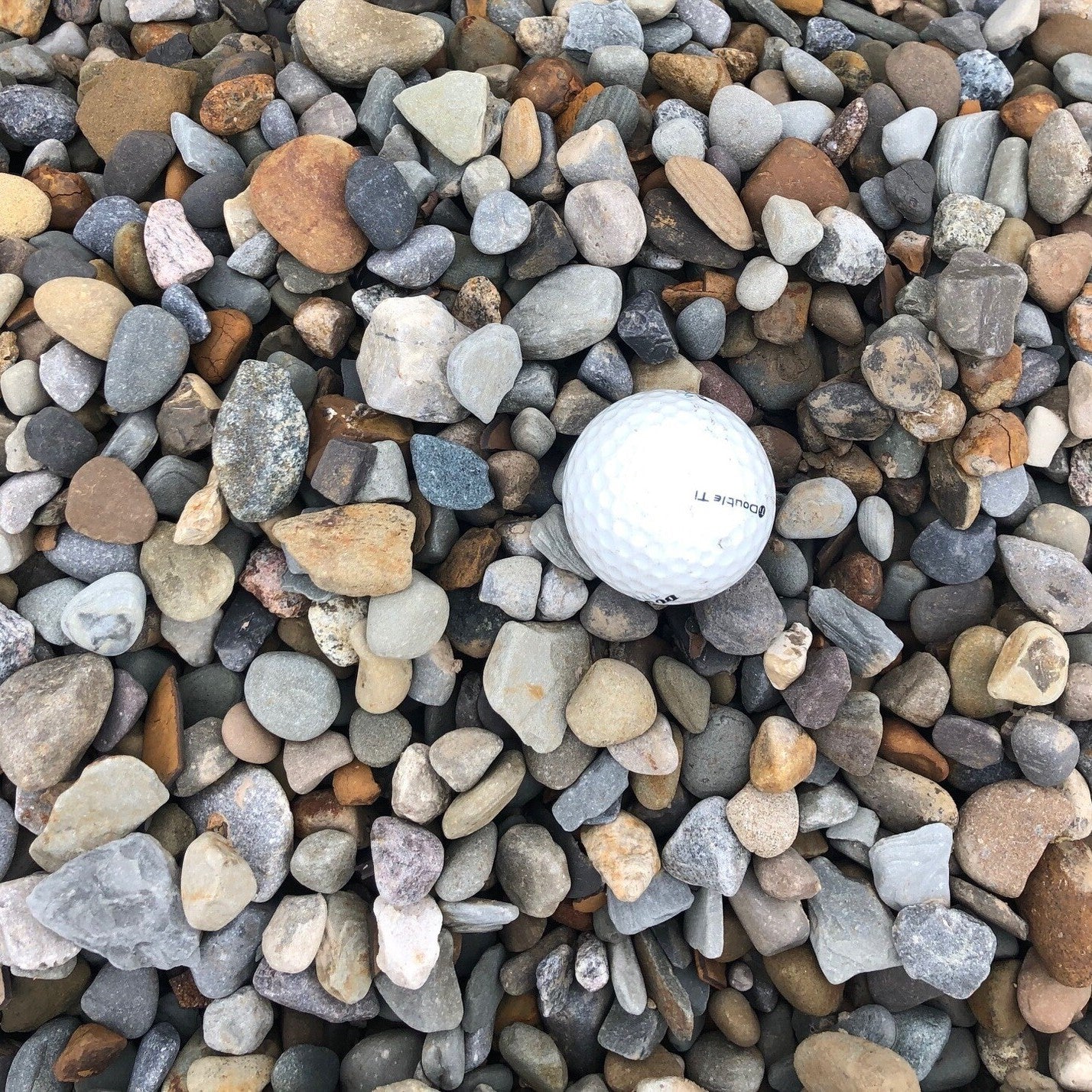
Number 57 crushed stone, angular limestone graded to about three quarters of an inch. The standard driveway, base and drainage gravel, it locks together under traffic and drains fast.
Mulch Mound delivered a yard of pea gravel to us. Delivery was on time, driver was friendly and hit a bullseye on the “tarp target”. We used the pea gravel (which was diameter as specified) to fill several muskrat holes around our pond. I would definitely recommend Mulch Mo...
Tell us what you're looking for
Thanks! We received your request.
Something went wrong. Please try again.
How Much Material Do I Need?
Use 2 inches of decorative rock in beds, 3 inches where wind and foot traffic are heavy, and 4 to 6 inches of compacted crushed base under vehicles. Add about 10 percent for spread and settling.
Use our free gravel calculator
What is a Yard?
A yard is approximately 27 cubic feet. As a general guideline, one yard of material can cover an area of about 100-160 square feet at a 2-3 inch depth.
We can't take orders for this right now. Tell us what you need and we'll get back to you.
What do you need?
Thanks! We received your request.
Something went wrong. Please try again.
Hand-picked local yards
4,000+ regional deliveries
Dedicated support
Why order through Mulch Mound
The best local , without the guesswork.
We hand-pick and partner with the best yards in your region, keep only the ones our buyers rate well, and back each load with our guarantee.
Mulch Mound Guarantee
If your isn't the quantity or quality you ordered, we'll make it right.
About this stone
Number 57 crushed stone, angular limestone graded to about three quarters of an inch. The standard driveway, base and drainage gravel, it locks together under traffic and drains fast.
Mulch Mound delivered a yard of pea gravel to us. Delivery was on time, driver was friendly and hit a bullseye on the “tarp target”. We used the pea gravel (which was diameter as specified) to fill several muskrat holes around our pond. I would definitely recommend Mulch Mo...
How Much Material Do I Need?
Use 2 inches of decorative rock in beds, 3 inches where wind and foot traffic are heavy, and 4 to 6 inches of compacted crushed base under vehicles. Add about 10 percent for spread and settling.
Use our free gravel calculator
What is a Yard?
A yard is approximately 27 cubic feet. As a general guideline, one yard of material can cover an area of about 100-160 square feet at a 2-3 inch depth.
Mulch Mound delivered a yard of pea gravel to us. Delivery was on time, driver was friendly and hit a bullseye on the “tarp target”. We used the ...
Read full review
Mulch Mound delivered a yard of pea gravel to us. Delivery was on time, driver was friendly and hit a bullseye on the “tarp target”. We used the pea gravel (which was diameter as specified) to fill several muskrat holes around our pond. I would definitely recommend Mulch Mound to a friend!
Placing an order online was so easy. Delivery was on time. When the driver realized we had a newly poured driveway they erred on the side of cautio...
Read full review
Placing an order online was so easy. Delivery was on time. When the driver realized we had a newly poured driveway they erred on the side of caution and opted not ti drive in it. The company even sent me a message explaining that call. Would recommend!
Measure the area in square feet and pick your depth, then remember stone is sold by weight or by yard depending on the product. One cubic yard covers about 160 square feet at 2 inches or 80 square feet at 4 inches. Measure driveway width at both ends, since Brawley aprons often flare toward the street.
Complete Your Outdoor Stone Project
Pair stone with steel or concrete edging so it stays out of the clay, and keep blended soil and mulch on hand for the planting pockets you leave inside the rock.
Compact your subgrade before a single rock goes down. Brawley silty clay swells and shrinks with moisture, and loose clay under gravel turns into ruts the first time a truck parks on it. Wet the ground lightly, run a plate compactor or roller, and check that the surface sheds water away from the house. Ten extra minutes here prevents a full rebuild in two years.
Mulch Mound Pro Tip
Set your grade for the rare cloudburst, not the average year. Brawley sits in a closed basin below sea level, so when an inch of rain falls in an hour there is nowhere for it to go quickly. Give gravel areas a minimum 2 percent slope away from foundations, and build a shallow gravel swale along the low side of the lot to catch and route runoff toward the street.
Mulch Mound Pro Tip
Mix stone and plants deliberately instead of covering everything. A solid rock yard in the Imperial Valley reflects heat into your windows and raises cooling bills all summer. Leave generous planting islands with real amended soil, run drip to them, and place a couple of shade trees on the west and south sides. You keep the low water maintenance of rock while cutting the heat load around the house.
The Unique Landscape of Brawley
In a town that averages 3 inches of rain and routinely runs above 110 degrees, decorative stone earns its place in Brawley yards. It never blows away in the valley wind, never fades to gray under our UV load, and needs no replacing season after season. Over dense silty clay, a stone surface also spreads foot and vehicle loads so the ground does not rut and compact into a hardpan. Because we sit 112 feet below sea level in a closed basin, the rare downpour arrives all at once, and gravel swales or dry creek beds give that water a place to go instead of ponding against a slab. The trade off is heat, so stone belongs in paths, driveways, and wind exposed strips rather than pressed up against tender plantings.
Frequently Asked Questions
Click a question to see the answer
Answer
Will decorative stone make my yard even hotter?
It can. Stone absorbs and re radiates Brawley's afternoon heat, so a large expanse next to a west facing wall will raise the temperature around it noticeably. Use lighter colored rock where you want to reflect rather than store heat, keep stone away from tender plant crowns, and shade big gravel areas with trees or ramadas.
Answer
What size stone works best for a walkway over silty clay?
Use an angular crushed material in the three eighths to three quarter inch range over a compacted base. Angular pieces lock together and stay put, while rounded pea gravel rolls underfoot and sinks into soft clay. Compact the subgrade first, since Brawley clay shifts as it wets and dries.
Answer
Do I need fabric under stone in Brawley?
Yes for decorative beds, and a heavier woven geotextile for driveways. Our clay pumps fines upward when it gets wet, which muddies clean rock over time, and fabric slows that. It also cuts down on nutsedge and bermuda pushing through, which are the two weeds that beat everything else in the Imperial Valley.
Answer
How does stone handle our flash storms?
Better than almost anything else. Brawley gets most of its 3 annual inches in a few short bursts, and a gravel swale or dry creek bed carries that flow without eroding. Grade it so water moves away from foundations and toward the street or a low collection area, since our flat, below sea level terrain drains slowly.
Answer
Will weeds grow through my rock?
Some will, because year round Zone 10a warmth means no dormant season to slow them. Fabric plus 2 to 3 inches of stone stops most seedlings, and the fact that dry rock surfaces bake in summer helps. Spot treat bermuda and nutsedge early, and keep organic debris blown off the rock so it does not build a seedbed.
Answer
How thick should stone be in a driveway or parking pad?
Plan 4 to 6 inches of compacted crushed base for vehicles on Brawley clay, more if trucks or trailers park there. The clay subgrade loses strength when it gets wet, so a proper compacted base layer is what keeps you from developing ruts and potholes at the apron.
Answer
Can I put rock over the clay instead of replacing my lawn?
Many Brawley homeowners do, and the water savings are substantial. Kill and remove the existing bermuda thoroughly first, since it will find its way through, then grade for drainage, lay fabric, and place 2 to 3 inches of rock. Leave planting pockets with real soil and drip irrigation so the whole yard is not solid heat sink.