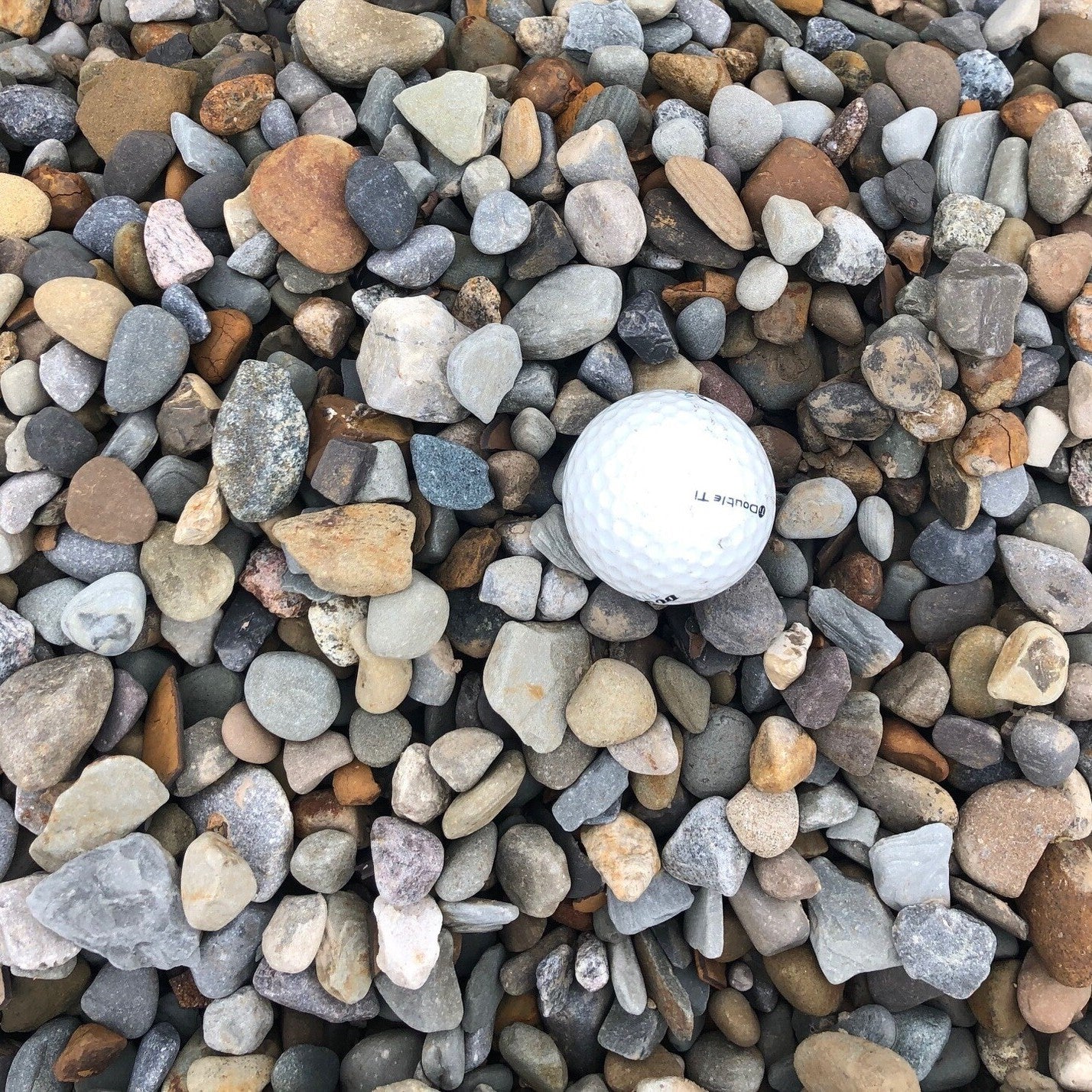
Number 57 crushed stone, angular limestone graded to about three quarters of an inch. The standard driveway, base and drainage gravel, it locks together under traffic and drains fast.
I used Mulch Mound to have 3 cubic yards of garden soil delivered. The process was easy and I love that I didn't have to call anyone. I placed my order online, picked my delivery date, laid out my tarp and the dirt was delivered. My delivery had to be pushed back, but I was ke...
Tell us what you're looking for
Thanks! We received your request.
Something went wrong. Please try again.
How Much Material Do I Need?
For ground coverage in Buckeye landscapes, 3 inches of decomposed granite or gravel is the functional minimum for weed suppression and a finished appearance, while dry riverbeds and drainage channels typically need 4 to 6 inches of river rock to perform well during monsoon flows. Accent boulders and decorative stone features are sold by the piece or ton and are easier to estimate by mapping out your design before ordering.
Use our free gravel calculator
What is a Yard?
A yard is approximately 27 cubic feet. As a general guideline, one yard of material can cover an area of about 100-160 square feet at a 2-3 inch depth.
What is a ton?
A ton is 2,000 pounds of material. As a general guideline, one ton of rock covers roughly 100 square feet at 2 inches deep, depending on rock size and density.
We can't take orders for this right now. Tell us what you need and we'll get back to you.
What do you need?
Thanks! We received your request.
Something went wrong. Please try again.
Hand-picked local yards
4,000+ regional deliveries
Dedicated support
Why order through Mulch Mound
The best local , without the guesswork.
We hand-pick and partner with the best yards in your region, keep only the ones our buyers rate well, and back each load with our guarantee.
Mulch Mound Guarantee
If your isn't the quantity or quality you ordered, we'll make it right.
About this stone
Number 57 crushed stone, angular limestone graded to about three quarters of an inch. The standard driveway, base and drainage gravel, it locks together under traffic and drains fast.
I used Mulch Mound to have 3 cubic yards of garden soil delivered. The process was easy and I love that I didn't have to call anyone. I placed my order online, picked my delivery date, laid out my tarp and the dirt was delivered. My delivery had to be pushed back, but I was ke...
How Much Material Do I Need?
For ground coverage in Buckeye landscapes, 3 inches of decomposed granite or gravel is the functional minimum for weed suppression and a finished appearance, while dry riverbeds and drainage channels typically need 4 to 6 inches of river rock to perform well during monsoon flows. Accent boulders and decorative stone features are sold by the piece or ton and are easier to estimate by mapping out your design before ordering.
Use our free gravel calculator
What is a Yard?
A yard is approximately 27 cubic feet. As a general guideline, one yard of material can cover an area of about 100-160 square feet at a 2-3 inch depth.
What is a ton?
A ton is 2,000 pounds of material. As a general guideline, one ton of rock covers roughly 100 square feet at 2 inches deep, depending on rock size and density.
I used Mulch Mound to have 3 cubic yards of garden soil delivered. The process was easy and I love that I didn't have to call anyone. I placed my o...
Read full review
I used Mulch Mound to have 3 cubic yards of garden soil delivered. The process was easy and I love that I didn't have to call anyone. I placed my order online, picked my delivery date, laid out my tarp and the dirt was delivered. My delivery had to be pushed back, but I was kept informed via text, which was great. So why not 5 stars? The description of garden soil on the website is "A balanced mix of topsoil and organic amendments ready for raised beds, flower gardens, and new planting areas. Good drainage, solid nutrients, easy to work with." What I got was more like fill dirt. It had a lot of gravel, a lot of clay, and random trash mixed in. I didn't test the soil to see if it actually had "amendments" because I already have compost and alpaca manure ready to add, but if I'd known the quality of the dirt was going to be the same as the bagged dirt I bought last year, I probably would have gotten 2 yards of top soil and a yard of leaf compost for better quality, especially since the leaf compost is cheaper. Photo of my mountain of dirt and just some of the trash I found in it.
Really appreciate the care and follow thru that this company had with our order. A hiccup came up but they were quick to respond and address all co...
Read full review
Really appreciate the care and follow thru that this company had with our order. A hiccup came up but they were quick to respond and address all concerns, which made our garden day a success! Thank you for your prompt care.
Measure your coverage area in square feet by walking the perimeter and sketching the space, then breaking any irregular shapes into rectangles or triangles that are easier to calculate. For decomposed granite at 3 inches deep, plan on roughly 1 cubic yard per 100 square feet as an easy working estimate that also builds in a small buffer for variations in ground level. If your yard has significant slopes or mounded areas, add 15 percent to your base calculation since sloped surfaces require more material to achieve consistent depth.
Complete Your Outdoor Stone Project
If you are converting a lawn area or bare soil bed to stone, installing a quality amended soil layer before any stone goes down creates a better environment for any plants remaining in the design. Pairing decomposed granite ground coverage with wood mulch directly around plant bases gives you the best of both materials where it matters most.
Before installing decomposed granite in your Buckeye yard, address any grade issues that direct water toward your foundation or create pooling areas. Laying DG over a problematic grade does not fix the drainage, it covers it, and then you end up with DG being displaced by trapped water over time. A simple re-grading pass with a few cubic yards of fill soil to slope water away from structures will protect your stone investment and prevent the kind of monsoon-related displacement that requires a partial reinstall after a big storm.
Mulch Mound Pro Tip
One of the most overlooked stone applications in Buckeye is using a 2 to 3 inch layer of small river rock directly in your drip irrigation basin zones around trees and large shrubs. Drip emitters in direct contact with dry DG or soil heat up dramatically in summer sun and can evaporate a significant portion of your water output before it ever reaches root depth. A small stone ring around each emitter keeps that zone cooler and allows water to soak in more effectively during those critical morning watering cycles in June, July, and August.
Mulch Mound Pro Tip
When edging decomposed granite beds against sidewalks or driveways in Buckeye, use a steel or aluminum landscape edging buried at least 3 inches into the ground to prevent DG from migrating onto hardscape surfaces. The combination of foot traffic, wind, and monsoon runoff gradually pushes loose stone onto walkways and streets if there is no physical barrier holding it back. A clean edging line also gives your finished yard a polished and intentional appearance that holds up through the windy West Valley spring season without constant raking and correction.
The Unique Landscape of Buckeye
Decorative and functional stone is one of the most practical landscape materials available to Buckeye homeowners because it handles the desert's extreme conditions without degrading, fading beyond recognition, or requiring replacement every few years. In a climate where organic ground covers break down under UV and heat, stone provides a permanent solution for pathways, water management swales, dry riverbeds, and open ground coverage around desert-adapted plants. Buckeye's monsoon season, while brief, delivers intense bursts of rainfall on hard, dry ground that can erode bare soil in minutes, and stone used as surface coverage or channeling material controls that runoff effectively. The naturally sandy and rocky aesthetic of the Sonoran Desert also means that gravel and stone look completely at home in Buckeye landscapes rather than out of place as they might in wetter, greener climates. With water conservation mandates and turf restrictions increasingly common in the West Valley, stone is playing a growing role in replacing lawn areas with functional and beautiful hardscape. Choosing the right stone product and depth can dramatically reduce your landscape maintenance load while improving the long-term curb appeal and value of your Buckeye property.
Frequently Asked Questions
Click a question to see the answer
Answer
What is the difference between decomposed granite and gravel and which one is better for Buckeye front yards?
Decomposed granite, often called DG, is a fine-grained crushed granite that compacts into a firm walkable surface with a natural earthy appearance that blends beautifully with the Sonoran Desert palette. Gravel is a looser, more rounded material that does not compact and tends to migrate more under foot traffic and monsoon runoff. For Buckeye front yards going for a clean desert-native look, DG is usually the preferred choice around plants and in walkable areas, while larger rounded gravel works well in dry riverbeds and decorative borders where movement adds to the natural appearance.
Answer
How deep should I lay decomposed granite for weed control in my Buckeye yard?
For meaningful weed suppression, 3 to 4 inches of compacted decomposed granite is the target in Buckeye. Going thinner leaves enough light penetration and soil contact at the surface for puncturevine and Bermuda grass seeds to establish. Most landscapers in the West Valley also install a quality woven landscape fabric underneath before laying DG, because the combination of fabric and 3 plus inches of stone is significantly more effective than either approach alone. Fabric alone without sufficient stone depth tends to degrade faster in our intense UV exposure.
Answer
Will my decomposed granite wash away during Buckeye monsoon storms?
DG can be vulnerable to erosion during intense monsoon downpours if the grade of your yard directs water flow through it at speed. The solution is two-part. First, compaction matters, DG that has been properly watered and tamped is far more resistant to surface erosion than freshly laid loose material. Second, directing monsoon runoff through designated gravel-lined channels or dry riverbeds rather than across open DG areas protects your main groundcover from becoming a flowing surface. Stabilized DG with a binding agent is also available and performs even better in high-flow areas.
Answer
I want to replace my grass with stone in the backyard. Will it make the outdoor space feel unbearably hot?
This is one of the most common concerns we hear from Buckeye homeowners converting turf to stone, and the heat reflection is a real factor. Lighter-colored stones like white marble chips reflect more heat upward, which can be uncomfortable near patios and seating areas. Darker tones like charcoal or brown DG absorb more heat. The best approach for livable backyard spaces is using stone in areas away from your primary seating zone and combining it with shade structures, native trees, and some canopy cover. Stone on the perimeter and in plant beds, combined with a cool deck or paver surface near the home, balances aesthetics and comfort well in Buckeye's climate.
Answer
Can I use river rock to manage the drainage problem along my back fence line?
River rock is an excellent solution for managing water flow along fence lines and low-lying areas in Buckeye because the smooth rounded stones allow water to pass through quickly during monsoon events without compacting or blocking flow. A dry riverbed lined with river rock along a problem drainage path also adds significant visual interest to what would otherwise be a muddy eroded trench. For best results, use larger 2 to 4 inch river rock in the main channel and transition to smaller 1 to 2 inch material on the sides to mimic the look of a natural desert wash.
Answer
How many tons or cubic yards of decomposed granite do I need to cover my front yard?
DG is typically sold by the cubic yard, and at a 3 inch depth, one cubic yard covers approximately 108 square feet. Measure your front yard square footage excluding the house footprint and any existing hardscape, then divide by 108 to get your cubic yard estimate for 3 inches. If you are planning a 4 inch depth for better weed suppression, divide by 81 instead. It is wise to add 10 percent to your calculated total to account for compaction loss and slightly uneven spreading, especially if your yard has raised planting mounds or uneven grade.
Answer
What stone colors look best with the tan and beige stucco homes common in Buckeye neighborhoods?
The warm earthy tones of Buckeye architecture pair best with desert gold, tan, or buff-colored decomposed granite, which echo the natural Sonoran Desert floor and feel completely intentional rather than contrasting. Mesa brown and Maricopa gold DG are particularly popular in the West Valley for exactly this reason. For accent stone in beds and dry riverbeds, a mix of warm-toned river rock or Apache brown gravel adds texture and depth without clashing. Cooler gray tones work on some contemporary homes but can look stark and unnatural against traditional Southwest stucco exteriors.