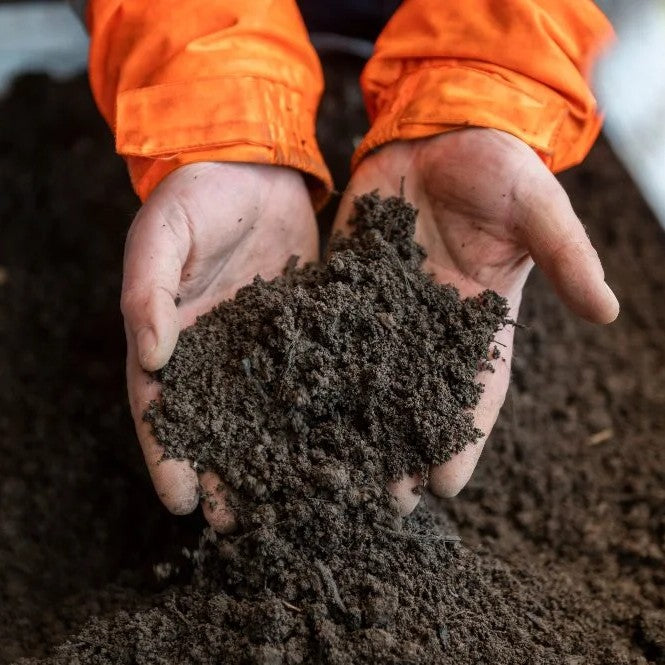
About this compost

Finished screened compost, fully broken down and ready to work into beds. The general purpose choice for building soil that holds water and feeds roots.

Really appreciate the care and follow thru that this company had with our order. A hiccup came up but they were quick to respond and address all concerns, which made our garden day a success! Thank you for your prompt care.

One cubic yard of compost covers about 324 square feet at a 1 inch depth, which is the right amount for topdressing an established lawn. For beds, plan on 2 to 3 inches tilled in, so figure closer to 100 to 160 square feet per yard depending on how deep you go. Measure your bed or lawn area first, then decide if you are dressing the top or rebuilding the soil underneath.

A yard is approximately 27 cubic feet. As a general guideline, one yard of material can cover an area of about 100-160 square feet at a 2-3 inch depth.

Denton Compost Delivery

Denton Compost Delivery

4.7
137 reviews
Regular price $60.00 per Yard
Regular price Sale price $60.00
Sale Sold out
Shipping calculated at checkout.
Type
Size
Hand-picked local yards
4,000+ regional deliveries
Dedicated support
Why order through Mulch Mound

The best local compost, without the guesswork.

We hand-pick and partner with the best yards in your region, keep only the ones our buyers rate well, and back each load with our guarantee.

Mulch Mound Guarantee

If your compost isn't the quantity or quality you ordered, we'll make it right.

About this compost

Finished screened compost, fully broken down and ready to work into beds. The general purpose choice for building soil that holds water and feeds roots.

Really appreciate the care and follow thru that this company had with our order. A hiccup came up but they were quick to respond and address all concerns, which made our garden day a success! Thank you for your prompt care.

One cubic yard of compost covers about 324 square feet at a 1 inch depth, which is the right amount for topdressing an established lawn. For beds, plan on 2 to 3 inches tilled in, so figure closer to 100 to 160 square feet per yard depending on how deep you go. Measure your bed or lawn area first, then decide if you are dressing the top or rebuilding the soil underneath.

A yard is approximately 27 cubic feet. As a general guideline, one yard of material can cover an area of about 100-160 square feet at a 2-3 inch depth.

View full details

How It Works

Getting started is easy — just follow these simple steps

1

Choose your quantity

Adjust the quantity to match your project. One cubic yard covers about 100 to 160 square feet at a 2 to 3 inch depth.

2

Select your delivery date

Select a delivery date you'd like for the product to be dropped off at your home

3

Sit back and wait

Sit back, wait, and let us work our magic to make sure the highest quality product is delivered to your driveway.

From The Mouths of Denton Folks

4.7
out of 5 based on 137 reviews
Google Reviews

Complete Your Outdoor Project

Compost pairs well with a bark or hardwood mulch layer on top in beds, since the compost feeds the soil while the mulch holds moisture and blocks weeds. For lawns, some people follow a compost topdressing with a light layer of topsoil if they are also leveling low spots. If you are starting a new bed from scratch, compost mixed into existing clay loam gets you further than trying to replace the soil outright.

Mulch Mound Pro Tip

Do not pile finished compost more than 3 inches deep in beds, even though it seems like more would help faster. Compost this fine breaks down quickly in Denton's heat, and too thick a layer can actually go anaerobic underneath, which smells bad and stalls root growth instead of helping it. Thin layers worked into the soil surface do more for clay loam than a deep pile ever will.

Mulch Mound Pro Tip

The biggest mistake we see is people topdressing lawns during peak summer heat, expecting fast green-up. Compost is a soil builder, not a fast fertilizer, and Denton's summer sun can crust a fresh layer before it settles in. Spring and fall, when temperatures are milder and rainfall more consistent, are when compost actually gets pulled down into the soil profile by worms and rain instead of just sitting on top.

Mulch Mound Pro Tip

If you are amending a large bed area, it is more cost efficient to till compost into the existing clay loam rather than trying to fully replace the soil. Denton's native soil has decent mineral content, it just needs organic matter and better structure. A few seasons of compost applications will get you further than one expensive soil swap, and you will spend less material overall doing it incrementally.

Building Better Soil in Denton

Denton's clay loam holds water and compacts hard once the summer sun bakes it, which makes root growth tough for anything but the toughest turf. Compost worked into the top 2 to 3 inches breaks up that density over time and gives roots somewhere to actually spread. With zone 8a summers and a growing window that runs long between the March and November frosts, beds here get worked hard, and compost is what keeps the soil from wearing out. It is also a low-risk way to build structure before planting, since it will not burn roots the way raw manure can.

What Finished Compost Is

Finished compost is organic matter that has fully broken down into a dark, crumbly material with an earthy smell. It feeds soil life, improves structure, and helps beds hold water without staying soggy.

How Much to Apply

Work 1 to 2 inches into new beds, or topdress lawns with a quarter to half inch and rake it in. More is not better. Too thick a layer can smother roots instead of feeding them.

When to Apply

Spring and fall are both good windows. Spring applications feed the growing season ahead, and fall applications break down over winter so beds are ready at first thaw.

Frequently Asked Questions

Click a question to see the answer

Answer

Will compost actually help with Denton's clay soil or do I need something else first?

Compost is one of the most direct ways to improve clay loam like ours, since it adds organic matter that breaks up compaction over time. It will not turn clay into sand overnight, but repeated applications worked into the top few inches noticeably improve drainage and root penetration within a season or two.

Answer

How many cubic yards do I need for a 1000 square foot lawn?

At a 1 inch topdressing depth, one cubic yard covers about 324 square feet, so a 1000 square foot lawn needs roughly 3 cubic yards. If you are working beds instead at 2 to 3 inches deep, plan on needing 2 to 3 times more material per square foot.

Answer

When is the best time to apply compost in Denton?

Spring and fall both work well here, since the milder temperatures and more consistent rain help compost integrate into the soil instead of crusting over in summer heat. Fall application ahead of the first frost is popular for bed prep, while spring topdressing before the heat sets in is common for lawns.

Answer

Where will the compost be dropped and do I need to be home?

We place the load wherever you specify, usually a driveway or other firm, accessible surface, and you choose the delivery date at checkout. You do not need to be home, just make sure the drop spot is clear and reachable for a delivery truck.

Answer

Should I get compost or topsoil for my new garden bed?

Compost is best for feeding existing soil and improving structure, while topsoil is more about adding volume or filling low areas. For most Denton beds sitting on clay loam, working compost into the native soil gets better long-term results than importing topsoil alone.

More delivery around Denton, Texas

All Denton, Texas landscape supply