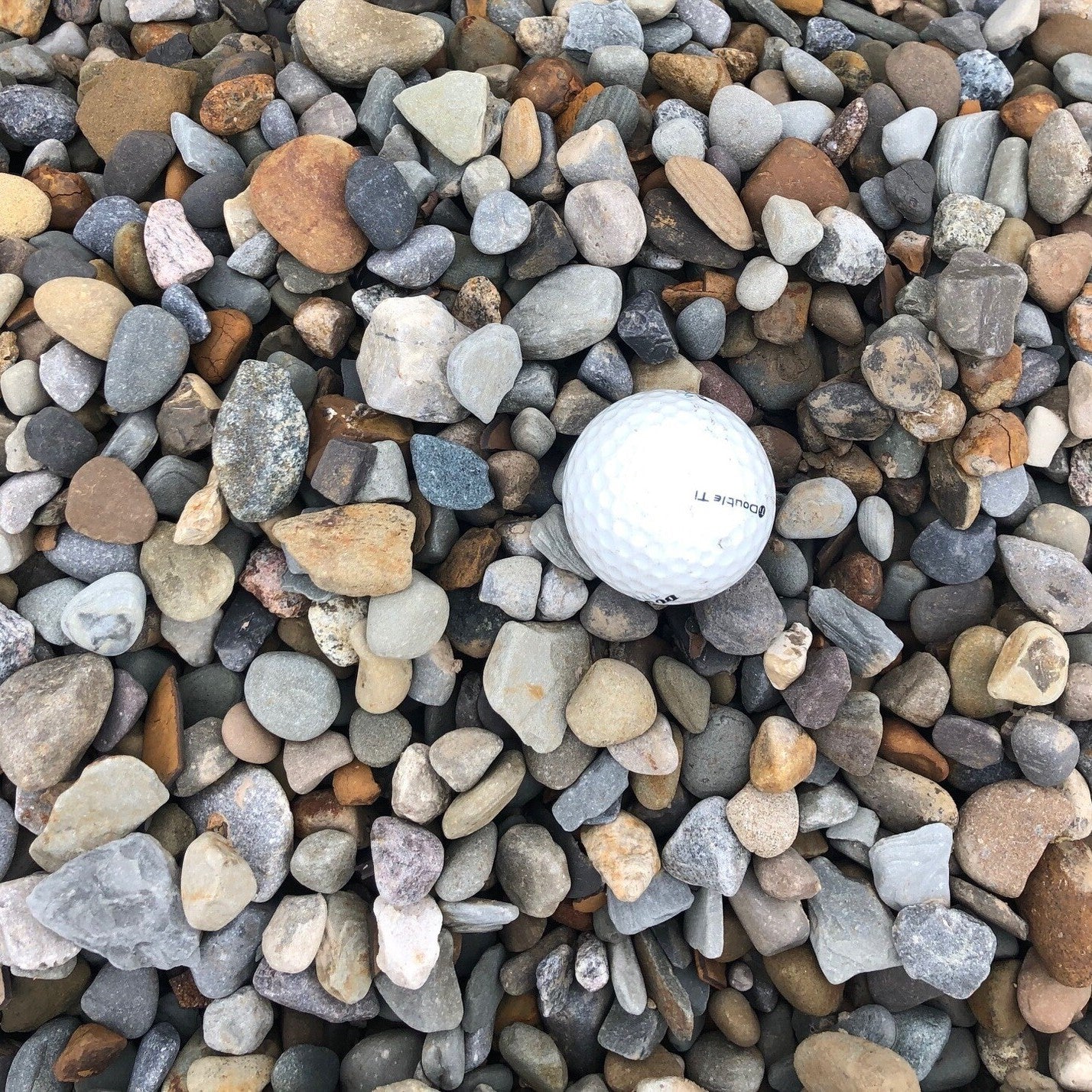
Number 57 crushed stone, angular limestone graded to about three quarters of an inch. The standard driveway, base and drainage gravel, it locks together under traffic and drains fast.
Mulch Mound delivered a yard of pea gravel to us. Delivery was on time, driver was friendly and hit a bullseye on the “tarp target”. We used the pea gravel (which was diameter as specified) to fill several muskrat holes around our pond. I would definitely recommend Mulch Mo...
Tell us what you're looking for
Thanks! We received your request.
Something went wrong. Please try again.
How Much Material Do I Need?
For decorative stone coverage in Fontana landscapes, plan on a minimum of 2 inches for flat areas and 3 inches wherever weed suppression is the priority. Dry creek beds and drainage features need 4 to 6 inches of material to function properly during the intense rain events that deliver most of Fontana's annual 15 inches.
Use our free gravel calculator
What is a Yard?
A yard is approximately 27 cubic feet. As a general guideline, one yard of material can cover an area of about 100-160 square feet at a 2-3 inch depth.
We can't take orders for this right now. Tell us what you need and we'll get back to you.
What do you need?
Thanks! We received your request.
Something went wrong. Please try again.
Hand-picked local yards
4,000+ regional deliveries
Dedicated support
Why order through Mulch Mound
The best local , without the guesswork.
We hand-pick and partner with the best yards in your region, keep only the ones our buyers rate well, and back each load with our guarantee.
Mulch Mound Guarantee
If your isn't the quantity or quality you ordered, we'll make it right.
About this stone
Number 57 crushed stone, angular limestone graded to about three quarters of an inch. The standard driveway, base and drainage gravel, it locks together under traffic and drains fast.
Mulch Mound delivered a yard of pea gravel to us. Delivery was on time, driver was friendly and hit a bullseye on the “tarp target”. We used the pea gravel (which was diameter as specified) to fill several muskrat holes around our pond. I would definitely recommend Mulch Mo...
How Much Material Do I Need?
For decorative stone coverage in Fontana landscapes, plan on a minimum of 2 inches for flat areas and 3 inches wherever weed suppression is the priority. Dry creek beds and drainage features need 4 to 6 inches of material to function properly during the intense rain events that deliver most of Fontana's annual 15 inches.
Use our free gravel calculator
What is a Yard?
A yard is approximately 27 cubic feet. As a general guideline, one yard of material can cover an area of about 100-160 square feet at a 2-3 inch depth.
Mulch Mound delivered a yard of pea gravel to us. Delivery was on time, driver was friendly and hit a bullseye on the “tarp target”. We used the ...
Read full review
Mulch Mound delivered a yard of pea gravel to us. Delivery was on time, driver was friendly and hit a bullseye on the “tarp target”. We used the pea gravel (which was diameter as specified) to fill several muskrat holes around our pond. I would definitely recommend Mulch Mound to a friend!
Placing an order online was so easy. Delivery was on time. When the driver realized we had a newly poured driveway they erred on the side of cautio...
Read full review
Placing an order online was so easy. Delivery was on time. When the driver realized we had a newly poured driveway they erred on the side of caution and opted not ti drive in it. The company even sent me a message explaining that call. Would recommend!
Measure the length and width of the area you want to cover in feet and multiply them together for square footage. Then decide on your installation depth, typically 2 to 3 inches for decorative coverage and 3 to 4 inches for functional weed suppression. Enter those numbers into the MulchMound calculator and it will tell you exactly how many cubic yards to order, taking the guesswork out of the math.
Complete Your Outdoor Stone Project
Pair your stone order with a delivery of quality soil to fill any raised planting pockets within your stone design, giving drought-tolerant plants like agave and salvia a productive root environment surrounded by beautiful stone. Adding a mulch layer to planted areas within your stone landscape creates a visual contrast and keeps plant roots cool during Fontana's long summers.
Install landscape fabric before you place any stone, but choose woven polypropylene fabric rather than solid plastic sheeting. Fontana's clay soil needs to breathe and absorb the rainfall it does receive, and solid plastic barriers create underground pooling that can actually damage roots and undermine your hardscape over time. Woven fabric blocks weeds while still allowing air and water movement through the soil profile beneath your stone.
Mulch Mound Pro Tip
Use stone to create a thermal buffer around heat-sensitive plants in your Fontana yard. Placing a ring of light-colored river rock around the base of shrubs and perennials reflects some radiant heat away from the plant crown while still suppressing weeds and retaining soil moisture. This is especially effective for plants positioned against south or west-facing walls where reflected heat from stucco or block walls can push temperatures even higher than the ambient air temperature.
Mulch Mound Pro Tip
When grading for a stone installation in Fontana, plan a very slight slope away from your home's foundation, roughly one inch of drop for every eight feet of distance. Fontana's clay soil does not absorb water quickly, which means even a modest rainstorm can send a sheet of surface water toward your house if the grade is flat or inverted. Getting the slope right before you place stone means your landscape will manage water correctly for years without any intervention.
The Unique Landscape of Fontana
Stone and gravel are among the most practical landscaping choices a Fontana homeowner can make given the city's 15 inches of annual rainfall and blistering summer heat. Unlike organic ground covers, stone does not decompose, does not need replacement, and does not require supplemental watering to maintain its appearance. Fontana's clay soil and low rainfall make water conservation a real priority, and swapping grass or high-water plants for decorative stone landscapes can reduce outdoor water use dramatically. Stone also handles Fontana's occasional intense rain events better than exposed soil, reducing runoff and erosion on properties with slopes or hardpan clay underneath. The city's elevation at 1,237 feet means temperatures can swing significantly between day and night, and stone landscapes absorb daytime heat and release it slowly, creating a slightly warmer microclimate that is often beneficial for heat-loving plants. From decomposed granite pathways to river rock dry creek beds that manage seasonal stormwater, stone is a long-term investment that fits Fontana's climate and lifestyle.
Frequently Asked Questions
Click a question to see the answer
Answer
What kind of stone works best for a water-wise front yard makeover in Fontana?
Decomposed granite is the most popular choice for full front yard conversions in Fontana and across the Inland Empire. It compacts into a firm, walkable surface, comes in warm golden and tan tones that complement the regional landscape, and allows rainwater to percolate into the ground rather than running off. For accent areas around plants, river rock or pea gravel adds visual contrast and works well as a transition material between DG paths and planting zones.
Answer
Will stone get too hot to walk on barefoot during a Fontana summer?
Darker stones like black lava rock absorb significantly more heat than lighter materials, and during a Fontana summer that can mean surface temperatures well above air temperature. Lighter-colored decomposed granite and tan or buff river rock stay considerably cooler underfoot. If you have pets or kids who use the yard regularly, stick with lighter stone tones and consider the placement of shade structures to reduce heat buildup in high-traffic areas.
Answer
I want to build a dry creek bed to handle stormwater runoff in my Fontana yard. What size stone should I use?
For a functional dry creek bed in Fontana that can handle the intense but short bursts of rainfall the city receives, you want a mix of sizes. Use larger river cobbles, 3 to 5 inches, in the main channel to resist the velocity of moving water, and step down to smaller river rock along the edges for a natural appearance. A layer of landscape fabric underneath will keep Fontana's clay soil from pushing up through the stone over time.
Answer
How deep does stone need to be to block weeds in Fontana?
In Fontana's climate, a 3-inch depth of stone is the minimum for reliable weed suppression when installed over landscape fabric. Without fabric, even 4 inches of stone will eventually allow weeds to push through as wind-blown seed and fine debris accumulate on the surface. Installing a quality woven landscape fabric before placing your stone is the single most important step for long-term low-maintenance results in Inland Empire yards.
Answer
Does stone actually help with Fontana's clay soil drainage problems?
Stone on its own does not fix clay drainage, but it can redirect and manage water movement across the surface of your property. A well-designed stone landscape with gentle grading routes storm runoff toward drains, parkways, or dry creek beds before it can pool against your foundation or flood planting areas. For actual soil drainage improvement, stone needs to be paired with soil amendment or French drain systems that address what is happening below the surface.
Answer
How much decomposed granite do I need for a Fontana backyard pathway?
A standard 3-foot-wide garden path that runs 20 feet long needs about half a cubic yard of decomposed granite at a 3-inch installation depth. Use the MulchMound calculator to enter your specific path dimensions and get an accurate number. It is always worth ordering 10 percent extra with DG because it compacts down during installation and you want enough material to finish any low spots after tamping.
Answer
Will my stone landscape look out of place in Fontana's natural surroundings?
Not at all. Fontana sits at the base of the San Gabriel Mountains where natural rocky terrain and decomposed granite soils are part of the native landscape. Stone yards with drought-tolerant plants like agave, desert willow, and California poppy actually look more at home in Fontana than turf grass does. Choosing warm-toned local-style stone in tan, buff, or rust tones ties your landscape to the regional aesthetic in a way that looks intentional and beautiful.
Answer
Is there a stone yard near Fontana?
Ask at any stone yard and you'd probably walk out with a few cubic yards of crushed stone, and Mulch Mound delivers that same crushed stone in Fontana without the trip to a quarry. It suits the area because stone never rots or needs watering, which helps with the city's clay soil and low rainfall.