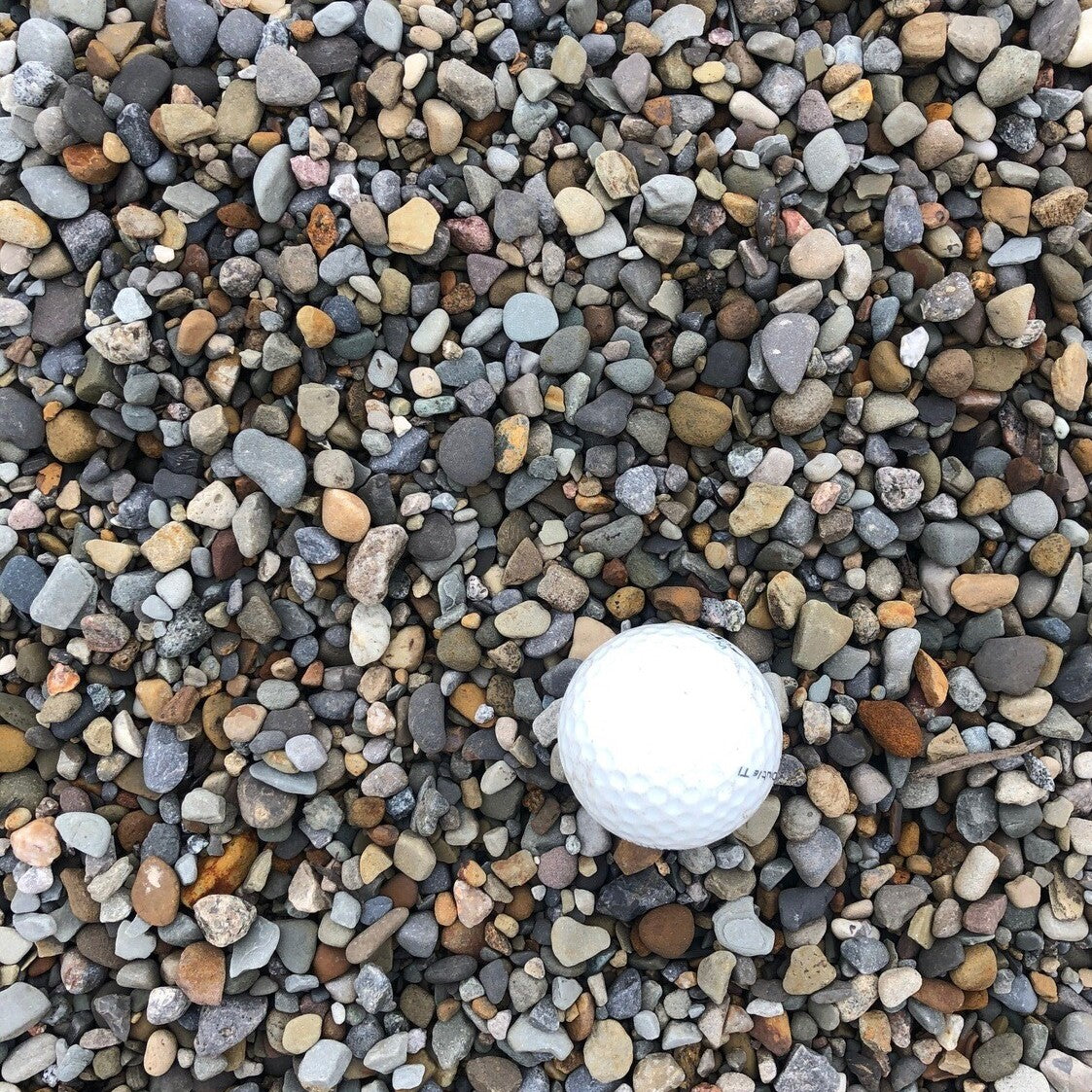
About this landscape rock

Smooth tumbled river rock, heavy enough to stay put in drainage runs and handsome enough for beds and borders.

I contacted Mulch Mound for #57 river rocks and it was easy and fast to get a delivery right before the holiday weekend. Stone was delivered as promised and place exactly where I asked. Excellent service! I will be ordering mulch next!

At the standard 2 to 3 inch install depth, one cubic yard of landscape rock covers about 162 square feet at the shallower end of that range. Measure your bed length by width, decide if you are going 2 or 3 inches deep depending on how much weed suppression you want, and order in full cubic yards since this stone is heavy at 1.35 tons per yard. Most Greenfield front yard beds and downspout borders run somewhere between 1 and 3 yards total.

A yard is approximately 27 cubic feet. As a general guideline, one yard of material can cover an area of about 100-160 square feet at a 2-3 inch depth.

A yard is approximately 27 cubic feet. As a general guideline, one yard of material can cover an area of about 10 feet by 10 feet at a few inches deep.

Greenfield Landscape Rock Delivery

Greenfield Landscape Rock Delivery

4.7
137 reviews
Regular price $132.00 per Yard
Regular price Sale price $132.00
Sale Sold out
Shipping calculated at checkout.
Type
Size
Minimum of 3 Yard
Hand-picked local yards
4,000+ regional deliveries
Dedicated support
Why order through Mulch Mound

The best local landscape rock, without the guesswork.

We hand-pick and partner with the best yards in your region, keep only the ones our buyers rate well, and back each load with our guarantee.

Mulch Mound Guarantee

If your landscape rock isn't the quantity or quality you ordered, we'll make it right.

About this landscape rock

Smooth tumbled river rock, heavy enough to stay put in drainage runs and handsome enough for beds and borders.

I contacted Mulch Mound for #57 river rocks and it was easy and fast to get a delivery right before the holiday weekend. Stone was delivered as promised and place exactly where I asked. Excellent service! I will be ordering mulch next!

At the standard 2 to 3 inch install depth, one cubic yard of landscape rock covers about 162 square feet at the shallower end of that range. Measure your bed length by width, decide if you are going 2 or 3 inches deep depending on how much weed suppression you want, and order in full cubic yards since this stone is heavy at 1.35 tons per yard. Most Greenfield front yard beds and downspout borders run somewhere between 1 and 3 yards total.

A yard is approximately 27 cubic feet. As a general guideline, one yard of material can cover an area of about 100-160 square feet at a 2-3 inch depth.

A yard is approximately 27 cubic feet. As a general guideline, one yard of material can cover an area of about 10 feet by 10 feet at a few inches deep.

View full details

How It Works

Getting started is easy — just follow these simple steps

1

Choose your quantity

Adjust the quantity to match your project. One cubic yard covers about 100 to 160 square feet at a 2 to 3 inch depth.

2

Select your delivery date

Select a delivery date you'd like for the product to be dropped off at your home

3

Sit back and wait

Sit back, wait, and let us work our magic to make sure the highest quality product is delivered to your driveway.

From The Mouths of Greenfield Folks

4.7
out of 5 based on 137 reviews
Google Reviews

Complete Your Outdoor Project

Landscape fabric underneath is what makes rock a decade long install instead of a weed patch by year two. Edging material keeps the stone from migrating into the lawn or driveway, which matters more than people expect once mowers and snow shovels start pushing things around. If any beds also need organic material for plants, keep that separate from the rock zones since rock does not feed soil the way mulch does.

Mulch Mound Pro Tip

Lay landscape fabric before the rock goes down, not after, and overlap seams by at least six inches. In Greenfield's silt loam, skipping fabric means rock slowly works itself into the soil over a few seasons and you end up with a muddy mess instead of clean stone. Fabric also keeps the silt loam from wicking up through the rock during wet spring stretches, which is common here given how slow this soil drains compared to sandier ground.

Mulch Mound Pro Tip

The biggest mistake homeowners make with rock beds near mature trees is forgetting about leaf drop. Rock traps leaves instead of breaking them down like mulch does, so beds near oaks or maples need a fall blow out or rake before snow cover, otherwise you get a matted leaf layer sitting on top of the stone all winter that looks bad and holds moisture against the rock.

Mulch Mound Pro Tip

Rock is a one time cost that outlasts mulch by years, so it is worth pairing with steel or paver edging up front rather than adding it later. Doing both in the same delivery saves a second trip, and edging keeps rock from spreading into the lawn during Greenfield winters when snow removal and freeze thaw cycles push loose material around at the bed edges.

Decorative Stone in Greenfield

Greenfield sits on silt loam that drains slower than sandy ground, so beds near the house or along downspouts tend to stay damp longer after storms rolling through in spring and fall. Rock over fabric handles that better than mulch does, since it does not break down or mat into the wet soil underneath. With a growing season that runs roughly May through mid October here in zone 5b, homeowners are often working around a narrow install window before the first frost hits in early October. A one time rock install sidesteps that seasonal pressure entirely, since it is not something you have to redo every spring like you would with mulch.

What Landscape Rock Is

Landscape rock is stone chosen for how it looks as much as what it does. River rock is smooth and rounded, decomposed granite is fine and packs firm underfoot. Both are sold by the cubic yard for beds, borders, paths, and dry creek beds.

River Rock vs Decomposed Granite

River rock stays loose and rolls, so it suits beds, borders, and drainage runs where it can sit in place. Decomposed granite compacts into a firm surface, so it suits paths, patios, and anywhere you will walk or roll a wheelbarrow.

Depth and Coverage

Spread river rock 2 to 3 inches deep over landscape fabric so it stays put and weeds stay down. Lay decomposed granite 3 to 4 inches deep, wet it, and compact it in lifts for a surface that sheds water instead of rutting.

Frequently Asked Questions

Click a question to see the answer

Answer

Does landscape rock work well with Greenfield's clay heavy soil?

Yes, rock actually performs better than mulch in Greenfield's silt loam because it does not break down or hold as much surface moisture. The key is fabric underneath so the rock stays separated from the soil and does not slowly sink in over a few seasons, especially in spots that stay damp after rain.

Answer

How many cubic yards do I need for a downspout border or small front bed?

One cubic yard covers about 162 square feet at a 2 inch depth, so a typical 8 by 10 foot downspout bed only needs a fraction of a yard, while a full front yard border often runs 1 to 2 yards. Measure your area first and go with 3 inches deep if you want stronger weed suppression.

Answer

What is the best time of year to install landscape rock in Greenfield?

Anytime the ground is not frozen works, but late spring through early fall gives you the easiest digging in Greenfield's silt loam before it firms up. With first frost typically around October 11, most people aim to finish before mid October so fabric and edging go down while the soil is still workable.

Answer

Where will the rock be placed when it is delivered?

The driver places the load wherever you direct on delivery day, usually a driveway or curb area close to the project site since rock is too heavy to move far by hand. Clear that spot ahead of time and have a wheelbarrow ready if the bed is any distance from the drop point.

Answer

Should I choose rock or mulch for beds near my house foundation?

Rock is generally the better choice against foundations since it does not hold moisture against the house the way mulch can, and it is a one time install rather than an annual refresh. The tradeoff is that rock does not feed the soil, so it is not ideal around plants that want organic matter added back in each year.

More delivery around Greenfield, Wisconsin

All Greenfield, Wisconsin landscape supply