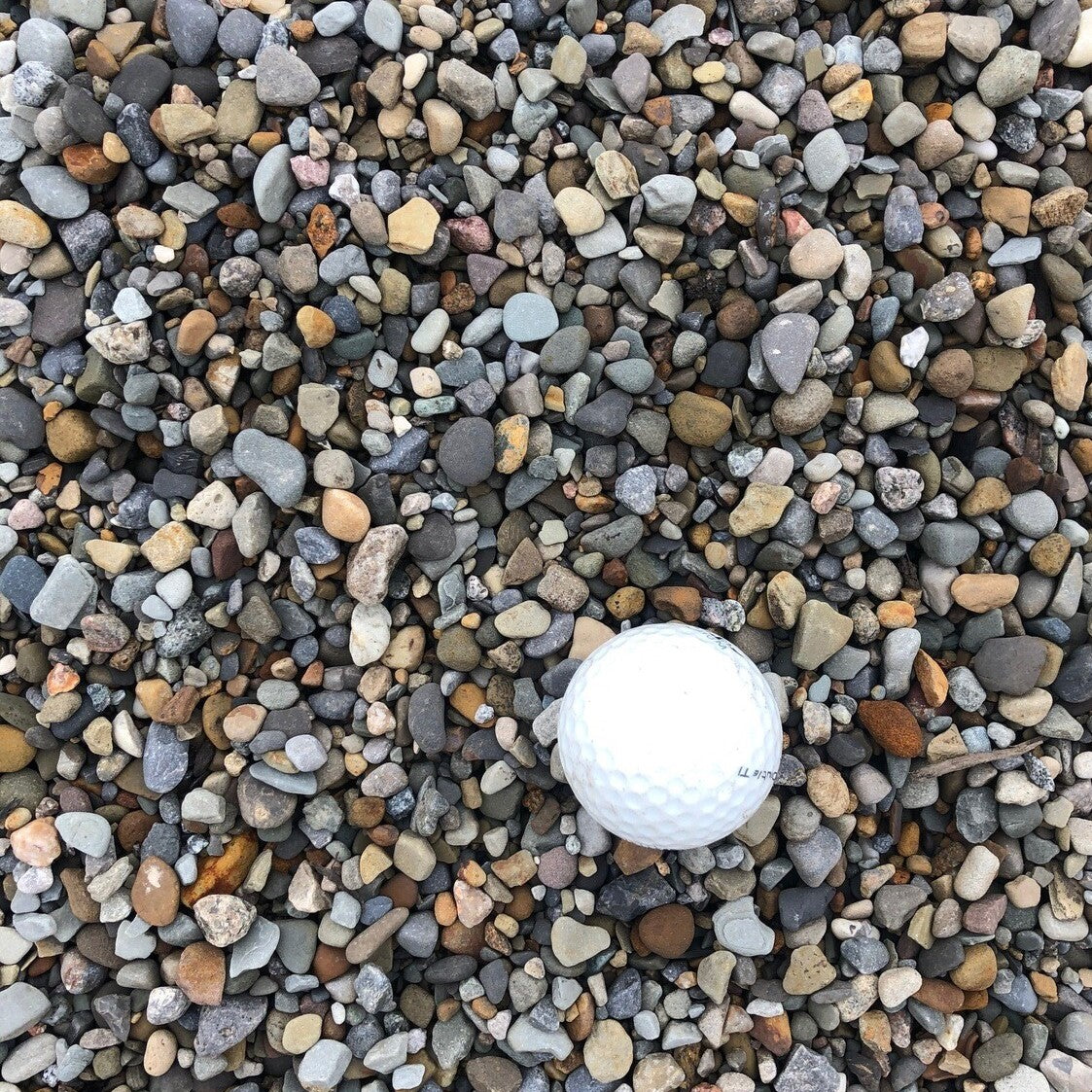
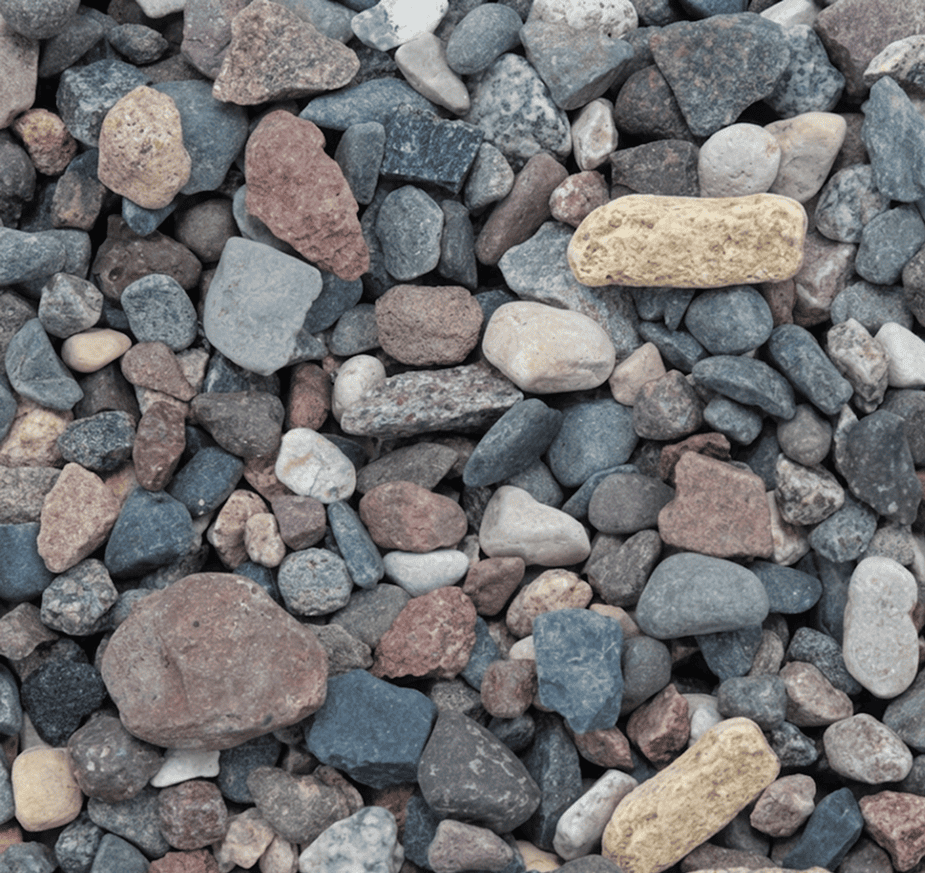
Classic pea gravel with smooth, rounded edges and natural earth tones. A versatile favorite for pathways, patios, drainage, and decorative ground cover.
One of the easiest customer service experiences I've had in a long time! Mulch Mound made it so simple. After putting it off for a while, I looked at the weather and knew I needed to get to mulching ASAP before the rain came if I didn't want to wait another week. I put my orde...
Tell us what you're looking for
Thanks! We received your request.
Something went wrong. Please try again.
How Much Landscape Rock Do I Need?
At a standard 2 inch install depth, one cubic yard of rock covers about 162 square feet, so a 500 square foot front yard bed runs a little over 3 yards. Going to 3 inches for better weed suppression drops coverage to around 108 square feet per yard, worth factoring in before you order. Measure the bed footprint first, then decide on depth, since rock is a much heavier haul than mulch and you don't want a yard sitting unused. Use our free stone calculator
What is a Yard?
A yard is approximately 27 cubic feet. As a general guideline, one yard of material can cover an area of about 100-160 square feet at a 2-3 inch depth.
What is a ton?
A ton is 2,000 pounds of material. As a general guideline, one ton covers roughly 100 square feet at 2 inches deep, depending on the size and density of the material.
We can't take orders for this right now. Tell us what you need and we'll get back to you.
What do you need?
Thanks! We received your request.
Something went wrong. Please try again.
Hand-picked local yards
4,000+ regional deliveries
Dedicated support
Why order through Mulch Mound
The best local landscape rock, without the guesswork.
We hand-pick and partner with the best yards in your region, keep only the ones our buyers rate well, and back each load with our guarantee.
Mulch Mound Guarantee
If your landscape rock isn't the quantity or quality you ordered, we'll make it right.
About this landscape rock
Classic pea gravel with smooth, rounded edges and natural earth tones. A versatile favorite for pathways, patios, drainage, and decorative ground cover.
One of the easiest customer service experiences I've had in a long time! Mulch Mound made it so simple. After putting it off for a while, I looked at the weather and knew I needed to get to mulching ASAP before the rain came if I didn't want to wait another week. I put my orde...
How Much Landscape Rock Do I Need?
At a standard 2 inch install depth, one cubic yard of rock covers about 162 square feet, so a 500 square foot front yard bed runs a little over 3 yards. Going to 3 inches for better weed suppression drops coverage to around 108 square feet per yard, worth factoring in before you order. Measure the bed footprint first, then decide on depth, since rock is a much heavier haul than mulch and you don't want a yard sitting unused. Use our free stone calculator
What is a Yard?
A yard is approximately 27 cubic feet. As a general guideline, one yard of material can cover an area of about 100-160 square feet at a 2-3 inch depth.
What is a ton?
A ton is 2,000 pounds of material. As a general guideline, one ton covers roughly 100 square feet at 2 inches deep, depending on the size and density of the material.
One of the easiest customer service experiences I've had in a long time! Mulch Mound made it so simple. After putting it off for a while, I looked ...
Read full review
One of the easiest customer service experiences I've had in a long time! Mulch Mound made it so simple. After putting it off for a while, I looked at the weather and knew I needed to get to mulching ASAP before the rain came if I didn't want to wait another week. I put my order in for the next day online and they came right at 9 AM. The employee who dropped off the mulch did a great job, putting it right on the tarp I laid out, she even made sure none of it got on the yard and double checked the truck bed to make sure it all came out. The mulch was exactly what I needed and arrived right on time.
We have always spread our own mulch for the past 24 years. This was our first time with the Mulch Mound - things I liked: they have online ordering...
Read full review
We have always spread our own mulch for the past 24 years. This was our first time with the Mulch Mound - things I liked: they have online ordering and provide a digital receipt which means you can remember how much you ordered (I always forget for the next year!), they were on time, they were able to deliver in 48 hours, they were generous with the portion (we got 9 yards and it felt like a FULL nine yards!), the driver was polite! We have ordered from reputable places, and there is always a little trash in the mulch. The mulch we recv'd from Mulch Mound had barely any... we were pleasant surprised!!! Color was great! Not to mention - the price was competitive and LOWER than other mulch places around. We will use again !! Highly recommend! Thanks Mulch Mound!
Landscape fabric goes down first, always, or the rock will work itself into the caliche and weeds will find a way through anyway. Steel or aluminum edging keeps rock beds clean against turf or walkways, which matters more here since Henderson's HOA landscapes lean tidy and geometric. A few boulders or a dry creek bed feature dropped into the rock before the final grading step reads a lot more finished than flat coverage alone.
Lay landscape fabric before any rock touches Henderson's caliche, this soil compacts so hard that once rock and fine dust mix into it, pulling weeds later means fighting concrete like conditions. Overlap fabric seams by at least 6 inches and pin every foot along edges, since our valley wind kicks up enough to shift loose fabric before rock ever gets spread over it.
Mulch Mound Pro Tip
The most common mistake we see in Henderson yards is piling rock too deep against downspout splash zones, thinking more coverage stops erosion. Past 3 inches, rock just channels water faster and can wash soil out from under the fabric during our rare but intense monsoon bursts. Keep depth consistent at 2 to 3 inches and let a dry well or splash block handle the actual water diversion work.
Mulch Mound Pro Tip
Buying in one full delivery instead of several small loads saves you multiple delivery charges and gets your whole yard color matched, since rock color can vary slightly between batches at the quarry. If you are doing beds in phases, over order slightly on the first phase and bank the extra for touch ups later rather than trying to match an exact shade a year down the line.
Decorative Stone in Henderson
Henderson sits on caliche, that dense chalky subsoil that barely drains and makes digging a workout, which is exactly why rock over fabric outperforms mulch here, it never breaks down into the hardpan below it. With Zone 9b summers pushing plants to conserve water, most Henderson yards near Lake Las Vegas and beyond have gone partly or fully to rock beds already. The tradeoff is real, rock traps blown in leaves and desert dust and it does nothing for soil biology, so keep it away from beds where you actually want plants rooting into improved soil.
What Landscape Rock Is
Landscape rock is stone chosen for how it looks as much as what it does. River rock is smooth and rounded, decomposed granite is fine and packs firm underfoot. Both are sold by the cubic yard for beds, borders, paths, and dry creek beds.
River Rock vs Decomposed Granite
River rock stays loose and rolls, so it suits beds, borders, and drainage runs where it can sit in place. Decomposed granite compacts into a firm surface, so it suits paths, patios, and anywhere you will walk or roll a wheelbarrow.
Depth and Coverage
Spread river rock 2 to 3 inches deep over landscape fabric so it stays put and weeds stay down. Lay decomposed granite 3 to 4 inches deep, wet it, and compact it in lifts for a surface that sheds water instead of rutting.
Frequently Asked Questions
Click a question to see the answer
Answer
Does landscape rock actually hold up in Henderson heat and sun?
Yes, that is one of its main advantages here. Unlike mulch, rock does not fade, bake down, or blow away in a season, it is mineral, so summer heat in the 100s does not degrade it. The only real maintenance is occasionally blowing out leaves and dust that settle on top, which happens in any Henderson yard regardless of ground cover.
Answer
How many cubic yards do I need for a typical Henderson front yard?
Most Henderson front yard beds run 400 to 800 square feet after subtracting the house footprint and walkways. At 2 inches deep, that is roughly 2.5 to 5 cubic yards, using the 162 square feet per yard coverage rate. Measure your actual bed area first since lot sizes vary a lot across Henderson's newer master planned neighborhoods versus older sections.
Answer
When is the best time to install rock in Henderson?
Late fall through winter, once temperatures drop out of the triple digits, makes for a far more comfortable install, and it lines up with our first frost around December 10 before things cool further. That said, this is not a seasonal material like mulch, you can install rock any month, it just goes down easier on your crew when it is not 105 degrees out.
Answer
Where will the truck place the rock, and do I need anything ready?
We place the load as close to your work area as the truck can safely reach, typically the driveway or curb if access is tight. Have your landscape fabric and any edging on site and your work area cleared beforehand, since rock delivered on a tarp or directly onto a driveway is much easier to shovel and wheelbarrow from a hard surface than a dirt approach.
Answer
Should I use rock or mulch for my Henderson yard?
Rock makes sense as a one time install for front yards, foundation lines, and areas near downspouts where you want permanence and low upkeep. If you have shrubs or beds that benefit from organic matter breaking down into the soil, mulch is the better call since rock over fabric blocks that nutrient cycle entirely. Many Henderson yards use both, rock up front, mulch in planted beds.
Answer
What is decomposed granite, or DG, best used for?
Caliche, the dense chalky subsoil under Henderson, barely drains, so rain tends to pond on bare ground. Decomposed granite, or DG, is weathered granite chips and fines that compact into a firm surface for paths, patios, side yards, and seating areas. It suits the tan desert palette, and edging plus fabric keeps it neat.