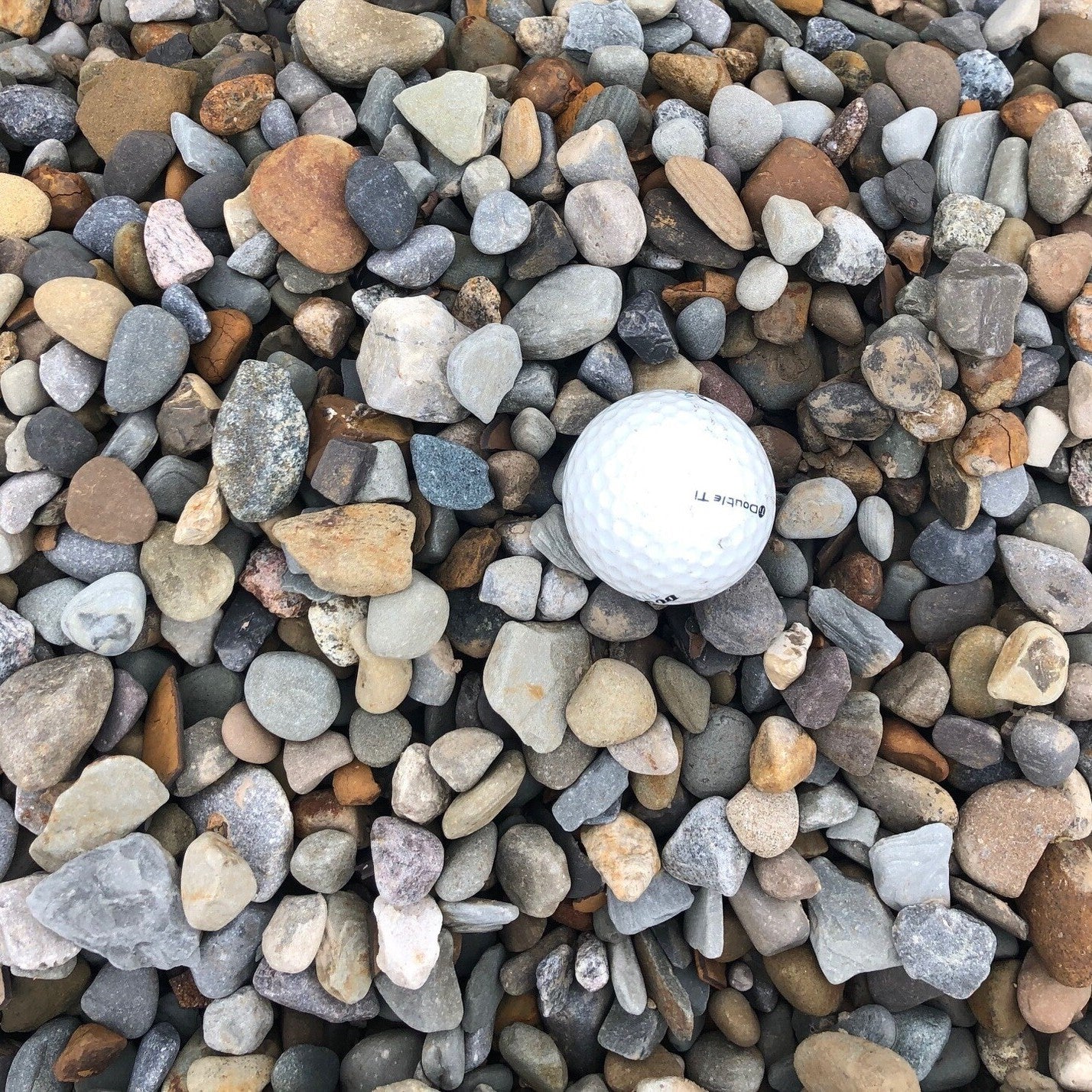
Number 57 crushed stone, angular limestone graded to about three quarters of an inch. The standard driveway, base and drainage gravel, it locks together under traffic and drains fast.
My experience with Mulch Mound was great and super easy. I ordered two yards of screened topsoil and was able to get it delivered within 2 days. They came in my requested time frame (afternoon) and dropped it off where I asked on my driveway. The topsoil was exactly what was a...
Tell us what you're looking for
Thanks! We received your request.
Something went wrong. Please try again.
How Much Material Do I Need?
Spread 2 inches for standard ground cover and 3 inches where you want full coverage over fabric or in high visibility front yard areas. Washes and dry riverbeds using cobble typically need 4 to 6 inches to look natural.
Use our free gravel calculator
What is a Yard?
A yard is approximately 27 cubic feet. As a general guideline, one yard of material can cover an area of about 100-160 square feet at a 2-3 inch depth.
We can't take orders for this right now. Tell us what you need and we'll get back to you.
What do you need?
Thanks! We received your request.
Something went wrong. Please try again.
Hand-picked local yards
4,000+ regional deliveries
Dedicated support
Why order through Mulch Mound
The best local , without the guesswork.
We hand-pick and partner with the best yards in your region, keep only the ones our buyers rate well, and back each load with our guarantee.
Mulch Mound Guarantee
If your isn't the quantity or quality you ordered, we'll make it right.
About this stone
Number 57 crushed stone, angular limestone graded to about three quarters of an inch. The standard driveway, base and drainage gravel, it locks together under traffic and drains fast.
My experience with Mulch Mound was great and super easy. I ordered two yards of screened topsoil and was able to get it delivered within 2 days. They came in my requested time frame (afternoon) and dropped it off where I asked on my driveway. The topsoil was exactly what was a...
How Much Material Do I Need?
Spread 2 inches for standard ground cover and 3 inches where you want full coverage over fabric or in high visibility front yard areas. Washes and dry riverbeds using cobble typically need 4 to 6 inches to look natural.
Use our free gravel calculator
What is a Yard?
A yard is approximately 27 cubic feet. As a general guideline, one yard of material can cover an area of about 100-160 square feet at a 2-3 inch depth.
My experience with Mulch Mound was great and super easy. I ordered two yards of screened topsoil and was able to get it delivered within 2 days. Th...
Read full review
My experience with Mulch Mound was great and super easy. I ordered two yards of screened topsoil and was able to get it delivered within 2 days. They came in my requested time frame (afternoon) and dropped it off where I asked on my driveway. The topsoil was exactly what was advertised, clean with no rocks or other debris. The price was reasonable. I plan to use them again in a couple weeks to order compost for my garden beds.
Really appreciate the care and follow thru that this company had with our order. A hiccup came up but they were quick to respond and address all co...
Read full review
Really appreciate the care and follow thru that this company had with our order. A hiccup came up but they were quick to respond and address all concerns, which made our garden day a success! Thank you for your prompt care.
Break irregular yards into rectangles and triangles, measure each one, and add them up rather than eyeballing the total. Stone is sold by the ton, and three quarter inch gravel runs about 1.4 tons per cubic yard. Subtract the footprint of planters, boulders, and walkways so you are not paying to cover concrete.
Complete Your Outdoor Stone Project
Add boulders and cobble for scale and contrast, and keep a few yards of mulch on hand for the planted islands inside your rock field where shrubs need cooler roots.
Mix two sizes in the same area for a look that reads as natural desert rather than a parking lot. Spread three quarter inch as your base field, then scatter a few hundred pounds of two to four inch cobble in loose drifts, heavier along the low line where water would naturally travel. The Mojave landscape around Henderson never has uniform particle size, and copying that irregularity is what makes a rock yard look designed.
Mulch Mound Pro Tip
Set boulders so they are buried a third of the way into the ground. A rock sitting on the surface looks dropped, while one partially sunk looks like it has been there since before the subdivision. Dig the pocket, orient the most weathered and lichen stained face toward the street, and angle the bedding lines on multiple boulders in the same direction the way natural outcrops in the surrounding hills do.
Mulch Mound Pro Tip
Leave generous bare openings in your rock for plants and irrigation. Rock pushed tight against a shrub base traps heat and makes it impossible to adjust a drip emitter without digging through gravel. Keep an 18 inch clear ring around each plant, run your drip tubing above the fabric and under the rock, and flag the emitter locations so you can find them when our hard water eventually clogs one.
The Unique Landscape of Henderson
Decorative rock is the dominant ground cover in Henderson for good reason, since it survives 110 degree afternoons, never needs replacing, and satisfies the water efficient landscape standards that come with turf conversion rebates. With only 5 inches of rain a year, a rock yard is simply a better match for the climate than anything that needs irrigation. Stone also solves drainage problems that caliche creates, because when the hardpan will not absorb a monsoon downpour, gravel swales and dry riverbeds give that water a place to go instead of your foundation. The right size and color of rock keeps reflected heat manageable near windows and patios while framing the desert plantings that thrive in Zone 9b. Rip rap and cobble hold slopes and berms in place through the flash runoff that hits the valley in July and August. Chosen well, stone is the one landscape material here that will still look right in twenty years.
Frequently Asked Questions
Click a question to see the answer
Answer
What size rock is standard for a Henderson front yard?
Three quarter inch screened gravel is the valley standard and what most HOAs in Anthem, Inspirada, and Seven Hills expect. It is small enough to walk on and rake, large enough that spring winds and monsoon runoff will not move it. Half inch reads finer and cleaner, while one and a half inch and larger is usually reserved for washes and accent areas.
Answer
Does rock make my yard hotter?
It does store and reradiate heat, which is noticeable on a south or west facing wall in July. Lighter colors like desert gold and salt and pepper stay measurably cooler than dark charcoal or red lava. Keep the darkest rock away from windows and patio seating, and use shade trees or larger boulders to break up big open expanses.
Answer
Do I really need fabric under decorative rock?
Use a quality woven fabric under ground cover rock to keep it from sinking into the soft soil above the caliche, but understand it will not stop weeds forever. In Henderson most weeds sprout in the dust that blows in and settles on top of the rock, not from below. Plan on spot spraying after winter rains regardless of what is underneath.
Answer
How much rock do I need to convert my lawn?
At the typical 2 inch depth, one ton of three quarter inch gravel covers roughly 100 square feet. So a 1,000 square foot lawn conversion needs about 10 tons. Measure the turf area before you remove it, and if you are chasing a Southern Nevada Water Authority rebate, check their current coverage requirements too.
Answer
Will monsoon storms wash my gravel into the street?
It can happen on any slope steeper than about 4 to 1, and Henderson's August storms drop a lot of water fast. On grades use larger three quarter to one and a half inch rock or cobble instead of fines, install a header or curb at the bottom edge, and build a shallow swale to steer runoff toward a wash rather than across the yard.
Answer
How do I clean the dust out of my existing rock?
Our valley dust settles into gravel and dulls it within a couple of years. A stiff landscape rake breaks the crust, and a leaf blower on low will lift the fine silt out without throwing the rock. For a deeper clean, hose sections down in the early morning. If the rock has sunk or gone gray, a half inch top dress usually beats replacement.
Answer
Can I lay rock directly on caliche?
Yes, and caliche actually makes a stable base for it. Just make sure you have grading that moves water away from the house first, because caliche will not absorb a downpour and the water will run wherever the slope sends it. Compact the surface, lay fabric, then spread your stone.