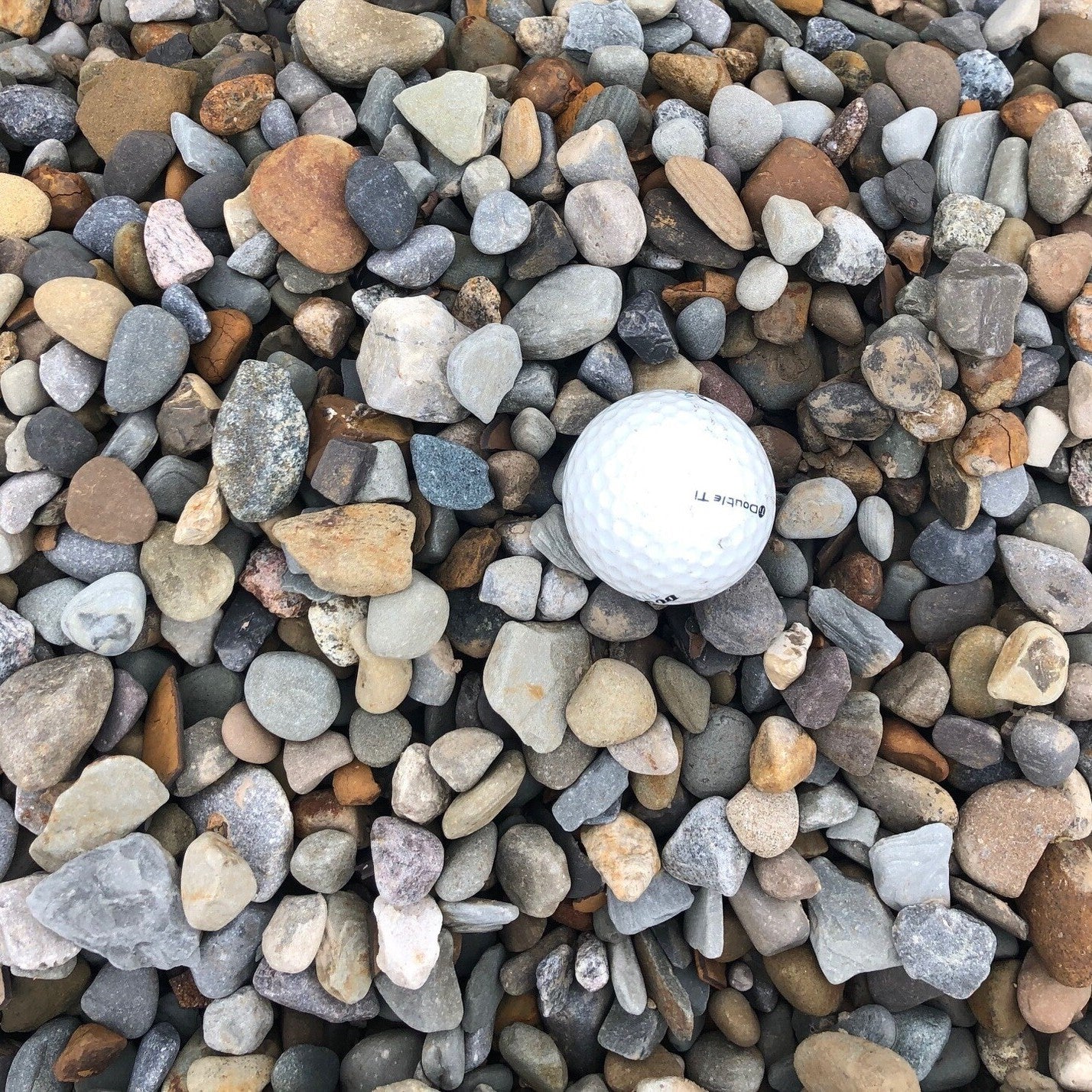
Number 57 crushed stone, angular limestone graded to about three quarters of an inch. The standard driveway, base and drainage gravel, it locks together under traffic and drains fast.
I contacted Mulch Mound for #57 river rocks and it was easy and fast to get a delivery right before the holiday weekend. Stone was delivered as promised and place exactly where I asked. Excellent service! I will be ordering mulch next!
Tell us what you're looking for
Thanks! We received your request.
Something went wrong. Please try again.
How Much Material Do I Need?
For ground cover applications in Los Angeles landscapes, plan on 2 to 3 inches of gravel or decorative stone for aesthetics and weed suppression, and 3 to 4 inches for high-traffic walkways where stability matters. Dry river bed features look most natural when you vary the depth, mounding slightly in the center of the channel to mimic a real streambed.
Use our free gravel calculator
What is a Yard?
A yard is approximately 27 cubic feet. As a general guideline, one yard of material can cover an area of about 100-160 square feet at a 2-3 inch depth.
We can't take orders for this right now. Tell us what you need and we'll get back to you.
What do you need?
Thanks! We received your request.
Something went wrong. Please try again.
Hand-picked local yards
4,000+ regional deliveries
Dedicated support
Why order through Mulch Mound
The best local , without the guesswork.
We hand-pick and partner with the best yards in your region, keep only the ones our buyers rate well, and back each load with our guarantee.
Mulch Mound Guarantee
If your isn't the quantity or quality you ordered, we'll make it right.
About this stone
Number 57 crushed stone, angular limestone graded to about three quarters of an inch. The standard driveway, base and drainage gravel, it locks together under traffic and drains fast.
I contacted Mulch Mound for #57 river rocks and it was easy and fast to get a delivery right before the holiday weekend. Stone was delivered as promised and place exactly where I asked. Excellent service! I will be ordering mulch next!
How Much Material Do I Need?
For ground cover applications in Los Angeles landscapes, plan on 2 to 3 inches of gravel or decorative stone for aesthetics and weed suppression, and 3 to 4 inches for high-traffic walkways where stability matters. Dry river bed features look most natural when you vary the depth, mounding slightly in the center of the channel to mimic a real streambed.
Use our free gravel calculator
What is a Yard?
A yard is approximately 27 cubic feet. As a general guideline, one yard of material can cover an area of about 100-160 square feet at a 2-3 inch depth.
I contacted Mulch Mound for #57 river rocks and it was easy and fast to get a delivery right before the holiday weekend. Stone was delivered as pro...
Read full review
I contacted Mulch Mound for #57 river rocks and it was easy and fast to get a delivery right before the holiday weekend. Stone was delivered as promised and place exactly where I asked. Excellent service! I will be ordering mulch next!
To estimate stone for a Los Angeles project, measure your area in square feet and decide on your target depth in inches. Divide your square footage by the coverage rate listed for your specific product, which varies by stone size and density. For decomposed granite at a 3 inch depth, roughly 1 cubic yard covers about 100 square feet, and having your measurements written down before you order makes the process quick and accurate.
Complete Your Outdoor Stone Project
Pair your stone delivery with decomposed granite for bordering paths or transitioning between rock and planting areas, creating a cohesive finished look throughout your Los Angeles yard. Adding a bulk mulch order for any remaining planting beds ties the full landscape together with materials that complement one another in both function and appearance.
Los Angeles receives the bulk of its 16 inches of annual rainfall in a short window between November and March, often in concentrated storms rather than steady gentle rain. Before installing stone or gravel, take note of how water moves across your yard during a heavy rain and use that information to guide your stone placement. Installing a subtle swale or directing gravel paths to follow natural drainage routes means your stone landscape actually improves water management rather than creating new runoff problems.
Mulch Mound Pro Tip
Color temperature matters in Los Angeles stone selection more than in almost any other city because of our intense, high-angle sunlight. Warm tan and gold decomposed granite reads as bright and inviting in the California sun, while white or very light marble chips can create uncomfortable glare in south or west-facing yards during afternoon hours. Cool gray granite or blue-gray river rock tends to read as calm and modern under bright sun and is an excellent choice for contemporary Los Angeles architecture, including the many mid-century modern homes found throughout the city.
Mulch Mound Pro Tip
If your Los Angeles property is in a Very High Fire Hazard Severity Zone, which covers large portions of the hillside and foothill communities, replacing organic ground covers within 5 feet of your home with decomposed granite or gravel is one of the most effective fire-hardening steps you can take. Stone is non-combustible and will not carry a ground fire toward your structure the way wood chip mulch or dry lawn grass can. Local fire departments and the Los Angeles Fire Department's Ready Set Go program both recommend using stone as a near-structure ground cover as part of a defensible space strategy.
The Unique Landscape of Los Angeles
Stone and gravel have become essential landscape materials in Los Angeles not just for their appearance but for their practical performance in a city facing ongoing water scarcity and strict conservation regulations. With only 16 inches of annual rainfall and hot, dry summers, many Los Angeles homeowners are replacing high-water-use lawns with stone-covered landscapes that require no irrigation once installed and no seasonal replanting. The clay loam soil common across much of Los Angeles drains slowly, and a permeable gravel or decomposed granite surface helps direct water toward plant root zones rather than allowing it to sheet off into the street. Los Angeles's warm climate also means stone surfaces absorb and radiate heat, which is worth planning for in terms of plant placement and where you choose to use lighter versus darker stone. From the drought-resistant native gardens of the hillside communities to the modern xeriscaped front yards of Silver Lake and Eagle Rock, decorative stone has become a signature element of contemporary Los Angeles landscape design. Choosing the right stone for your specific project means thinking about drainage, sun exposure, and the overall aesthetic of your neighborhood.
Frequently Asked Questions
Click a question to see the answer
Answer
I want to replace my front lawn with gravel or stone. What type works best in Los Angeles?
Decomposed granite is the most popular choice for Los Angeles lawn conversions because it compacts into a stable walking surface, allows rainwater to permeate rather than run off, and has a warm, earthy tone that complements drought-tolerant plantings beautifully. For a more natural look, a blend of pea gravel and larger river rock creates a textured surface that reads as a dry creek style, which suits many of the craftsman and Spanish-style homes common in LA neighborhoods. If you want something lower maintenance than DG, which can track into the house, larger 1 to 2 inch river rock over a quality landscape fabric requires almost no upkeep once installed.
Answer
Will decomposed granite get too hot in summer for bare feet or near plants in a Los Angeles yard?
This is a real consideration in Los Angeles, where summer ground temperatures in full sun can climb well above air temperature. Lighter-colored decomposed granite, golden or tan tones, reflects more solar radiation than dark gravel or black lava rock and will stay noticeably cooler underfoot. Near plant beds, any gravel surface raises ambient temperature somewhat, which is actually a benefit for heat-loving Mediterranean herbs like rosemary, lavender, and thyme but can stress plants that prefer cool roots. Position thermally sensitive plants in spots that receive afternoon shade, or use a layer of organic mulch beneath the stone in those specific areas.
Answer
Does gravel or stone help with drainage on a sloped Los Angeles property?
Yes, and in Los Angeles this is one of the most practical reasons homeowners in hilly neighborhoods use stone. A dry river bed made of rounded river rock installed along a natural drainage channel guides winter runoff away from foundations and planting areas without requiring any pipe or hardscape infrastructure. On slopes where Los Angeles clay loam would otherwise shed water in sheets during heavy rain, a layer of crushed gravel or decomposed granite slows that flow and gives water a chance to infiltrate the soil. For serious drainage challenges, pairing decorative river rock on the surface with a perforated drain pipe buried underneath gives you both function and a finished look.
Answer
I live near the coast in Santa Monica or Venice. Will salt air affect the stone I choose?
Most natural stone and gravel products used in landscaping are extremely resistant to the coastal salt air common in the Santa Monica, Venice, and Playa del Rey areas. Granite-based products, river rock, and limestone all hold up well in marine environments without deteriorating. Where salt exposure does matter is in the mortar or polymeric sand you might use to set flagstone or steppers in a hardscape application, and in any metal edging you use to contain gravel. Choose rust-resistant aluminum or galvanized steel edging for coastal properties to avoid the orange staining that can bleed onto light-colored stone.
Answer
How deep should I lay gravel for a walkway or patio area in my Los Angeles backyard?
For a functional walkway in a Los Angeles yard, 2 to 3 inches of compacted decomposed granite or pea gravel over a compacted base is sufficient. For a patio area where furniture will sit, 3 to 4 inches gives you a more stable surface that resists shifting underfoot. Because Los Angeles soils are clay loam rather than sand, you do not need as thick a gravel base as you would in a frost-prone climate where freeze-thaw cycles heave the ground. A layer of landscape fabric under your gravel is worth installing even on flat ground, as our winter rains can work fine soil particles up through gravel over several seasons and create a muddy surface.
Answer
What kind of stone looks good with California native plantings and a drought-tolerant garden design?
Crushed granite in golden, tan, or sandy tones works beautifully with the silvery foliage of natives like sage, artemisia, and dudleya, echoing the colors of the California chaparral landscape that many native gardens are designed to evoke. Larger boulders of local fieldstone or sandstone add authentic character and can serve as focal points around which native grasses and flowering perennials are grouped. Avoid very dark black or dark charcoal gravels near native plants because the heat they radiate in summer can dry out the root zones of even drought-tolerant plants beyond what they can handle, particularly in hotter inland Los Angeles neighborhoods.
Answer
Do I need to put landscape fabric under my stone to keep weeds from coming up?
In Los Angeles, landscape fabric under stone is a practical recommendation rather than an optional one. Our winter rainy season, though brief, delivers enough moisture to germinate weed seeds that have been dormant in the clay loam below, and without a barrier you can find weeds pushing through gravel within a season. Use a quality woven landscape fabric rather than the thin plastic sheeting sold in bargain packs, as the woven type allows water and air through while blocking light from weed seeds. Overlap seams by at least 6 inches, secure edges with staples, and your stone surface will stay significantly cleaner with far less maintenance.
Answer
Is there a stone yard near Los Angeles?
With only about 16 inches of rain a year and dry summers, Los Angeles yards do well with a firm, free draining base like crushed stone, which needs no irrigation once it is down. You can have it delivered by the cubic yard to your door, so there is no need to visit a stone yard or a quarry.