About this compost

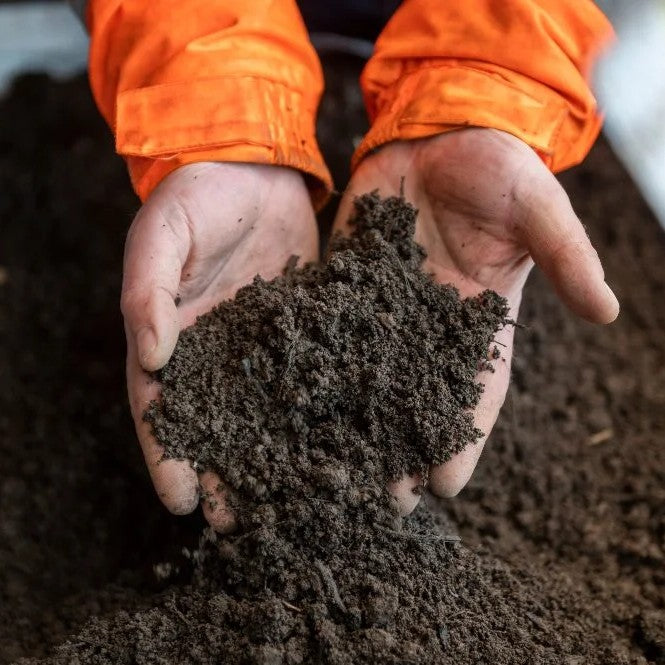
Finished screened compost, fully broken down and ready to work into beds. The general purpose choice for building soil that holds water and feeds roots.

We have always spread our own mulch for the past 24 years. This was our first time with the Mulch Mound - things I liked: they have online ordering and provide a digital receipt which means you can remember how much you ordered (I always forget for the next year!), they were o...

One cubic yard of compost covers about 324 square feet at a 1 inch depth, which is right for lawn top dressing. If you're amending planting beds at 2 to 3 inches before tilling, figure closer to 110 to 160 square feet per yard depending on depth. Measure your bed or lawn area first, then decide whether you're top dressing or building soil, since the depth changes the math a lot.

A yard is approximately 27 cubic feet. As a general guideline, one yard of material can cover an area of about 100-160 square feet at a 2-3 inch depth.

Morgantown Compost Delivery

Morgantown Compost Delivery

4.7
137 reviews
Regular price $60.00 per Yard
Regular price Sale price $60.00
Sale Sold out
Shipping calculated at checkout.
Type
Size
Hand-picked local yards
4,000+ regional deliveries
Dedicated support
Why order through Mulch Mound

The best local compost, without the guesswork.

We hand-pick and partner with the best yards in your region, keep only the ones our buyers rate well, and back each load with our guarantee.

Mulch Mound Guarantee

If your compost isn't the quantity or quality you ordered, we'll make it right.

About this compost

Finished screened compost, fully broken down and ready to work into beds. The general purpose choice for building soil that holds water and feeds roots.

We have always spread our own mulch for the past 24 years. This was our first time with the Mulch Mound - things I liked: they have online ordering and provide a digital receipt which means you can remember how much you ordered (I always forget for the next year!), they were o...

One cubic yard of compost covers about 324 square feet at a 1 inch depth, which is right for lawn top dressing. If you're amending planting beds at 2 to 3 inches before tilling, figure closer to 110 to 160 square feet per yard depending on depth. Measure your bed or lawn area first, then decide whether you're top dressing or building soil, since the depth changes the math a lot.

A yard is approximately 27 cubic feet. As a general guideline, one yard of material can cover an area of about 100-160 square feet at a 2-3 inch depth.

View full details

How It Works

Getting started is easy — just follow these simple steps

1

Choose your quantity

Adjust the quantity to match your project. One cubic yard covers about 100 to 160 square feet at a 2 to 3 inch depth.

2

Select your delivery date

Select a delivery date you'd like for the product to be dropped off at your home

3

Sit back and wait

Sit back, wait, and let us work our magic to make sure the highest quality product is delivered to your driveway.

From The Mouths of Morgantown Folks

4.7
out of 5 based on 137 reviews
Google Reviews

Complete Your Outdoor Project

Compost pairs well with a layer of mulch on top once it's tilled into beds, the mulch holds moisture in and keeps the compost from drying out too fast. If you're building new beds in Morgantown's silt loam, some people bring in a topsoil blend first and finish with compost to avoid over amending native soil that already holds structure. For lawns, compost top dressing works well right after aeration.

Mulch Mound Pro Tip

In Morgantown's silt loam, resist the urge to till compost in deep. Two to three inches worked into the top 6 to 8 inches of bed soil is plenty, going deeper just buries the organic matter below where roots are actively feeding. For lawns, one inch top dressed and left to work down naturally through rain and worm activity does more good than trying to rake it in hard, which can smother existing grass.

Mulch Mound Pro Tip

Compost that looks and smells finished can still be actively decomposing if it was turned recently, and that process pulls nitrogen from the surrounding soil temporarily. If your compost has any strong odor or heat when you dump the pile, let it sit a week before spreading, especially before planting anything sensitive. This matters more in spring when you're racing the last frost date to get seedlings in.

Mulch Mound Pro Tip

Buying compost by the cubic yard instead of bags saves a lot of trips if you're doing more than a couple beds, since one yard equals roughly 40 bags at the standard bag size. Pair a modest compost order with mulch on top rather than doubling up on compost depth, the mulch protects the investment you already made and cuts down on how often you need to reapply.

Building Better Soil in Morgantown

Morgantown's silt loam drains reasonably well but tends to compact on slopes near Coopers Rock and in the older hillside neighborhoods where topsoil got stripped during construction. Compost worked into that soil rebuilds the crumb structure so water and roots move through it instead of running off. With our zone 6b frost window closing around May 10 and opening back up by October 10, gardeners here have a real spring and fall push to get beds amended before planting or before winter dormancy. Lawn top dressing in the fall also helps grass recover from summer stress before frost sets in.

What Finished Compost Is

Finished compost is organic matter that has fully broken down into a dark, crumbly material with an earthy smell. It feeds soil life, improves structure, and helps beds hold water without staying soggy.

How Much to Apply

Work 1 to 2 inches into new beds, or topdress lawns with a quarter to half inch and rake it in. More is not better. Too thick a layer can smother roots instead of feeding them.

When to Apply

Spring and fall are both good windows. Spring applications feed the growing season ahead, and fall applications break down over winter so beds are ready at first thaw.

Frequently Asked Questions

Click a question to see the answer

Answer

How much compost do I actually need for a vegetable garden bed in Morgantown?

For a new bed, plan on 2 to 3 inches tilled into the top several inches of soil. A 10 by 10 foot bed at 3 inches needs a little under 1 cubic yard, so most home gardeners order 1 yard and have a bit left over for touch ups elsewhere.

Answer

How many square feet does one cubic yard of compost cover?

One cubic yard covers about 324 square feet at a 1 inch depth, which is standard for lawn top dressing. If you're going 2 to 3 inches deep for bed amending, that same yard covers roughly 110 to 160 square feet instead, so depth really changes your total coverage.

Answer

When is the best time to apply compost around here, spring or fall?

Both work in Morgantown. Spring application ahead of the May 10 last frost gets nutrients into beds before planting season, while fall application after harvest lets compost break down over winter before the ground fully freezes. Lawn top dressing tends to do best in fall when grass is recovering from summer heat.

Answer

Where will the compost be dropped and do I need to be home?

We place the load wherever you specify at checkout, usually a driveway or curb area with truck access. You don't need to be present for delivery, just make sure the spot is clear and reachable and that you've noted any access restrictions like narrow streets or low branches.

Answer

Should I use compost instead of topsoil for my project?

They do different jobs. Topsoil builds volume and structure for new beds or leveling low spots, while compost adds organic matter and nutrients to soil that already has structure. Many Morgantown customers use topsoil to build a bed, then finish with a compost layer worked into the top few inches before planting.

More delivery around Morgantown, West Virginia

All Morgantown, West Virginia landscape supply
