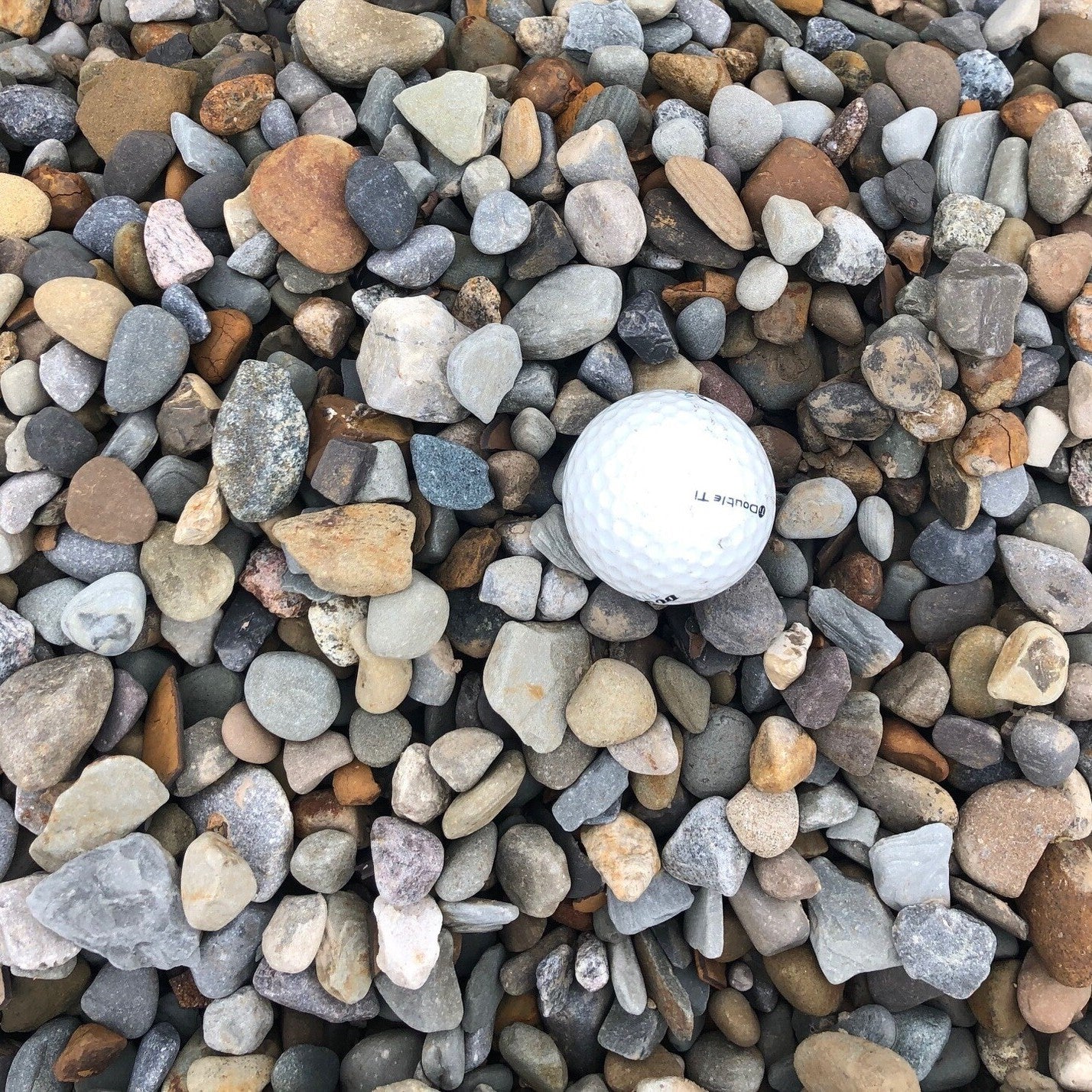
Number 57 crushed stone, angular limestone graded to about three quarters of an inch. The standard driveway, base and drainage gravel, it locks together under traffic and drains fast.
Mulch Mound delivered a yard of pea gravel to us. Delivery was on time, driver was friendly and hit a bullseye on the “tarp target”. We used the pea gravel (which was diameter as specified) to fill several muskrat holes around our pond. I would definitely recommend Mulch Mo...
Tell us what you're looking for
Thanks! We received your request.
Something went wrong. Please try again.
How Much Material Do I Need?
For pathways and patio areas, plan on 3 to 4 inches of compacted decomposed granite or crushed aggregate for a stable finished surface over Oakland's clay loam base. Decorative river rock used as a ground cover or dry creek bed accent can be applied at 2 to 3 inches depth, which is enough to cover the soil completely and suppress weed germination.
Use our free gravel calculator
What is a Yard?
A yard is approximately 27 cubic feet. As a general guideline, one yard of material can cover an area of about 100-160 square feet at a 2-3 inch depth.
We can't take orders for this right now. Tell us what you need and we'll get back to you.
What do you need?
Thanks! We received your request.
Something went wrong. Please try again.
Hand-picked local yards
4,000+ regional deliveries
Dedicated support
Why order through Mulch Mound
The best local , without the guesswork.
We hand-pick and partner with the best yards in your region, keep only the ones our buyers rate well, and back each load with our guarantee.
Mulch Mound Guarantee
If your isn't the quantity or quality you ordered, we'll make it right.
About this stone
Number 57 crushed stone, angular limestone graded to about three quarters of an inch. The standard driveway, base and drainage gravel, it locks together under traffic and drains fast.
Mulch Mound delivered a yard of pea gravel to us. Delivery was on time, driver was friendly and hit a bullseye on the “tarp target”. We used the pea gravel (which was diameter as specified) to fill several muskrat holes around our pond. I would definitely recommend Mulch Mo...
How Much Material Do I Need?
For pathways and patio areas, plan on 3 to 4 inches of compacted decomposed granite or crushed aggregate for a stable finished surface over Oakland's clay loam base. Decorative river rock used as a ground cover or dry creek bed accent can be applied at 2 to 3 inches depth, which is enough to cover the soil completely and suppress weed germination.
Use our free gravel calculator
What is a Yard?
A yard is approximately 27 cubic feet. As a general guideline, one yard of material can cover an area of about 100-160 square feet at a 2-3 inch depth.
Mulch Mound delivered a yard of pea gravel to us. Delivery was on time, driver was friendly and hit a bullseye on the “tarp target”. We used the ...
Read full review
Mulch Mound delivered a yard of pea gravel to us. Delivery was on time, driver was friendly and hit a bullseye on the “tarp target”. We used the pea gravel (which was diameter as specified) to fill several muskrat holes around our pond. I would definitely recommend Mulch Mound to a friend!
Placing an order online was so easy. Delivery was on time. When the driver realized we had a newly poured driveway they erred on the side of cautio...
Read full review
Placing an order online was so easy. Delivery was on time. When the driver realized we had a newly poured driveway they erred on the side of caution and opted not ti drive in it. The company even sent me a message explaining that call. Would recommend!
Measure your project area in feet and decide on your desired depth before calculating your order. For stone pathways and patios, a depth of 3 to 4 inches gives good coverage and stability, while decorative top dressing over existing ground can be as shallow as 2 inches. Multiply length by width by depth in feet, then divide by 27 to convert to cubic yards, or just use our calculator to handle the math.
Complete Your Outdoor Stone Project
Add a layer of woven landscape fabric to your order to install beneath your stone for long-term weed control, especially important in Oakland's mild climate where weeds grow nearly year-round. A border of garden soil along the edges of your stone area will help establish any drought-tolerant plants you plan to incorporate into the design.
Oakland's fire risk, particularly in the hills and in neighborhoods adjacent to open space, has made non-combustible ground covers increasingly important. Stone and decomposed granite create a fire-resistant zone around structures that does not feed flames the way dry mulch or wood chips can. If you live near open space in the Oakland hills, transitioning the area within 5 feet of your home's foundation to gravel or stone is one of the most effective defensible space improvements you can make.
Mulch Mound Pro Tip
Decomposed granite that has not been treated with a stabilizing binder will erode and wash into the street during Oakland's winter rain storms. If your DG installation is in a sloped area or near a storm drain, choose a stabilized product or apply a liquid binder after compacting. Unstabilized DG also tracks into the house on shoes more easily. For high-traffic areas and any surface with drainage considerations, stabilized DG is worth the modest additional cost.
Mulch Mound Pro Tip
Many Oakland homeowners converting lawns to stone underestimate how important the transition between stone areas and planted areas is. Where gravel meets soil, you need a firm physical edging, either steel, aluminum, or concrete banding, to keep stone from migrating into beds and soil from washing into your gravel. Oakland's winter rains move loose material quickly, and without edging you will find your crisp stone border looking muddled and mixed within a single rainy season.
The Unique Landscape of Oakland
Stone and gravel are practical choices for Oakland landscapes precisely because they do not need water, do not decompose in the rainy season, and hold their appearance through the long dry summers that define this climate. As Oakland faces ongoing water conservation expectations and periodic drought restrictions, replacing thirsty lawn areas with stone ground cover has become an increasingly popular and sensible choice. Oakland's clay loam soil, which drains slowly after the winter rains, pairs well with decomposed granite and gravel pathways that give water somewhere to go rather than pool. The city's mild winters with minimal freeze-thaw activity mean stone installations stay stable year-round without the heaving and cracking that damages hardscape in colder climates. Whether you are building a dry creek bed to manage winter runoff or laying a decomposed granite patio in a drought-tolerant front yard, stone is a durable, low-maintenance solution that suits Oakland's conditions well.
Frequently Asked Questions
Click a question to see the answer
Answer
What type of stone works best for a dry creek bed to handle Oakland's winter runoff?
Rounded river rock in the 2 to 4 inch range is the classic choice for dry creek beds because it mimics the look of a natural streambed and allows water to move through it freely. Oakland gets most of its 20 inches of annual rain in concentrated bursts from November through March, and a well-designed dry creek bed filled with river rock can channel that runoff away from foundations and low spots efficiently. For the edges of the creek bed, you can step up to larger 4 to 6 inch cobbles to give it a defined, natural edge.
Answer
I want to replace my front lawn with decomposed granite. How well does that work with Oakland's clay soil underneath?
Decomposed granite over clay loam can work beautifully in Oakland as long as you address drainage at the base. Clay does not drain quickly, so water can pool under the DG layer during heavy winter storms if you do not install a 4-inch compacted base layer of crushed aggregate beneath the DG surface. That base creates a drainage buffer and keeps your DG from becoming muddy and destabilized when the rains arrive. Many Oakland front yard conversions use this exact approach with great results.
Answer
Does gravel or stone get too hot to walk on during Oakland summers?
In Oakland's inland neighborhoods like Dimond or Fruitvale, afternoon temperatures regularly climb into the 80s and 90s during summer, and dark stone can absorb significant heat. Lighter-colored stones like buff decomposed granite, white marble chips, or pale limestone gravel reflect more heat and stay more comfortable underfoot. If your pathway or patio gets full afternoon sun, choosing a lighter aggregate color is a practical comfort decision, not just an aesthetic one.
Answer
How do I keep weeds from growing up through my gravel area?
A quality woven landscape fabric installed under the stone before you spread it is the most effective long-term weed barrier. In Oakland, where mild winters keep weed seeds germinating nearly year-round, skipping the fabric means you will be pulling weeds from gravel beds constantly. Lay the fabric, overlap the seams by at least 6 inches, cut precise holes only where you intend to plant, and then spread at least 3 inches of stone over the top to hold the fabric in place and block any light from reaching seeds below.
Answer
Can I use stone to help with drainage around my Oakland house's foundation?
Yes, and it is one of the most practical applications in Oakland. Clay loam around foundations holds water against the structure after winter rains, which can cause moisture damage over time. Replacing a 12 to 18 inch strip of soil along the foundation with a layer of drain rock over a perforated pipe, topped with river pebble, creates a drainage corridor that moves water away from the structure quickly. This approach is especially useful for Oakland homes with older foundations that were not designed with modern drainage expectations in mind.
Answer
How much stone do I need for a backyard patio area?
For a decomposed granite patio with a finished depth of 3 to 4 inches, you will need roughly 1 cubic yard of DG for every 80 to 100 square feet of patio area. Measure your patio dimensions, calculate the square footage, and use our online calculator to determine your total order. Remember to account for a compacted base layer of crushed rock beneath the DG if you are working over Oakland's clay loam, which will add to your total material volume.
Answer
Will stone or gravel shift around on my sloped Oakland yard?
Slope stability is a real consideration in Oakland, where many properties sit on hillsides and winter rains can mobilize loose material. For gentle slopes up to about 10 percent grade, a stabilized decomposed granite that includes a natural binder holds well once compacted and slightly moist. For steeper slopes, use larger angular rock rather than round smooth gravel, since angular edges lock together and resist movement. Adding timber or stone edging at the low end of any slope keeps material from migrating downhill during heavy rain events.