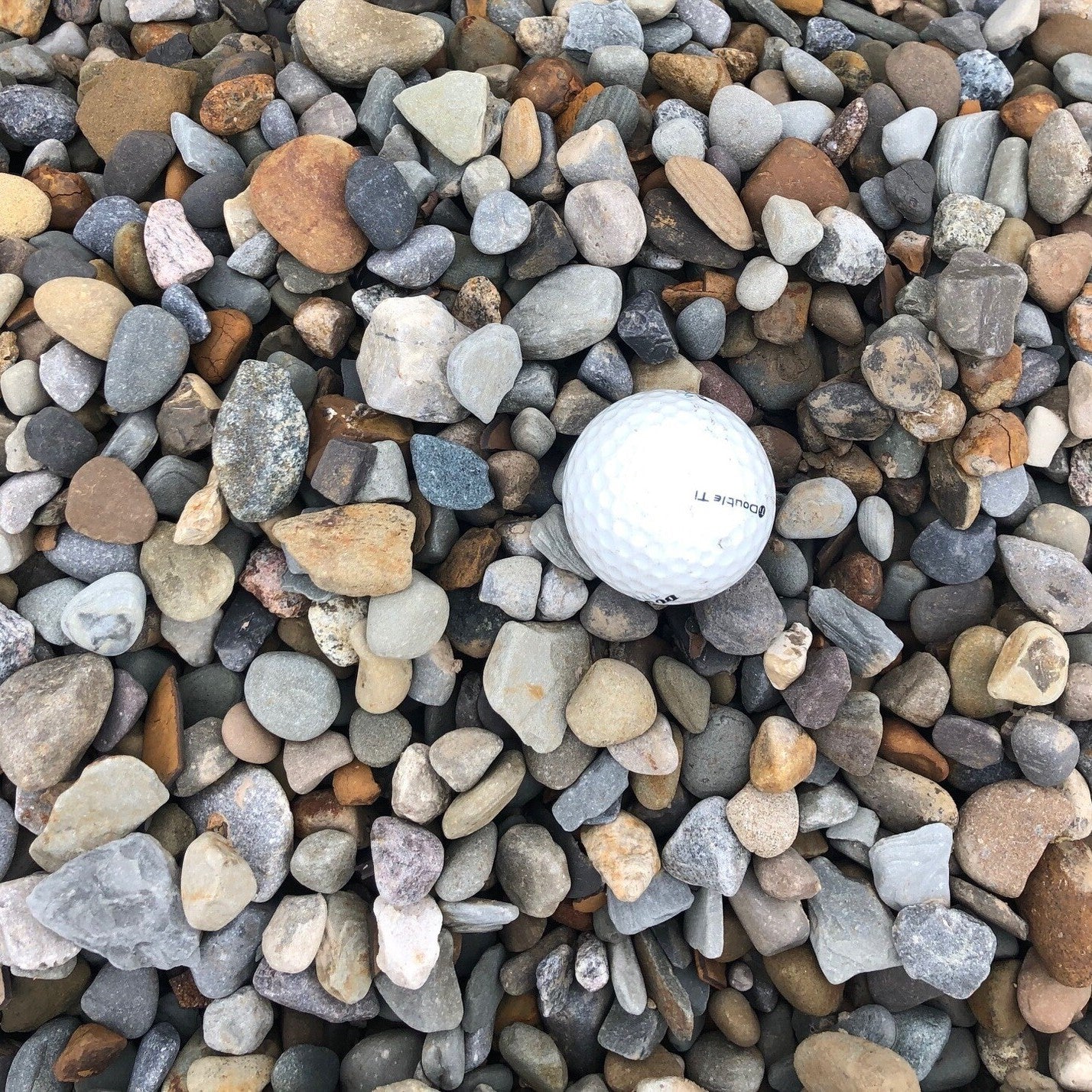
About this stone

#8 washed gravel: small angular crushed stone perfect for drainage, French drains, and concrete bases.

I used Mulch Mound to have 3 cubic yards of garden soil delivered. The process was easy and I love that I didn't have to call anyone. I placed my order online, picked my delivery date, laid out my tarp and the dirt was delivered. My delivery had to be pushed back, but I was ke...

Use 2 to 3 inches for decorative beds and pathways, 8 inches of compacted crushed base under patios, and 12 inches under driveways to survive Saratoga Springs frost depths. Dry creek beds vary, but 4 to 6 inches of river rock in the channel is a good starting point.
Use our free stone calculator

A yard is approximately 27 cubic feet. As a general guideline, one yard of material can cover an area of about 100-160 square feet at a 2-3 inch depth.

Saratoga Springs Stone Delivery

Saratoga Springs Stone Delivery

4.7
137 reviews
Regular price $101.00 per Yard
Regular price Sale price $101.00
Sale Sold out
Shipping calculated at checkout.
Type
Size
Hand-picked local yards
4,000+ regional deliveries
Dedicated support
Why order through Mulch Mound

The best local , without the guesswork.

We hand-pick and partner with the best yards in your region, keep only the ones our buyers rate well, and back each load with our guarantee.

Mulch Mound Guarantee

If your isn't the quantity or quality you ordered, we'll make it right.

About this stone

#8 washed gravel: small angular crushed stone perfect for drainage, French drains, and concrete bases.

I used Mulch Mound to have 3 cubic yards of garden soil delivered. The process was easy and I love that I didn't have to call anyone. I placed my order online, picked my delivery date, laid out my tarp and the dirt was delivered. My delivery had to be pushed back, but I was ke...

Use 2 to 3 inches for decorative beds and pathways, 8 inches of compacted crushed base under patios, and 12 inches under driveways to survive Saratoga Springs frost depths. Dry creek beds vary, but 4 to 6 inches of river rock in the channel is a good starting point.
Use our free stone calculator

A yard is approximately 27 cubic feet. As a general guideline, one yard of material can cover an area of about 100-160 square feet at a 2-3 inch depth.

View full details

How It Works

Getting started is easy — just follow these simple steps

1

Choose your stone

Make sure you adjust the quantity to your home's needs. You can use our calculator to estimate how much you'll need.

2

Select your delivery date

Select a delivery date you'd like for the product to be dropped off at your home

3

Sit back and wait

Sit back, wait, and let us work our magic to make sure the highest quality product is delivered to your driveway.

From The Mouths of Saratoga Springs Folks

4.7
out of 5 based on 137 reviews
Google Reviews

Need Help Calculating How Much Stone & Gravel You Need?

Use our NEW Trace from Satellite tool to get an estimate for your project based on an aerial view of your property

Try Our Calculator
📍

Measure your area in feet, choose a depth of 2 to 3 inches for decorative stone or 8 to 12 inches for a compacted base, and run the numbers before ordering. Stone is sold by weight or by volume depending on the product, and a cubic yard of crushed stone runs roughly 2,600 pounds, so factor that into how you plan to move it. Round up slightly, because it is far easier to use leftover stone than to place a second small delivery.

Complete Your Outdoor Stone Project

Pair your stone with heavy woven landscape fabric and steel or aluminum edging so the material stays where you put it through spring runoff. Screened topsoil and mulch finish out the adjacent planting beds that border your stone work.

Mulch Mound Pro Tip

Compact in lifts, never all at once. When building a base in Saratoga Springs, spread crushed stone in 2 to 3 inch layers and run a plate compactor over each one before adding the next. A 10 inch pile compacted only from the top leaves loose material below that will settle once frost cycles work on it. Lightly wetting each lift before compaction helps the fines lock the aggregate together and makes a dramatic difference in final stability.

Mulch Mound Pro Tip

Choose fabric based on the job. The thin spun landscape fabric sold in big box stores tears within a season under 1 to 2 inch river rock and does nothing for the weeds that eventually germinate in the debris on top. Use a heavy woven geotextile under any stone application, overlap seams by at least 6 inches, and pin every 2 to 3 feet. On Saratoga Springs sandy loam, that fabric also stops stone from slowly sinking into the soil.

Mulch Mound Pro Tip

Plan for the plow. Anywhere a plow blade or snowblower operates in Saratoga Springs, stone will get thrown into the lawn every single winter. Set stone beds along driveways an inch or two below the pavement grade, install a firm metal edge, and mark the bed corners with driveway stakes before the first November snow. Those small steps save you hours of raking stone out of the grass each April and protect your mower blades.

The Unique Landscape of Saratoga Springs

Saratoga Springs winters are hard on landscapes, with heavy snow loads, plow traffic, road salt, and a freeze and thaw cycle that heaves anything not properly based. Decorative and structural stone stands up to all of it in a way that organic material simply cannot. Because the local sandy loam drains quickly, stone is also a natural fit for drip lines, dry creek beds, and drainage swales that move the 41 inches of yearly rainfall away from foundations. Crushed stone bases are essential under patios and walkways here, since anything set directly on soil will shift once the ground freezes to depth in January and February. Stone also gives you a permanent, no refresh solution for side yards, driveway edges, and utility areas where mulch would just wash out every spring.

Frequently Asked Questions

Click a question to see the answer

Answer

What stone should I use as a base for a paver patio in our climate?

Use three quarter inch crushed stone with fines, compacted in 2 to 3 inch lifts. In Saratoga Springs you want a minimum 8 inch base for patios and closer to 12 inches for driveways, because frost drives deep here and a thin base will heave by the second winter. Skipping base depth is the single most common cause of failed patios in this area.

Answer

How many yards of stone do I need for my driveway?

A cubic yard of crushed stone covers about 160 square feet at 2 inches or 100 square feet at 3 inches. A typical Saratoga Springs driveway of 12 by 60 feet is 720 square feet, so a 3 inch resurfacing takes roughly 7 yards. If you are building new rather than topping up, plan on three to four times that for a proper frost resistant base.

Answer

Will road salt from winter plowing damage decorative stone?

Granite and most river rock shrug off salt entirely, which is a real advantage along driveway edges here where plow spray lands. Limestone products can spall slightly over many years of salt contact. If your beds sit right against a plowed driveway or the street, choose a granite based crushed stone or a washed river rock for the longest life.

Answer

Does stone really stop weeds better than mulch?

It stops far more, but it is not permanent magic. Organic debris blows in, breaks down in the stone voids, and eventually creates a seedbed on top. In Saratoga Springs with our heavy autumn leaf drop, plan to blow beds clean every fall and expect to spot treat a few weeds each summer. A quality woven landscape fabric underneath extends the weed free period by years.

Answer

Can I use river rock for a dry creek bed to handle spring melt?

Yes, and it is one of the best uses for stone on a Saratoga Springs lot. Our March snowmelt combined with saturated sandy loam sends a lot of surface water moving at once. Excavate a shallow channel, line it with fabric, place larger fieldstone along the edges and 1 to 3 inch river rock in the center, and you have a feature that quietly handles runoff every spring.

Answer

How deep should decorative stone go in my landscape beds?

Two to three inches is right for most decorative applications. Go 2 inches for smaller three eighths inch stone and closer to 3 inches for larger 1 to 2 inch river rock so you cannot see the fabric underneath. Deeper than 3 inches wastes material and makes future planting changes far more difficult.

Answer

Is stone a good idea around my foundation plantings?

It works well for drainage and durability, but be aware that stone holds heat and reflects it, which stresses shade preferring plants like hostas and hydrangeas on a hot July afternoon. A 12 to 18 inch stone drip strip against the foundation with mulched planting beds beyond it gives you both benefits. That combination is very common on Saratoga Springs homes and looks intentional rather than piecemeal.