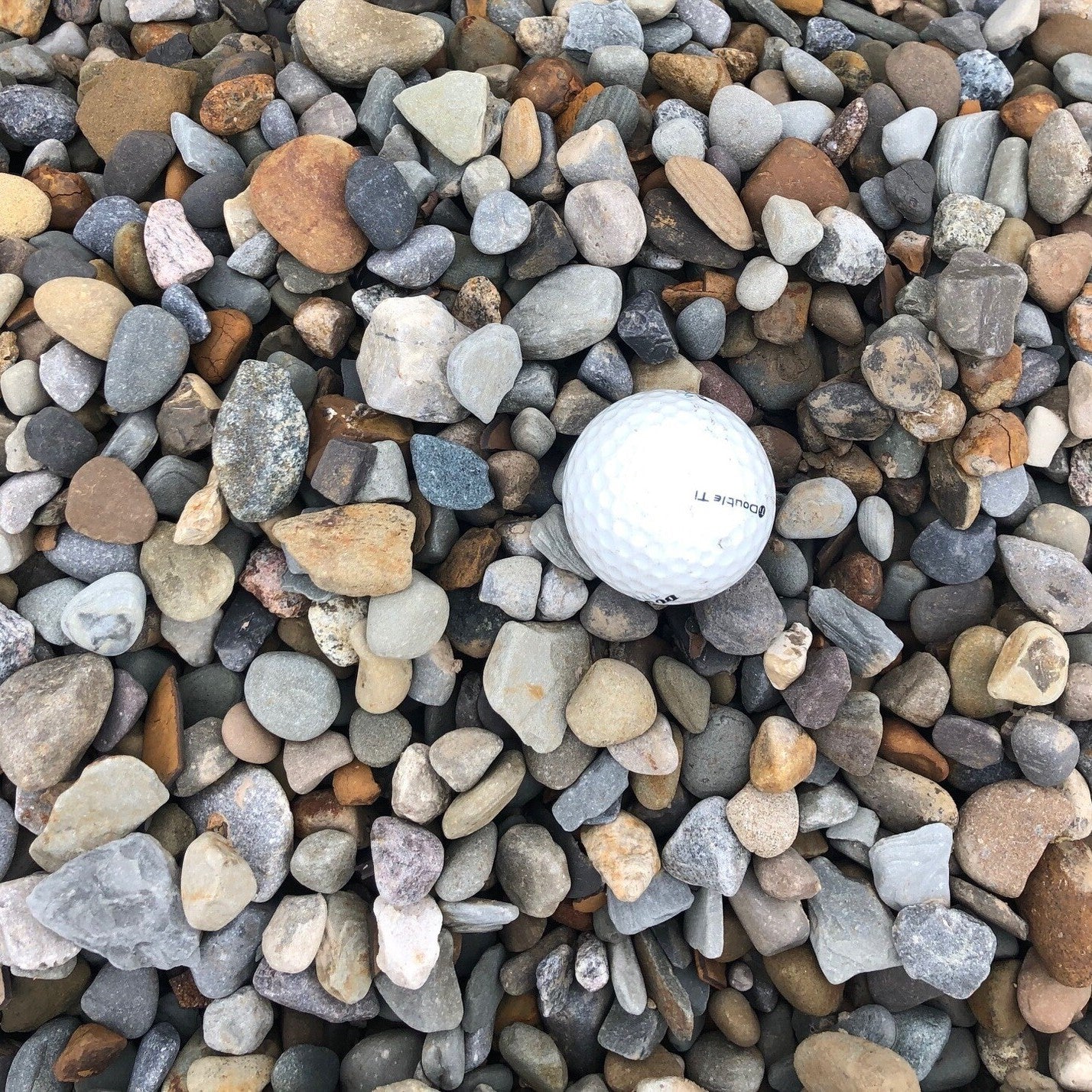
Number 57 crushed stone, angular limestone graded to about three quarters of an inch. The standard driveway, base and drainage gravel, it locks together under traffic and drains fast.
I used Mulch Mound to have 3 cubic yards of garden soil delivered. The process was easy and I love that I didn't have to call anyone. I placed my order online, picked my delivery date, laid out my tarp and the dirt was delivered. My delivery had to be pushed back, but I was ke...
Tell us what you're looking for
Thanks! We received your request.
Something went wrong. Please try again.
How Much Material Do I Need?
Decorative rock goes two to three inches deep, which means one cubic yard covers about 110 square feet at three inches. Structural base under patios and driveways needs four to six inches compacted.
Use our free gravel calculator
What is a Yard?
A yard is approximately 27 cubic feet. As a general guideline, one yard of material can cover an area of about 100-160 square feet at a 2-3 inch depth.
We can't take orders for this right now. Tell us what you need and we'll get back to you.
What do you need?
Thanks! We received your request.
Something went wrong. Please try again.
Hand-picked local yards
4,000+ regional deliveries
Dedicated support
Why order through Mulch Mound
The best local , without the guesswork.
We hand-pick and partner with the best yards in your region, keep only the ones our buyers rate well, and back each load with our guarantee.
Mulch Mound Guarantee
If your isn't the quantity or quality you ordered, we'll make it right.
About this stone
Number 57 crushed stone, angular limestone graded to about three quarters of an inch. The standard driveway, base and drainage gravel, it locks together under traffic and drains fast.
I used Mulch Mound to have 3 cubic yards of garden soil delivered. The process was easy and I love that I didn't have to call anyone. I placed my order online, picked my delivery date, laid out my tarp and the dirt was delivered. My delivery had to be pushed back, but I was ke...
How Much Material Do I Need?
Decorative rock goes two to three inches deep, which means one cubic yard covers about 110 square feet at three inches. Structural base under patios and driveways needs four to six inches compacted.
Use our free gravel calculator
What is a Yard?
A yard is approximately 27 cubic feet. As a general guideline, one yard of material can cover an area of about 100-160 square feet at a 2-3 inch depth.
I used Mulch Mound to have 3 cubic yards of garden soil delivered. The process was easy and I love that I didn't have to call anyone. I placed my o...
Read full review
I used Mulch Mound to have 3 cubic yards of garden soil delivered. The process was easy and I love that I didn't have to call anyone. I placed my order online, picked my delivery date, laid out my tarp and the dirt was delivered. My delivery had to be pushed back, but I was kept informed via text, which was great. So why not 5 stars? The description of garden soil on the website is "A balanced mix of topsoil and organic amendments ready for raised beds, flower gardens, and new planting areas. Good drainage, solid nutrients, easy to work with." What I got was more like fill dirt. It had a lot of gravel, a lot of clay, and random trash mixed in. I didn't test the soil to see if it actually had "amendments" because I already have compost and alpaca manure ready to add, but if I'd known the quality of the dirt was going to be the same as the bagged dirt I bought last year, I probably would have gotten 2 yards of top soil and a yard of leaf compost for better quality, especially since the leaf compost is cheaper. Photo of my mountain of dirt and just some of the trash I found in it.
Really appreciate the care and follow thru that this company had with our order. A hiccup came up but they were quick to respond and address all co...
Read full review
Really appreciate the care and follow thru that this company had with our order. A hiccup came up but they were quick to respond and address all concerns, which made our garden day a success! Thank you for your prompt care.
Measure your area in feet and convert your depth to a decimal, so three inches is 0.25 and four inches is 0.33. Divide the total cubic feet by 27 to get yards. Order about ten percent extra for gravel that gets compacted and for the settling that happens on Smithfield's sloped lots.
Complete Your Outdoor Stone Project
Add commercial grade weed fabric, steel edging to hold the stone line clean, and a few yards of soil or compost for the planting pockets you leave in a waterwise design. Larger boulders anchor the layout and break up flat gravel fields.
Handle your perennial weeds before a single rock goes down. Field bindweed and quackgrass are everywhere in Cache Valley and both will push straight through fabric and two inches of gravel. Treat them in late summer or early fall when they move nutrients to the roots, wait for a full kill, then install. Skipping this step means tearing out finished rock a year later, which nobody wants to do twice.
Mulch Mound Pro Tip
Compact base rock in two inch lifts, wetting each lift lightly as you go. Smithfield's dry air pulls moisture out of road base fast, and dry fines will not lock together no matter how many passes you make with the plate compactor. Damp, layered, and properly compacted base is what carries a patio through a Zone 6a winter of repeated freezing and thawing without heaving or settling at the edges.
Mulch Mound Pro Tip
Use stone size to match wind and slope. The canyon winds that come out of Smithfield Canyon will scatter light chips across a walkway, and spring runoff moves small gravel downhill on bench lots. Go with one inch or larger material on exposed or sloped ground, and save the fine three eighths inch chips for flat, sheltered areas where they will stay exactly where you raked them.
The Unique Landscape of Smithfield
Water is the limiting resource in Smithfield, where 19 inches of annual precipitation puts real pressure on summer irrigation. Decorative rock and gravel let you shrink watered turf without giving up curb appeal, which is why waterwise designs keep spreading through Cache Valley neighborhoods. Stone also solves the drainage and erosion problems common on Smithfield's bench lots, where spring snowmelt runs downhill fast and cuts channels through bare beds. Unlike mulch, gravel does not blow away in the canyon winds that funnel out of Smithfield Canyon, and it does not need replacing every few years. Road base and gravel are the working foundation under any patio, walkway, or driveway that has to survive Zone 6a freeze and thaw. Choose the right stone once and it stays put for decades.
Frequently Asked Questions
Click a question to see the answer
Answer
How deep should decorative rock go in a Smithfield front yard?
Two to three inches over quality landscape fabric is the standard here. Smaller three eighths inch material can go at two inches, but larger river rock needs the full three to cover the ground and block light. Anything thinner lets Cache Valley weeds find sun and push right through by midsummer.
Answer
Will rock make my yard too hot for my plants?
It can. Stone stores heat, and with Smithfield summer highs regularly in the 90s a large rock field radiates well into the evening. Keep gravel away from foundations and windows on the south and west sides, and choose heat tolerant plants like rabbitbrush, yarrow, and ornamental grasses within rocked areas rather than shade lovers.
Answer
What do I need under a patio or paver walkway at this elevation?
Excavate and place four to six inches of compacted three quarter inch road base, then a one inch bedding layer of sand or fine chips. Smithfield goes through dozens of freeze and thaw cycles between October and May, and that compacted base is the only thing that keeps pavers from heaving. Compact in two inch lifts, not all at once.
Answer
How do I stop weeds from coming up through my gravel?
Kill existing perennial weeds first, especially bindweed and quackgrass, since they will grow through anything. Lay commercial grade woven fabric, not the thin plastic sheeting, then place at least two inches of stone. Expect to pull a few volunteers each year anyway, because Smithfield wind drops seed and dust on top of the rock where new weeds can root.
Answer
How much does a cubic yard of gravel weigh, and can my driveway handle it?
Most gravel and road base runs about 2,600 to 3,000 pounds per cubic yard, so a five yard load is well over seven tons. Standard residential concrete in Smithfield handles a truck fine, but older or cracked driveways and any surface over a window well should be avoided. We can drop on a tarp in the yard if you prefer.
Answer
Is rock a good way to handle the runoff coming off my slope?
Yes. Smithfield's bench lots shed a lot of water during spring melt and after summer thunderstorms. A gravel filled swale or a cobble lined channel slows the flow and lets it soak into the silt loam instead of cutting a trench through your beds. Use three to six inch cobble for real flow and pin fabric underneath.
Answer
How many cubic yards do I need for a gravel parking pad?
Multiply length by width in feet, multiply by depth in feet, then divide by 27. A 20 by 20 pad at four inches works out to about five cubic yards. Add ten percent for compaction, because road base loses volume when you run a plate compactor over it.
Answer
What is road base used for?
Under driveways and parking pads, road base is the compacted foundation layer that locks tight and sheds water. For Smithfield properties dealing with bench lot runoff, our Crushed Stone #57 is the better choice, draining freely rather than compacting, and pairing well with edging for a clean, waterwise bed.