



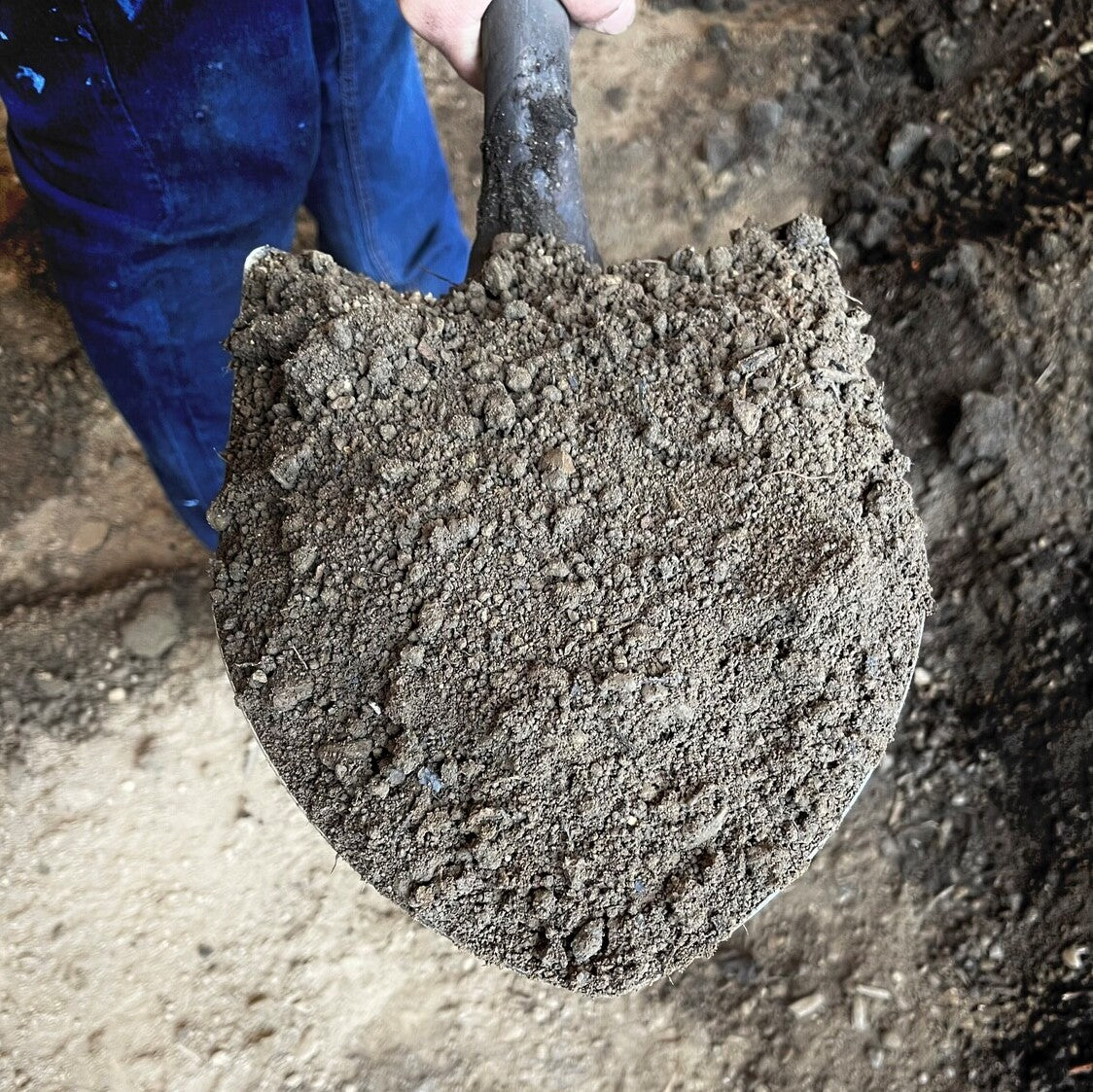


Good quality top soil and was delivered exactly where I wanted it. Nice Job!
About this soil
Screened topsoil with a fine, even texture. Ideal for new lawns, sod prep, and raised garden beds.
Good quality top soil and was delivered exactly where I wanted it. Nice Job!
Tell us what you're looking for
Thanks! We received your request.
Something went wrong. Please try again.
How Much Material Do I Need?
How Much Material Do I Need?
Plan for at least 4 to 6 inches of topsoil depth for new lawn installations and 8 to 12 inches for vegetable raised beds in South Hill. The gravelly sandy loam beneath your feet drains so freely that giving roots a deeper layer of quality soil pays off significantly during the dry summer months.
Use our free soil calculator
What is a Yard?
What is a Yard?
FAQs
FAQs
South Hill Soil Delivery
South Hill Soil Delivery
Regular price
$83.00
per
Yard
Regular price
Sale price
$83.00
Unit price
per
Shipping calculated at checkout.
Minimum of 3 Yard
Couldn't load pickup availability
Not currently available
We can't take orders for this right now. Tell us what you need and we'll get back to you.
Hand-picked local yards
4,000+ regional deliveries
Dedicated support
Why order through Mulch Mound
The best local , without the guesswork.
We hand-pick and partner with the best yards in your region, keep only the ones our buyers rate well, and back each load with our guarantee.
Mulch Mound Guarantee
If your isn't the quantity or quality you ordered, we'll make it right.
About this soil
Screened topsoil with a fine, even texture. Ideal for new lawns, sod prep, and raised garden beds.
Good quality top soil and was delivered exactly where I wanted it. Nice Job!
How Much Material Do I Need?
How Much Material Do I Need?
Plan for at least 4 to 6 inches of topsoil depth for new lawn installations and 8 to 12 inches for vegetable raised beds in South Hill. The gravelly sandy loam beneath your feet drains so freely that giving roots a deeper layer of quality soil pays off significantly during the dry summer months.
Use our free soil calculator
What is a Yard?
What is a Yard?
FAQs
FAQs
Tell us what you're looking for
Thanks! We received your request.
Something went wrong. Please try again.
How It Works
Getting started is easy — just follow these simple steps
1
Choose your soil
Make sure you adjust the quantity to your home's needs. You can use our calculator to estimate how much you'll need.
2
Select your delivery date
Select a delivery date you'd like for the product to be dropped off at your home
3
Sit back and wait
Sit back, wait, and let us work our magic to make sure the highest quality product is delivered to your driveway.

Online ordering was really simple and I liked the transparent pricing.

Easy to order, great service, and great product. We enjoy the final look of a very neglected beds we inherited!
Need Help Calculating How Much Soil You Need?
Use our NEW Trace from Satellite tool to get an estimate for your project based on an aerial view of your property
Try Our CalculatorFor raised beds, multiply the length by the width by the depth in feet to get cubic feet, then divide by 27 to get cubic yards. For lawn topdressing, one cubic yard covers roughly 300 square feet at a 1 inch depth, which is the recommended depth for working over existing South Hill grass. Measuring carefully before ordering prevents costly shortfalls or large piles sitting in your driveway.
Complete Your Outdoor Soil Project
Top your new soil with a 2 to 3 inch layer of mulch to lock in moisture and reduce erosion through South Hill's wet winter months. Adding a border of crushed stone or landscape edging also keeps soil contained within beds and gives your project a finished look.
Service area
Areas we deliver soil in South Hill, Washington
- Bonney Lake, Washington
- Buckley, Washington
- Clover Creek, Washington
- DuPont, Washington
- Elk Plain, Washington
- Enumclaw, Washington
- Fircrest, Washington
- Fort Lewis, Washington
- Frederickson, Washington
- Hobart, Washington
- Lacey, Washington
- Lakewood, Washington
- Maplewood, Washington
- Midland, Washington
- Milton, Washington
- Normandy Park, Washington
- North Fort Lewis, Washington
- Olympia, Washington
- Orting, Washington
- Pacific, Washington
- Parkland, Washington
- Prairie Ridge, Washington
- Puyallup, Washington
- Spanaway, Washington
- Steilacoom, Washington
- Summit, Washington
- Summit View, Washington
- Tanglewilde, Washington
- Tehaleh, Washington
- Waller, Washington
- Wollochet, Washington
- Yelm, Washington
Mulch Mound Pro Tip
South Hill's wet winter season is actually a great natural tool for settling and integrating new soil into your landscape. If you have soil delivered in October, spread it and let the fall and winter rains do the compaction work naturally over the following months. By the time March 20 rolls around and frost risk drops, your soil will be well-settled and ready for spring planting without additional tilling.
Mulch Mound Pro Tip
When filling raised vegetable beds in South Hill, consider a layered approach rather than using one uniform soil product. Start with a coarser topsoil at the bottom third to improve drainage through the gravelly native base below, then fill the upper two-thirds with a rich garden blend. This layered structure mimics natural soil horizons and gives vegetable roots the drainage they need while keeping the upper root zone nutrient-dense and moisture-retentive.
Mulch Mound Pro Tip
South Hill's high annual rainfall means your imported soil will experience significant nutrient leaching every winter. Rather than loading up on fertilizer in spring and hoping it lasts, mix a slow-release granular fertilizer into new soil at installation time and plan for a light liquid feeding in early July when the dry season begins. This two-part approach keeps nutrients available across the full growing season without a single heavy application that the rain washes away.
The Unique Landscape of South Hill
South Hill's native gravelly sandy loam soil is a mixed blessing for homeowners and gardeners. It drains well enough that standing water is rarely a problem after heavy rain, but that same drainage speed means nutrients and moisture move through the root zone quickly and must be replenished more often. At 541 feet elevation in zone 8b, South Hill landscapes experience a real growing season from late March through early November, and the soil needs to support plants through both dry summers and rain-saturated winters. Brought-in quality soil allows you to build productive raised beds, amend native soil, or establish new lawn areas without fighting the limitations of the native ground. The 44 inches of annual rainfall that South Hill receives leaches nutrients from sandy soils over time, making periodic soil additions a practical maintenance task rather than a one-time fix. Bulk soil delivery removes the hassle of hauling dozens of bags from a garden center and gives you the volume needed to make a real difference.