


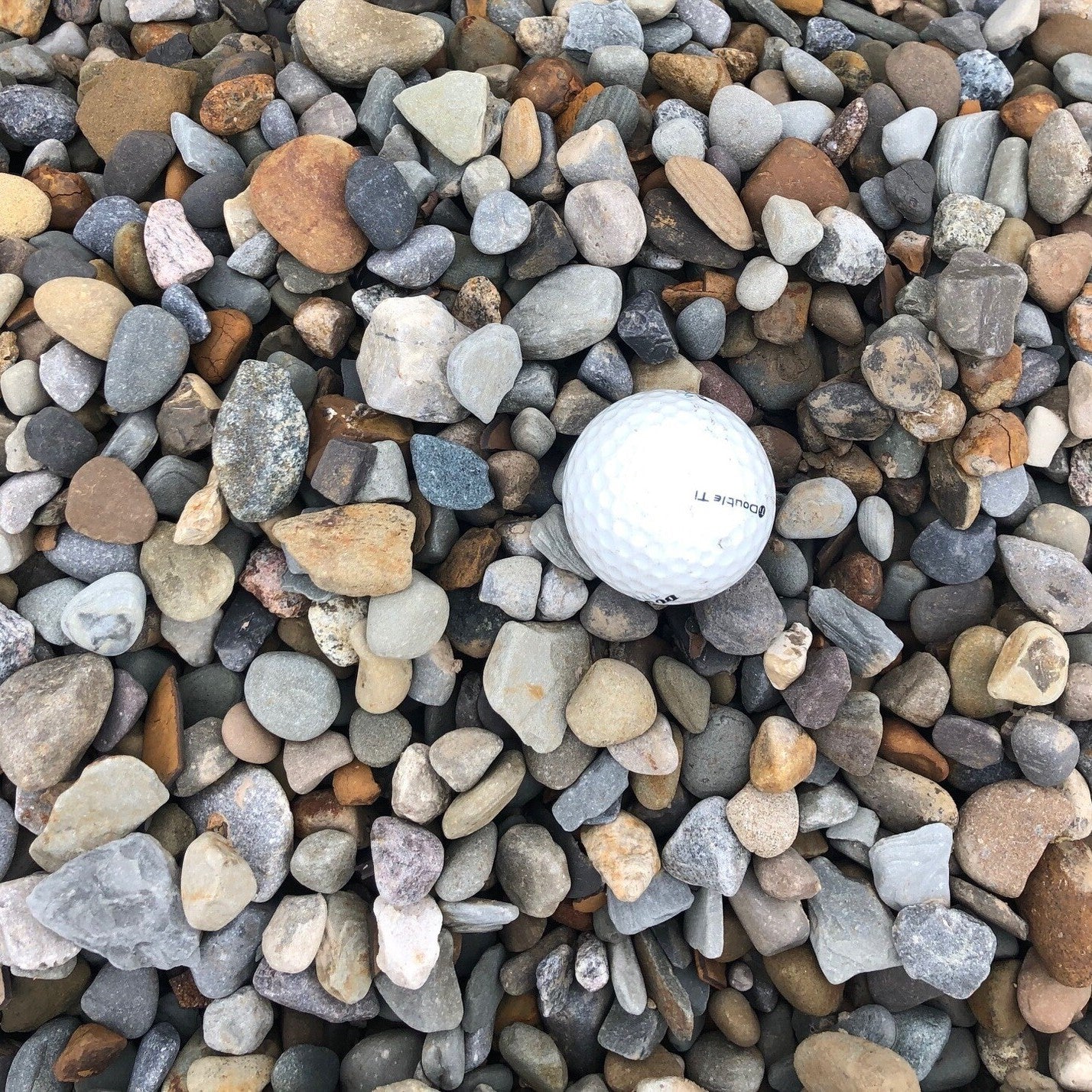

The driver nailed it on putting the gravel I ordered in front of my trailer and between the sidewalk. Very satisfied with how my flowerbeds look now.
About this stone
Number 57 crushed stone, angular limestone graded to about three quarters of an inch. The standard driveway, base and drainage gravel, it locks together under traffic and drains fast.
The driver nailed it on putting the gravel I ordered in front of my trailer and between the sidewalk. Very satisfied with how my flowerbeds look now.
Tell us what you're looking for
Thanks! We received your request.
Something went wrong. Please try again.
How Much Material Do I Need?
How Much Material Do I Need?
One cubic yard covers about 160 square feet at 2 inches deep or roughly 108 square feet at 3 inches. Use 2 inches for ground cover beds and 3 to 4 inches for paths, driveways, and any area that sees regular traffic.
Use our free gravel calculator
What is a Yard?
What is a Yard?
FAQs
FAQs
Corcoran Gravel Delivery
Corcoran Gravel Delivery
Regular price
$133.00
per
Yard
Regular price
Sale price
$133.00
Unit price
per
Shipping calculated at checkout.
Minimum of 3 Yard
Couldn't load pickup availability
Not currently available
We can't take orders for this right now. Tell us what you need and we'll get back to you.
Hand-picked local yards
4,000+ regional deliveries
Dedicated support
Why order through Mulch Mound
The best local , without the guesswork.
We hand-pick and partner with the best yards in your region, keep only the ones our buyers rate well, and back each load with our guarantee.
Mulch Mound Guarantee
If your isn't the quantity or quality you ordered, we'll make it right.
About this stone
Number 57 crushed stone, angular limestone graded to about three quarters of an inch. The standard driveway, base and drainage gravel, it locks together under traffic and drains fast.
The driver nailed it on putting the gravel I ordered in front of my trailer and between the sidewalk. Very satisfied with how my flowerbeds look now.
How Much Material Do I Need?
How Much Material Do I Need?
One cubic yard covers about 160 square feet at 2 inches deep or roughly 108 square feet at 3 inches. Use 2 inches for ground cover beds and 3 to 4 inches for paths, driveways, and any area that sees regular traffic.
Use our free gravel calculator
What is a Yard?
What is a Yard?
FAQs
FAQs
Tell us what you're looking for
Thanks! We received your request.
Something went wrong. Please try again.

How It Works
Getting started is easy — just follow these simple steps
1
Choose your stone
Make sure you adjust the quantity to your home's needs. You can use our calculator to estimate how much you'll need.
2
Select your delivery date
Select a delivery date you'd like for the product to be dropped off at your home
3
Sit back and wait
Sit back, wait, and let us work our magic to make sure the highest quality product is delivered to your driveway.

Placing an order online was so easy. Delivery was on time. When the driver realized we had a newly poured driveway they erred on the side of cautio...
Read full review
Placing an order online was so easy. Delivery was on time. When the driver realized we had a newly poured driveway they erred on the side of caution and opted not ti drive in it. The company even sent me a message explaining that call. Would recommend!

Online ordering was really simple and I liked the transparent pricing.
Need Help Calculating How Much Gravel You Need?
Use our NEW Trace from Satellite tool to get an estimate for your project based on an aerial view of your property
Try Our CalculatorMeasure the area in feet and note that stone is sold by weight or by cubic yard depending on the product, so have both numbers ready. Multiply length by width by depth in feet and divide by 27 for cubic yards, then multiply by roughly 1.4 tons per yard for most decorative gravel. Add 10 percent for edges and uneven subgrade.
Complete Your Outdoor Stone Project
Add commercial grade weed fabric, steel or concrete edging to keep stone out of the lawn, and a few accent boulders to give a flat Corcoran lot some vertical interest. A load of mulch for the remaining planting islands ties the two materials together nicely.

Service area
Areas we deliver stone and gravel in Corcoran, California
Mulch Mound Pro Tip
Compact your subgrade before any stone goes down. Corcoran clay loam swells and shrinks with the seasons, so gravel placed on loose, uncompacted ground will develop ruts and low spots after the first wet winter. Rent a plate compactor, wet the ground lightly first so it packs rather than powders, and make two passes in opposite directions. Ten extra minutes here prevents years of settling.
Mulch Mound Pro Tip
Choose woven fabric over the cheap spun landscape cloth. Under Corcoran sun and foot traffic, thin nonwoven fabric tears within a couple of seasons and then bermudagrass finds every gap. Woven geotextile handles the weight of stone, resists puncture, and still lets winter rain pass through into the clay below. Overlap seams by at least 6 inches and pin them down every few feet with staples.
Mulch Mound Pro Tip
Rinse your stone after installation. Decorative rock arrives with quarry fines coating it, and in a dry climate like ours that dust just sits there dulling the color and giving windblown weed seed a place to root. A good hose down washes the fines into the base where they help lock the stone together, and the true color of the rock finally shows. Do it once more each spring.
The Unique Landscape of Corcoran
Decorative stone earns its keep in Corcoran because we get months of blistering sun and almost no rain, and rock does not fade, decompose, or need replacing every spring. On a 10 inch rainfall budget, converting thirsty turf strips to gravel or cobble is one of the fastest ways to cut a water bill in the southern Valley. Stone also solves the drainage problem that clay loam creates, since a gravel base under a patio or a rock lined swale gives winter runoff somewhere to go instead of pooling against the slab. Around structures, rock is the safer ground cover because it will not hold moisture against stucco or invite the pests that damp organic material can. It does absorb heat, so placement matters, but in the right spots it delivers a finished look that holds up to Corcoran wind, sun, and foot traffic for decades.