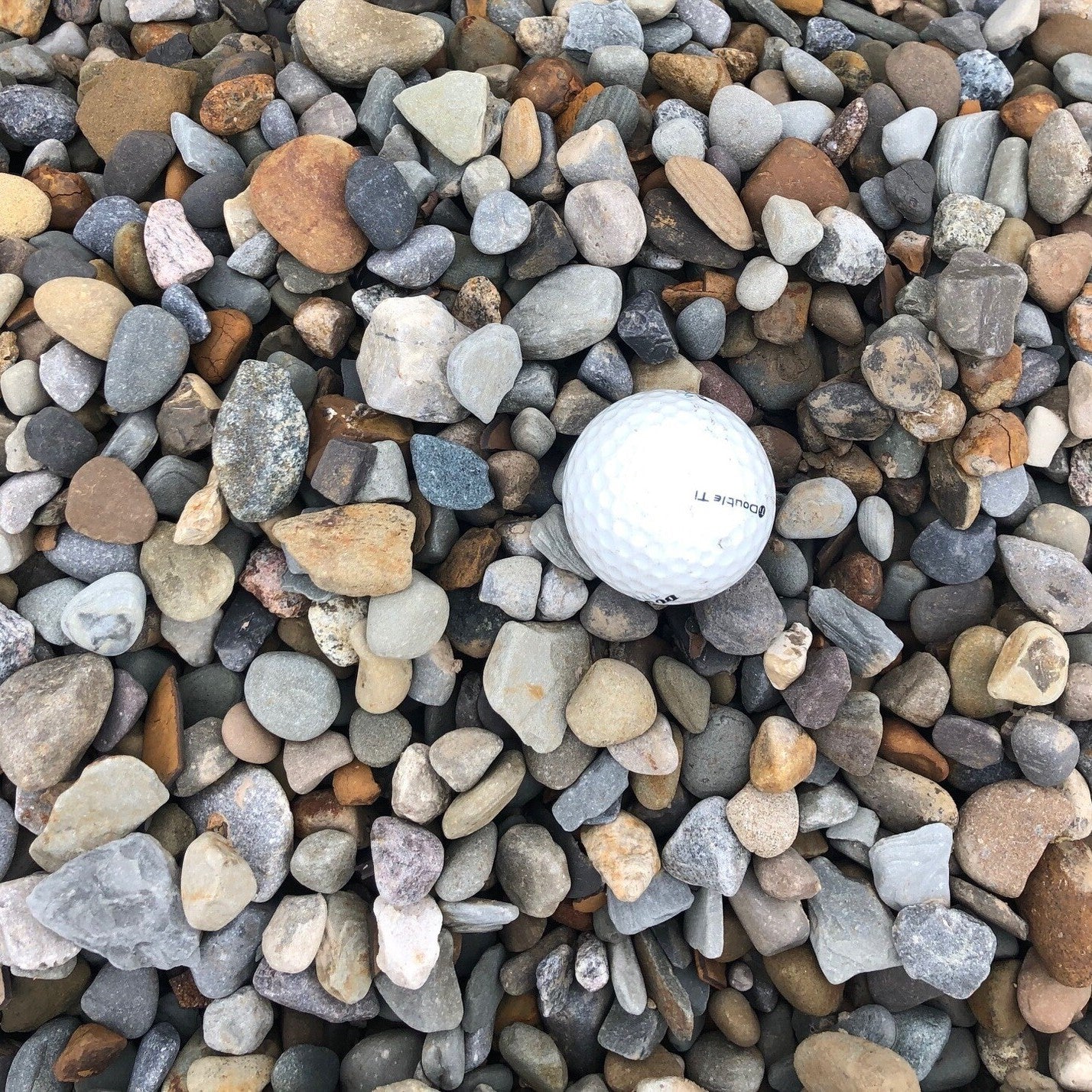
Number 57 crushed stone, angular limestone graded to about three quarters of an inch. The standard driveway, base and drainage gravel, it locks together under traffic and drains fast.
I used Mulch Mound to have 3 cubic yards of garden soil delivered. The process was easy and I love that I didn't have to call anyone. I placed my order online, picked my delivery date, laid out my tarp and the dirt was delivered. My delivery had to be pushed back, but I was ke...
Tell us what you're looking for
Thanks! We received your request.
Something went wrong. Please try again.
How Much Material Do I Need?
Most decorative stone applications in Riverside work best at a 2 to 3 inch depth, which provides good coverage and stability without requiring excessive material. For compacted pathways and driveways, plan for 4 inches of depth so the surface handles foot traffic and occasional vehicle weight without shifting.
Use our free gravel calculator
What is a Yard?
A yard is approximately 27 cubic feet. As a general guideline, one yard of material can cover an area of about 100-160 square feet at a 2-3 inch depth.
We can't take orders for this right now. Tell us what you need and we'll get back to you.
What do you need?
Thanks! We received your request.
Something went wrong. Please try again.
Hand-picked local yards
4,000+ regional deliveries
Dedicated support
Why order through Mulch Mound
The best local , without the guesswork.
We hand-pick and partner with the best yards in your region, keep only the ones our buyers rate well, and back each load with our guarantee.
Mulch Mound Guarantee
If your isn't the quantity or quality you ordered, we'll make it right.
About this stone
Number 57 crushed stone, angular limestone graded to about three quarters of an inch. The standard driveway, base and drainage gravel, it locks together under traffic and drains fast.
I used Mulch Mound to have 3 cubic yards of garden soil delivered. The process was easy and I love that I didn't have to call anyone. I placed my order online, picked my delivery date, laid out my tarp and the dirt was delivered. My delivery had to be pushed back, but I was ke...
How Much Material Do I Need?
Most decorative stone applications in Riverside work best at a 2 to 3 inch depth, which provides good coverage and stability without requiring excessive material. For compacted pathways and driveways, plan for 4 inches of depth so the surface handles foot traffic and occasional vehicle weight without shifting.
Use our free gravel calculator
What is a Yard?
A yard is approximately 27 cubic feet. As a general guideline, one yard of material can cover an area of about 100-160 square feet at a 2-3 inch depth.
I used Mulch Mound to have 3 cubic yards of garden soil delivered. The process was easy and I love that I didn't have to call anyone. I placed my o...
Read full review
I used Mulch Mound to have 3 cubic yards of garden soil delivered. The process was easy and I love that I didn't have to call anyone. I placed my order online, picked my delivery date, laid out my tarp and the dirt was delivered. My delivery had to be pushed back, but I was kept informed via text, which was great. So why not 5 stars? The description of garden soil on the website is "A balanced mix of topsoil and organic amendments ready for raised beds, flower gardens, and new planting areas. Good drainage, solid nutrients, easy to work with." What I got was more like fill dirt. It had a lot of gravel, a lot of clay, and random trash mixed in. I didn't test the soil to see if it actually had "amendments" because I already have compost and alpaca manure ready to add, but if I'd known the quality of the dirt was going to be the same as the bagged dirt I bought last year, I probably would have gotten 2 yards of top soil and a yard of leaf compost for better quality, especially since the leaf compost is cheaper. Photo of my mountain of dirt and just some of the trash I found in it.
For stone coverage, measure your project area in square feet and use these rough guides. A 2-inch depth requires about 1 cubic yard for every 160 square feet, and a 3-inch depth covers about 100 square feet per cubic yard. Write down each zone of your project separately, whether that is a pathway, a planting area, or a conversion lawn, and add the totals together before ordering.
Complete Your Outdoor Stone Project
Stone looks sharpest when planted areas alongside it are well-defined, so pairing your stone delivery with quality soil for any remaining planting beds will give your yard a finished, intentional look. If you are converting turf to stone, consider adding a layer of organic mulch around plants in the transition zone to protect roots while the landscape settles into its new design.
In Riverside, the combination of intense afternoon sun and light-colored stone can create a heat island effect in fully paved side yards or enclosed spaces. If you are installing stone in a spot that gets direct western afternoon exposure, choose a mid-tone or warm earth-colored crushed granite rather than bright white rock. Darker, warmer tones absorb heat more gradually and release it through the evening, which can actually make a patio area feel more comfortable after the sun dips below the roofline.
Mulch Mound Pro Tip
Riverside homeowners who install decomposed granite in their front yards sometimes find that heavy foot traffic creates shallow ruts over time, especially in the approach paths from the street to the front door. Mixing a DG stabilizer into the top layer of your decomposed granite before compacting it dramatically increases durability without changing the natural appearance. It is especially worth doing in high-traffic paths, since a stabilized DG surface can handle daily foot traffic for several years before needing a refresh.
Mulch Mound Pro Tip
If you are using river rock to create a dry creek bed for drainage in your Riverside yard, pay attention to where water actually flows during a storm before you design it. Riverside gets infrequent rain but those events can be intense, and water will take the path of least resistance whether or not that aligns with your planned creek layout. Walk your yard during or right after a heavy rain event, even a light one, and observe where water pools and moves. Designing your dry creek bed to follow that natural flow path rather than working against it will make it functional as a drainage feature and not just decorative.
The Unique Landscape of Riverside
Decorative stone and gravel have become a cornerstone of Riverside landscaping for practical reasons that go well beyond aesthetics. With only 10 inches of annual rainfall and mandatory water conservation awareness throughout the Inland Empire, replacing turf and high-water plantings with stone ground cover has become one of the most common landscape upgrades homeowners make. Riverside's sandy loam soil holds very little moisture and heats up quickly in direct sun, making exposed ground a poor environment for many plants during the June through September heat peak. Stone covers the ground permanently without the decomposition timeline of organic mulch, and it reflects or manages heat differently depending on the color and size you choose. The mild winters and long frost-free growing period from late February through early December mean outdoor living spaces get heavy year-round use here, making stone patios, pathways, and fire pit surrounds a worthwhile long-term investment. Whether you are converting a water-hungry lawn to a drought-tolerant landscape or adding a gravel driveway extension, bulk stone delivery makes large projects practical and affordable.
Frequently Asked Questions
Click a question to see the answer
Answer
I want to replace my front lawn with decomposed granite. How much do I need and how do I prepare the ground first?
For a decomposed granite conversion in Riverside, plan on 2 to 3 inches of depth for a stable walking surface that resists erosion during the occasional heavy rain event. Measure your lawn area in square feet and divide by 100 to get an approximate cubic yard estimate for a 3-inch depth. Before installing, remove the existing turf and as much root material as possible, then lay a permeable weed barrier fabric over the soil. Riverside's infrequent but sometimes intense rain events can wash loose DG if it is applied too thin, so 3 inches is the minimum for front yard applications.
Answer
Will light-colored gravel make my yard hotter in the summer, or does it actually help keep things cooler?
This is a really relevant question for Riverside. Light-colored gravel and decomposed granite do reflect solar radiation, which can actually increase ambient heat near the surface on very hot days, particularly in enclosed side yards or areas close to walls. Darker stones absorb more heat during the day but release it more slowly in the evening. For planting areas where root zone temperature matters, pairing any stone with a layer of organic mulch beneath the stone layer is an effective strategy. For open pathways and driveways, lighter stone tends to stay slightly cooler underfoot.
Answer
What size river rock should I use for a dry creek bed in my Riverside backyard?
For a decorative dry creek bed in a Riverside yard, a mix of 2-inch to 4-inch river rock gives a natural look while staying stable during the heavy rainstorms that do occasionally hit the Inland Empire. Smaller rock tends to scatter and migrate during runoff events, and Riverside's topography can channel water quickly through yards during a significant storm. Using a mix of sizes mimics the appearance of a natural streambed and the varied sizes lock together better than uniform gravel would.
Answer
Can I use crushed stone under my patio furniture area instead of pavers? I want something lower maintenance.
Crushed stone works well for a casual outdoor seating area in Riverside, especially for a fire pit circle or side yard lounge area. Use a compacted base of crushed stone about 3 to 4 inches deep and top it with a finer finished layer of pea gravel or smaller crushed rock for a more comfortable surface underfoot. It drains perfectly, which matters during Riverside's occasional winter rain events, and there is no cracking or settling the way you can see with concrete over time. Edging the area with metal or wood borders keeps the gravel contained.
Answer
I live near the foothills in Riverside and my yard has a bit of a slope. Will gravel stay in place or just wash away when it rains?
Slopes in Riverside can be a challenge because even though annual rainfall is low, the storms that do arrive can be intense and create meaningful runoff. For sloped areas, angular crushed stone or decomposed granite compacted with a stabilizer holds much better than rounded river rock or pea gravel. You can also use boulders or larger stones to create natural terracing that slows water flow down the slope. Weed fabric anchored firmly beneath the stone will also help prevent the material from migrating over time.
Answer
Does stone actually help with weed control in Riverside, or do weeds still push through?
Stone alone does not fully stop weeds, but a proper installation with quality landscape fabric underneath significantly reduces the problem. Riverside's weed pressure tends to spike during late winter and early spring when the occasional rainfall stimulates germination, and airborne seeds can settle into gravel and sprout if the layer is thin. A minimum of 2 to 3 inches of stone over a woven fabric barrier is the combination that makes weed control manageable. An occasional spray with a targeted weed treatment in early spring handles the small amount of breakthrough growth.
Answer
I am trying to design a low-water landscape. What stone types work best with drought-tolerant plants in Riverside?
Decomposed granite is probably the most popular choice for drought-tolerant landscapes in Riverside because it compacts into a stable surface, has a natural warm tone that complements native plants, and allows rainfall to percolate through rather than running off. River rock works well as a mulch substitute around individual plants and adds visual texture. Avoid very fine gravel directly around sensitive plants since it can radiate heat intensely onto foliage during peak summer. A combination of DG pathways with river rock plant rings and occasional boulder accents is a classic Riverside drought-tolerant look that stays attractive year-round.