


Ordered Dirt. Received Dirt. Would Buy Again.
About this sand
Washed and finely screened masonry sand for mortar, paver joints, and pool bases. Consistent grain, ready to screed.
Ordered Dirt. Received Dirt. Would Buy Again.
Tell us what you're looking for
Thanks! We received your request.
Something went wrong. Please try again.
How Much Sand Do I Need?
How Much Sand Do I Need?
One cubic yard of mason sand covers about 324 square feet at a 1 inch depth, so a small paver joint job or a mortar batch for a patio wall might only need a fraction of a yard. Larger pool base or bedding work at a 2 inch depth cuts that coverage roughly in half, so plan closer to 162 square feet per yard. Sand weighs about 1.35 tons per cubic yard, which matters if you are budgeting delivery weight for a tight driveway or a hillside lot.
Use our free sand calculator
What is a Yard?
What is a Yard?
FAQs
FAQs
Los Angeles Sand Delivery
Los Angeles Sand Delivery
Regular price
$74.00
per
Yard
Regular price
Sale price
$74.00
Unit price
per
Shipping calculated at checkout.
Minimum of 3 Yard
Couldn't load pickup availability
Not currently available
We can't take orders for this right now. Tell us what you need and we'll get back to you.
Hand-picked local yards
4,000+ regional deliveries
Dedicated support
Why order through Mulch Mound
The best local sand, without the guesswork.
We hand-pick and partner with the best yards in your region, keep only the ones our buyers rate well, and back each load with our guarantee.
Mulch Mound Guarantee
If your sand isn't the quantity or quality you ordered, we'll make it right.
About this sand
Washed and finely screened masonry sand for mortar, paver joints, and pool bases. Consistent grain, ready to screed.
Ordered Dirt. Received Dirt. Would Buy Again.
How Much Sand Do I Need?
How Much Sand Do I Need?
One cubic yard of mason sand covers about 324 square feet at a 1 inch depth, so a small paver joint job or a mortar batch for a patio wall might only need a fraction of a yard. Larger pool base or bedding work at a 2 inch depth cuts that coverage roughly in half, so plan closer to 162 square feet per yard. Sand weighs about 1.35 tons per cubic yard, which matters if you are budgeting delivery weight for a tight driveway or a hillside lot.
Use our free sand calculator
What is a Yard?
What is a Yard?
FAQs
FAQs
Tell us what you're looking for
Thanks! We received your request.
Something went wrong. Please try again.

How It Works
Getting started is easy — just follow these simple steps
1
Choose your quantity
Adjust the quantity to match your project. One cubic yard covers about 100 to 160 square feet at a 2 to 3 inch depth.
2
Select your delivery date
Select a delivery date you'd like for the product to be dropped off at your home
3
Sit back and wait
Sit back, wait, and let us work our magic to make sure the highest quality product is delivered to your driveway.

Wonderful experience! They put the mulch exactly where we wanted. This mulch spread very easily and didn’t have the usual “mulch smell.” We will de...
Read full review
Wonderful experience! They put the mulch exactly where we wanted. This mulch spread very easily and didn’t have the usual “mulch smell.” We will definitely use again!

Placing an order online was so easy. Delivery was on time. When the driver realized we had a newly poured driveway they erred on the side of cautio...
Read full review
Placing an order online was so easy. Delivery was on time. When the driver realized we had a newly poured driveway they erred on the side of caution and opted not ti drive in it. The company even sent me a message explaining that call. Would recommend!
Complete Your Outdoor Project
Mason sand pairs naturally with cement and lime for mortar batches, and with pavers or flagstone for joint filling once the base is set. If you are building a pool, order it alongside your gravel or crushed stone base material so both are on site the same day. Crews doing full patio builds often order sand and a base aggregate together to keep the job moving without a second delivery.


Service area
Areas we deliver sand in Los Angeles, California
- Agoura Hills, California
- Altadena, California
- Artesia, California
- Azusa, California
- Bell, California
- Bell Gardens, California
- Beverly Hills, California
- Calabasas, California
- Castaic, California
- Cerritos, California
- Cudahy, California
- Culver City, California
- Cypress, California
- Duarte, California
- East San Gabriel, California
- El Segundo, California
- Hermosa Beach, California
- La Crescenta-Montrose, California
- La Mirada, California
- La Palma, California
- La Puente, California
- Lawndale, California
- Lennox, California
- Lomita, California
- Manhattan Beach, California
- Maywood, California
- Monrovia, California
- Moorpark, California
- Paramount, California
- Rancho Palos Verdes, California
- Rosemead, California
- San Fernando, California
- San Gabriel, California
- Santa Clarita, California
- Santa Fe Springs, California
- Simi Valley, California
- South El Monte, California
- South Pasadena, California
- Stevenson Ranch, California
- Temple City, California
- Thousand Oaks, California
- Valinda, California
- Vincent, California
- West Carson, California
- West Hollywood, California
- West Puente Valley, California
- West Rancho Dominguez, California
- West Whittier-Los Nietos, California
- Westmont, California
- Willowbrook, California
Mulch Mound Pro Tip
Mason sand is finer and more uniform than concrete sand, which is exactly why it works for mortar but is a poor substitute in structural concrete mixes. If a supplier tries to sell you one for the other, ask directly which one you are getting. In LA's dry climate the sand can arrive very dry, so masons often dampen it slightly before mixing to get consistent mortar workability instead of a stiff, crumbly batch.
Mulch Mound Pro Tip
A common mistake on paver projects here is using mason sand as bedding under the pavers themselves. It compacts fine at first but can pump up through joints over time, especially with LA's occasional heavy winter rain events on clay loam soil that drains slowly. Many local crews now bed pavers on clean chip stone instead and reserve mason sand strictly for filling the joints on top.
Mulch Mound Pro Tip
Order mason sand and your base material together when you can, since combining deliveries saves a trip and keeps a job moving in one day instead of two. If you are doing a pool base, get your gravel or crushed rock scheduled the same week so the crew is not waiting on material mid install. Sand keeps fine in a covered pile, so ordering slightly over is safer than running short mid mortar batch.
Working With Sand in Los Angeles
Los Angeles sits on clay loam soil that drains slowly, so sand is rarely used as a soil amendment here, it is a construction material first. With hardscape season running spring through fall and dry weather most of the year, mortar work and paver joint filling can happen almost any month without rain interference. Pool builders across the city still rely on this sand for a smooth, compactable base layer under liners. Some crews switch to clean chip stone for paver bedding now since it will not pump under compaction, but mason sand still owns mortar mixing and pool bases.
Masonry vs Fill Sand
Masonry sand is washed and finely screened, the right choice for mortar work, paver joints, and sandboxes. Fill sand is coarser and less processed, better suited to leveling, bedding pipe, and filling low spots.
Bedding and Leveling
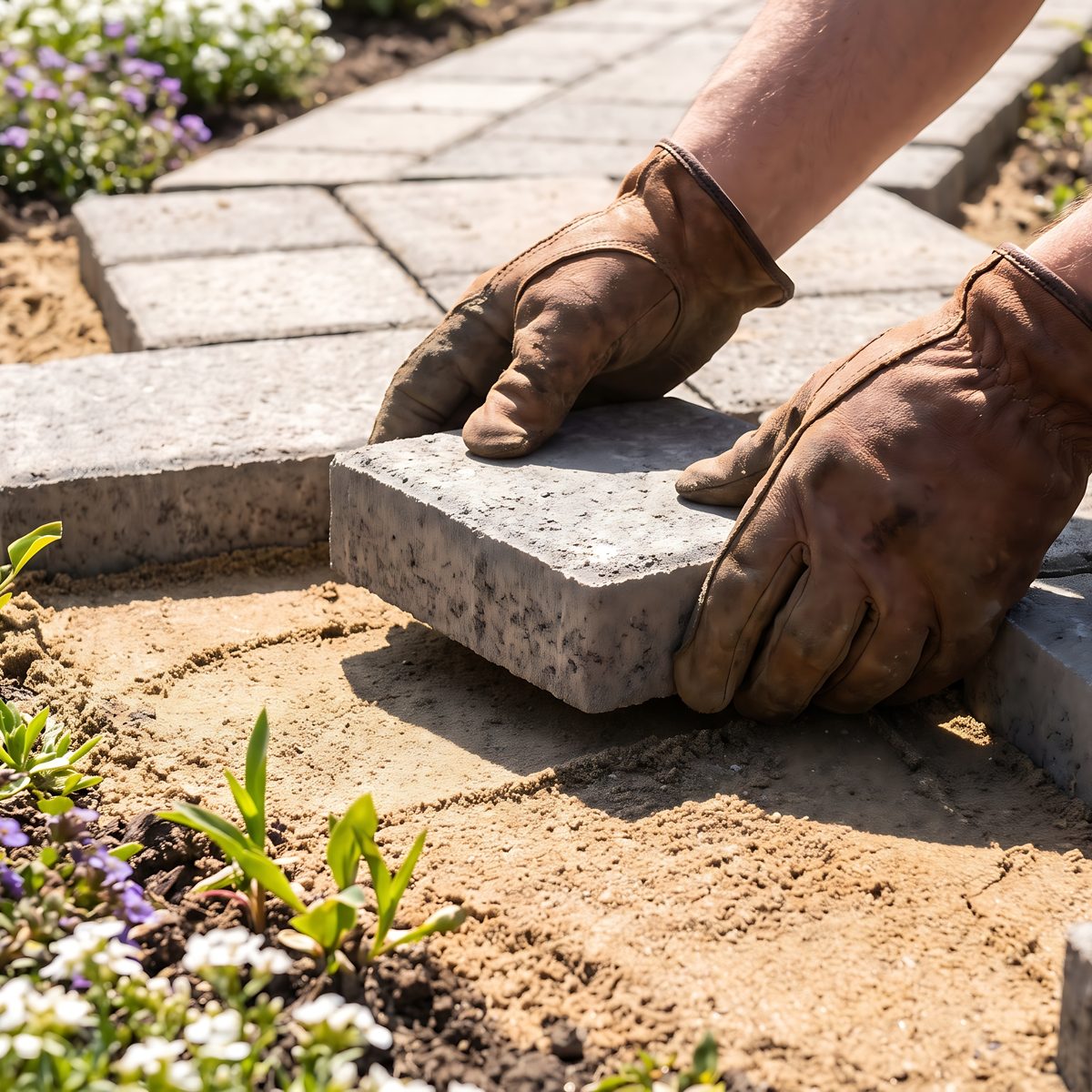
For pavers, screed a 1 inch sand bed over a compacted base rather than using sand to fix deep grade problems. A thin, even bed locks pavers in place. A thick one shifts underfoot.
Working With Moisture
Slightly damp sand spreads, screeds, and compacts far more easily than bone dry sand, which just flows back into your screed lines. Lightly wetting the pile before you work it saves real effort.