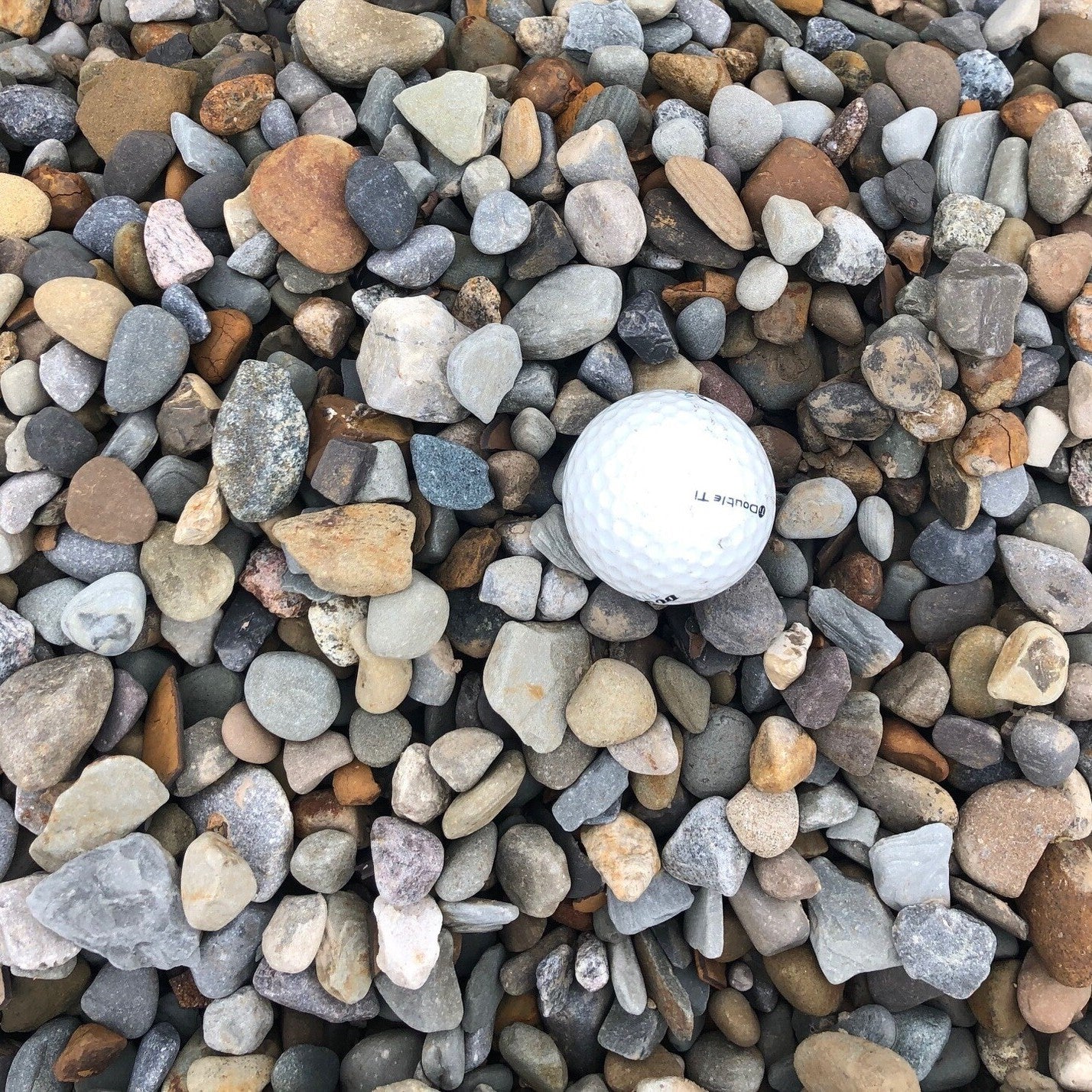
Number 57 crushed stone, angular limestone graded to about three quarters of an inch. The standard driveway, base and drainage gravel, it locks together under traffic and drains fast.
Mulch Mound delivered a yard of pea gravel to us. Delivery was on time, driver was friendly and hit a bullseye on the “tarp target”. We used the pea gravel (which was diameter as specified) to fill several muskrat holes around our pond. I would definitely recommend Mulch Mo...
Tell us what you're looking for
Thanks! We received your request.
Something went wrong. Please try again.
How Much Material Do I Need?
One cubic yard of stone covers roughly 160 square feet at two inches deep or about 108 square feet at three inches. Compacted base courses need four inches for walkways and patios and six inches under vehicle traffic.
Use our free gravel calculator
What is a Yard?
A yard is approximately 27 cubic feet. As a general guideline, one yard of material can cover an area of about 100-160 square feet at a 2-3 inch depth.
We can't take orders for this right now. Tell us what you need and we'll get back to you.
What do you need?
Thanks! We received your request.
Something went wrong. Please try again.
Hand-picked local yards
4,000+ regional deliveries
Dedicated support
Why order through Mulch Mound
The best local , without the guesswork.
We hand-pick and partner with the best yards in your region, keep only the ones our buyers rate well, and back each load with our guarantee.
Mulch Mound Guarantee
If your isn't the quantity or quality you ordered, we'll make it right.
About this stone
Number 57 crushed stone, angular limestone graded to about three quarters of an inch. The standard driveway, base and drainage gravel, it locks together under traffic and drains fast.
Mulch Mound delivered a yard of pea gravel to us. Delivery was on time, driver was friendly and hit a bullseye on the “tarp target”. We used the pea gravel (which was diameter as specified) to fill several muskrat holes around our pond. I would definitely recommend Mulch Mo...
How Much Material Do I Need?
One cubic yard of stone covers roughly 160 square feet at two inches deep or about 108 square feet at three inches. Compacted base courses need four inches for walkways and patios and six inches under vehicle traffic.
Use our free gravel calculator
What is a Yard?
A yard is approximately 27 cubic feet. As a general guideline, one yard of material can cover an area of about 100-160 square feet at a 2-3 inch depth.
Mulch Mound delivered a yard of pea gravel to us. Delivery was on time, driver was friendly and hit a bullseye on the “tarp target”. We used the ...
Read full review
Mulch Mound delivered a yard of pea gravel to us. Delivery was on time, driver was friendly and hit a bullseye on the “tarp target”. We used the pea gravel (which was diameter as specified) to fill several muskrat holes around our pond. I would definitely recommend Mulch Mound to a friend!
Placing an order online was so easy. Delivery was on time. When the driver realized we had a newly poured driveway they erred on the side of cautio...
Read full review
Placing an order online was so easy. Delivery was on time. When the driver realized we had a newly poured driveway they erred on the side of caution and opted not ti drive in it. The company even sent me a message explaining that call. Would recommend!
Stone is sold by weight or by volume, so measure your area in square feet first and pick a depth before converting. Sketch odd shaped Salinas side yards and driveway strips as a series of rectangles, and measure trench depth for swales separately since they hold far more than a flat area of the same footprint. Add five to ten percent for compaction and settling into soft loam.
Complete Your Outdoor Stone Project
Add landscape fabric and steel or bender board edging to keep stone from migrating into the loam, and use mulch in your planted areas so the two zones read as one deliberate design.
Install solid edging before the stone arrives. Salinas loam is soft and forgiving, which means a gravel path without a hard border will creep outward an inch or two every rainy season until the line is gone. Steel edging or concrete bender board set flush holds the shape for decades and pays for itself the first time you skip a re edging weekend. Set it a half inch above the finished stone grade.
Mulch Mound Pro Tip
Compact your base in two inch lifts and wet each lift lightly as you go. Dry crushed rock over dry valley loam never truly locks up, and the first heavy December storm reveals every soft spot as a dip. A rented plate compactor and a garden hose on mist will get you a base that stays flat through years of winter rain and summer drying cycles.
Mulch Mound Pro Tip
Use stone strategically instead of everywhere. In this fog cooled climate, plants thrive with very little water once established, so the best Salinas yards use gravel for paths, swales, and hot exposed strips while keeping mulched planting pockets for shade and interest. All stone yards reflect glare, collect blown debris, and lose the soil building benefit that keeps your existing plants healthy year after year.
The Unique Landscape of Salinas
With about 19 inches of annual rain and no meaningful summer precipitation, Salinas landscapes increasingly lean on decorative stone in the spots where organic mulch simply burns off or blows away. Stone holds its depth permanently, which matters on a west facing frontage or a narrow strip along a driveway where afternoon valley wind moves lighter material around. It also handles the concentrated winter runoff well, so gravel swales and dry creek beds are a practical answer to the puddling that shows up on flat 52 foot elevation lots between November and March. Because Salinas loam is fine textured and drains far better than it looks, a crushed base under a patio or path stays stable rather than pumping mud. Stone is the low maintenance option for Zone 10a yards where plants never go fully dormant and you would rather not be redoing beds every spring. Used thoughtfully alongside plantings, it cuts water use, weeding, and replacement cost at once.
Frequently Asked Questions
Click a question to see the answer
Answer
Will decorative stone make my Salinas yard hotter?
Less than you would expect. The marine influence keeps summer highs here mostly in the seventies with regular fog and afternoon wind, so light colored gravel does not radiate the way it would inland in Hollister or Fresno. Still, keep stone away from the drip line of thin barked young trees and choose lighter tones on southwest exposures.
Answer
What stone works for a dry creek bed to handle winter runoff?
Layer it. Use three quarter inch drain rock as a base, then a mix of two to four inch and six to twelve inch river cobble on top with a few larger boulders as anchors. Salinas gets its whole 19 inches in a handful of concentrated storms, so the bed needs to move real volume for short bursts. Line it with filter fabric to keep the fine loam from washing up through.
Answer
Do I need to put fabric under gravel here?
For decorative beds, yes, a permeable landscape fabric slows the settling of stone into soft loam and cuts weeding. For compacted base under pavers, use a woven geotextile instead of the thin household grade. Skip plastic sheeting entirely, since it traps the winter rain that these flat valley lots need to absorb and it starves soil life in a climate that stays biologically active all year.
Answer
How deep should decorative gravel go in a planting bed?
Two inches for three eighths inch to half inch material and three inches for three quarter inch to one and a half inch rock. Because our loam is fine and soft, going too shallow lets individual stones press in and disappear within a season. Two to three inches over fabric keeps coverage looking clean and blocks the cool season weeds that germinate here from November on.
Answer
What should I use as a base for a paver patio in Salinas?
Use three quarter inch minus crushed rock, four inches deep for a patio and six inches for a driveway, compacted in two inch lifts, then a one inch bedding sand layer. Valley loam is stable when dry but it softens up in the winter rain, so compaction and a slight slope away from the house are what keep the surface flat over the years.
Answer
How much does a yard of stone weigh, and can my driveway take it?
A cubic yard of crushed rock or gravel runs roughly 2,600 to 3,000 pounds, and cobble is similar. Older Salinas driveways with thin concrete or asphalt can crack under a concentrated dump, so we recommend a plywood pad, or we can place the pile at the curb or on the street apron if your city parking situation allows it.
Answer
Will gravel beds stay weed free long term?
They stay much cleaner, but no bed is permanent here. In our frost free winters, weed seed blows in on the valley wind, lands on the stone, and germinates in the dust and leaf litter that collects over a couple of years. Blow out the debris each fall, spot treat early, and refresh the top layer every four or five years and you will keep maintenance to a few minutes a month.